Publishing citizens' identity information on Mashhad Metro monitors
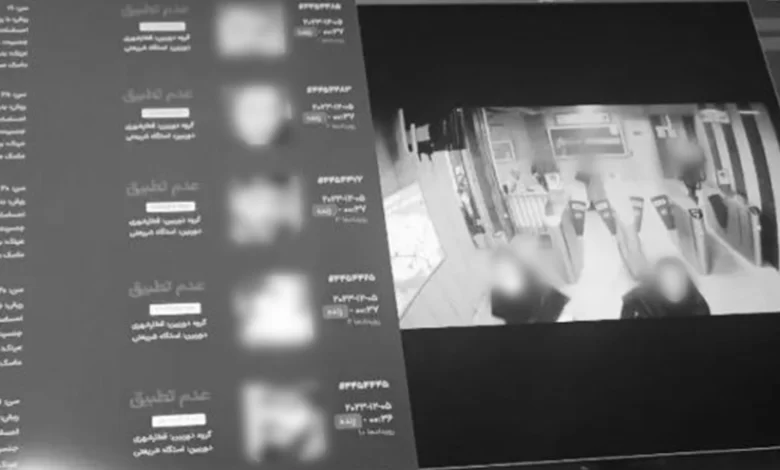
The publication of images and identity information of citizens on Mashhad Metro monitors sparked widespread reactions.
In the past two days, the publication of citizens' identity information on the Mashhad Metro monitor screen has sparked protests and strong reactions, to the extent that the Mashhad City Council and Governorship called it an oversight and announced that this incident had been stopped.
In response to this issue, Mashhad citizens and social media users announced that displaying identity information in this way is a violation of citizens' rights, calling this action "intimidation" and a security project to scare people.
Vahid Farihi, the editor of the Jamia group of Khorasan newspaper, published a picture in this regard on his Instagram page and wrote: "This is Shariati Station on Line 1 of the Mashhad Metro. Whoever passes in front of the camera, their photo will be displayed separately on the monitor with specifications including age and gender."
After two days of widespread citizen protests, Mashhad City Council spokesman Musa al-Reza Hajibegloo called the incident an oversight and announced: "This incident is not going to become a routine, because it is a violation of citizen rights and we are neither allowed to take this action nor has the legislator issued us such an order."
Sakineh Sadatpad, a lawyer and assistant to Ebrahim Raisi, also pointed out that the aforementioned action violates the principles of Articles 2 and 25 of the Constitution, human dignity, and privacy, adding: "The governor of Khorasan Razavi, as a representative of the government, is expected to deal with violators of people's rights and perpetrators of illegal behavior."
It should be noted that Islamic Republic officials have repeatedly claimed in the past that they are able to identify opponents of compulsory hijab through images from advanced cameras, and that the implementation of the hijab and chastity plan using surveillance cameras began on April 16, on the orders of General Radan, but until now there have been serious doubts about the implementation of such a plan.
Craig Singleton, a senior fellow at the Foundation for Defense of Democracies in the United States, said regarding the identification of hijab opponents through camera images: "I believe that China has provided this infrastructure to the Islamic Republic of Iran."
In December of last year, the United States also placed Tiandi on its sanctions list for selling surveillance cameras to the Revolutionary Guard.
It should be noted that the aforementioned systems for identifying opponents of the hijab have even led to some men being identified as women and being sent "Hijab Discovery" text messages. According to news published on social media, many men have received "Hijab Discovery" text messages because they have long hair and are in cars.