Ahvaz; Sewage in the city, houses on water
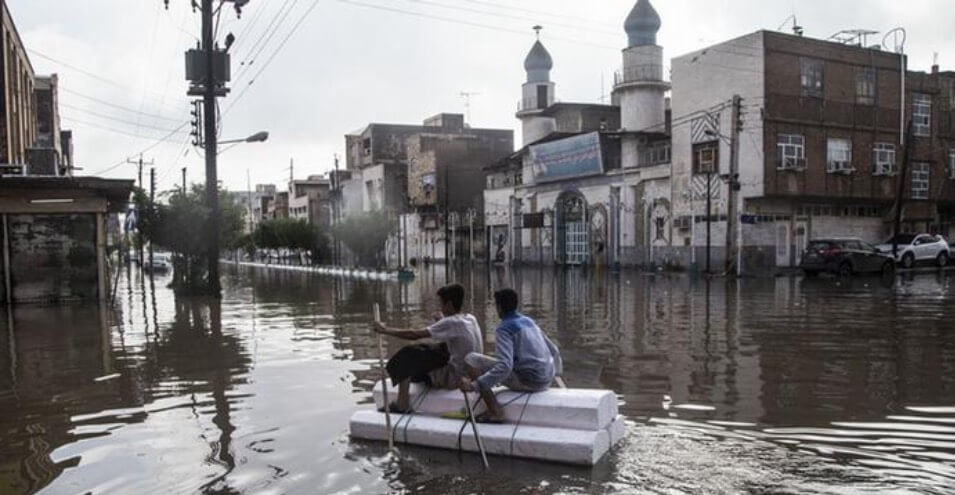
In the conflict surrounding the homes of Ahwazis in rain and sewage, Abfa and the Ahvaz Municipality accuse each other of “irresponsibility.” Ahvaz has 2,400 kilometers of sewage network, 1,100 kilometers of which are worn out. The lives of Ahwazis are wandering on water.
Three hours of rainfall from the sky in Ahvaz were enough to cause 90 millimeters of water to enter the city's surface water drainage network and canals. However, these canals did not have the capacity to handle this amount of rainfall, and most of the central and sloping areas of Ahvaz were flooded.
The latest reports from the executive agencies in the city of Ahvaz indicate that even the readiness and deployment of 1,700 municipal service personnel have failed to solve the city's recent problems by controlling surface water accumulated in public streets, people's homes in sloping areas, stores, shops, schools, and even the transit area of Ahvaz Airport.
The recent heavy rainfall in Khuzestan Province, which, according to video images posted on social media and clips sent to Deutsche Welle, has disrupted the lives of most Ahwazi families, began on Monday, December 15, and reached the city of Ahwaz.
The amount of rainfall in the first hours of Monday was reported as 104 mm in Abadan, 60 mm in Ahvaz, 28 mm in Mahshahr, 21.8 mm in Dezful city, and 20 mm in Dezful meteorological station.
According to the latest information, as of the time of writing this report, the intensity of rainfall in Ahvaz, Abadan, and Mahshahr has not decreased.
Ahvaz is more critical than other cities.
The city of Ahvaz, among other cities in Khuzestan Province, has assumed a more critical situation, and some unconfirmed reports indicate that some residential areas are being considered for evacuation.
This is while, according to ISNA, quoting the CEO of Ahvaz Water and Wastewater Company, within the next 48 to 72 hours, the accumulated water will be removed from the flooded areas in this city and the situation will return to normal.
Behnam Moridi, CEO of the Ahvaz Water and Wastewater Company, said that on Monday night, in just three hours, about 90 millimeters of rain fell on the sky, and this amount of rainfall entered the surface water disposal network and canals during this period.
Sewerage network, victim of dispute between Ahvaz Municipality and Abfa
The sewage network and surface water disposal channels of Ahvaz city do not have the capacity for this volume of water due to various reasons, including wear and tear, lack of dredging, and unbalanced urban development, and this has caused "wastewater backflow" and water entering the streets of Ahvaz city. More importantly, there is a dispute between the municipality and the Ahvaz Water and Sanitation Department regarding the sewage network and surface water disposal.
According to the CEO of the Ahvaz Water and Sewage Company, the water that exists on the streets is causing problems in the sewer lines of the city of Ahvaz, and until the municipality disposes of this water, the problems with the sewers in Ahvaz will continue.
Meanwhile, IRNA has reported on the disagreement between the Water and Sewerage Authority (Abfa) and the Ahvaz Municipality. The only victim of this long-standing dispute is the unfinished construction of the city's sewage network.
The report states that the lack of a surface water disposal system in Ahvaz, due to the expansion of construction and the lack of development of the sewage disposal network, has increased people's problems more than ever.
The CEO of the Ahvaz Water and Sewage Company reports that only 40% of the Ahvaz comprehensive sewage plan has been implemented and says that the issue of street flooding due to rainfall is related to the municipality's jurisdiction, and according to Article 55 of the Municipality Law, this organization must collect and dispose of city-level water.
He added that until a surface water disposal network is established under the responsibility of the Ahvaz Municipality, whenever rainfall in Ahvaz exceeds 10 millimeters, Ahvaz will be flooded.
In contrast, according to IRNA, the mayor of Ahvaz, Musa Shaeri, blamed the low capacity of the sewage network for the city's flooding, "as always," and said that the Ahvaz sewage disposal network is complex and the Ahvaz Water and Sewage Company should take action to dredge it.
According to Shaari, in 2019, 44 billion rials were spent by the Ahvaz Municipality on surface water and wastewater disposal, and building a surface water disposal network in Ahvaz requires about 10 trillion rials, which is "not cost-effective" because this problem would also be solved if the wastewater network were improved.
Ahvaz has 2,400 kilometers of sewage network, 1,100 kilometers of which are worn out. These networks are mainly made of concrete and are said to collapse when sewage enters.
The IRNA report states that for years, ABFA and the Ahvaz Municipality have been trying to "cover up their shortcomings" by throwing "irresponsible balls" at each other, and in the meantime, people suffer extensive damage with every rain.
Searching for “seats for representatives of the parliament”
The city of Ahvaz has been witnessing heavy rainfall for two days and nights, with large volumes of stagnant water flowing from the city's streets and public thoroughfares into homes downstream. Many residential areas in the city of Ahvaz are located on steep slopes, and for this reason, stagnant and undisposed water easily surrounds public thoroughfares and these residential areas.
Images received from users show that the belongings and belongings of many families living in steep areas are submerged in the stagnant water. Some tried to prevent more untreated sewage-contaminated water from entering their homes with sandbags. The car parks of many Ahwazi citizens are also surrounded by rainwater.
In the video footage received, some citizens, in humorous but bitter language, invited national officials, representatives of Khuzestan Province, and provincial officials to be guests in their homes, amid living conditions amidst stagnant water and urban sewage.
Others have criticized the "years of indifference of the country's officials" to the people of Khuzestan, saying that in these circumstances, many are throwing stones at the people's chests in order to gain seats in parliament and collect votes.
Concerns about the spread of infectious diseases
Add to all this the sewage that has entered the homes of the people of Ahvaz along with surface water. The Ministry of Health has announced that it will dispatch expert teams to investigate the health situation in critical areas, given the dangerous nature of urban sewage pollution and hospital contamination.
With untreated surface water flowing into hospital wastewater tanks, Ministry of Health officials expressed concern about hospital wastewater flowing into public streets and people's homes and the spread of infectious diseases.
Source: DW