Iran News

Several people arrested in Sistan and Baluchestan on charges of having ties to foreign media

The IRGC Intelligence Organization announced that it had arrested several people in Sistan and Baluchestan province on charges of having contact with foreign media; at the same time, a lawyer in Isfahan announced that the administrators of 10 Telegram channels had been summoned.

Iranian media reported the arrest of several people in Sistan and Baluchestan province on Monday, July 8, citing the province's IRGC Intelligence Organization.

The organization referred to the arrested individuals as "heads of hostile foreign media networks" and, without mentioning the identities of the detainees, said that some channels were "attracting and training a number of ignorant youth" to "spread lies and anti-unity content" in cyberspace.

The published reports do not mention the names of those arrested or their exact number.

The Revolutionary Guard Corps and some other Iranian security agencies have previously arrested individuals on charges of "contacting" and "collaborating" with Persian-language media outlets abroad, but these individuals have denied such accusations after their release.

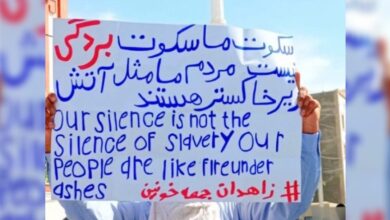
The new news of the arrests in Sistan and Baluchestan province has been published less than a month after the people of Iranshahr gathered in front of the city's governor's office to protest the rape of a number of girls.

After that rally, the director of the Baloch Activists Campaign website announced that his brother, Abdullah Bozorgzadeh, had been arrested during the protests.

The Human Rights Campaign in Iran announced on Monday that Mr. Bozorgzadeh remains detained in an unknown location and that Iranian judicial authorities have remained silent about the charges against him.
Ebrahim Hamidi, the director general of the Sistan and Baluchestan province's judiciary, accused the detained individual of "inciting people and providing documents for foreign media" last month, without mentioning a specific name.

Gholamqader Bozorgzadeh, Abdullah's father, held a sit-in in front of the IRGC headquarters in Iranshahr on July 4, demanding information about his son's condition.

Following the sit-in, the Human Rights Campaign, citing an informed source, reported that Abdullah Bozorgzadeh “after 20 days of no news… made a brief call to his mother at 1 a.m. and said in a shaky voice that he was fine, but did not say where he was.”

Summons of 10 Telegram channel administrators in Isfahan

On Monday, Payam Darfashan, a lawyer, also announced the summoning of a number of Telegram channel administrators to the Isfahan City Judicial Complex.

According to Mr. Derfashan, these individuals had previously registered their Telegram channels with the Ministry of Religious Affairs, and after Telegram was filtered, they were informed that activity on this messenger "is a crime and you will be dealt with."

He, who represents one of these individuals, said that they were summoned to the Isfahan Judicial Complex after this message.

According to the lawyer, most of these people are women who run "channels about baking, baking, or topics related to art and women."

On Saturday, June 3, Gholamhossein Mohseni Ejei, First Deputy and Spokesperson for the Iranian Judiciary, called on Iranian citizens to leave Telegram, saying that continuing to use the messaging app could "lead to crime."

Abdul Samad Khorramabadi, Deputy Attorney General of the country, also said on Saturday, May 19, that due to the filtering of Telegram, "advertising and service activities" of guilds on this messaging service are "prohibited" and that the Ministry of Industry and guild institutions must deal with this action.

On May 10, the Tehran Culture and Media Court issued an order to filter Telegram.

A month after this action, however, Mohammad Javad Azari Jahromi, the Minister of Communications and Information Technology, announced the "resistance" of Iranian users to the judicial order to block Telegram and announced that only one million people had left the messenger after it was filtered.

In recent years, international organizations have consistently described Iran as one of the "main enemies" of the Internet and cyberspace. For example, Reporters Without Borders describes the Iranian government, along with several other governments, as "enemies of the Internet," and Freedom House, in one of its most recent reports, has placed the Islamic Republic in fourth place, at the bottom of the "Internet freedom" table.


Source: Radio Farda

Similar posts

Leave a Reply

Your email address will not be published. Required fields are marked *

Back to top button