Rising debate about the prevalence of "bad hijab" in the city of Qom
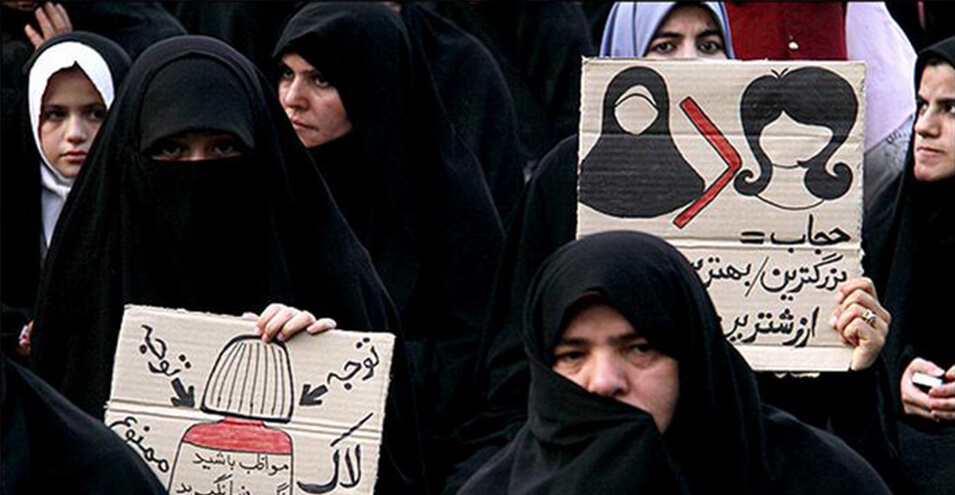
The deputy chief of police says that “hijab and chastity” are not observed in Qom, and Makarem Shirazi calls this situation a “great calamity.” With the beginning of Ramadan, criticism from religious figures in Qom about the clothing worn by women and youth in the city has increased.
Nasser Makarem Shirazi, a Shiite religious authority, has warned that "the issue of hijab today has gone beyond a purely religious issue and has become a political issue to confront the very essence of the system."
The Shafaqna news site reported on Monday morning, May 27, that the religious authority complained in one of his speeches on the occasion of the month of Ramadan that some people only talk about economic issues and said that cultural issues should not be neglected. He added: "The issues of improper hijab and lack of hijab, especially in Qom, are a great scourge."
Criticism of the clothing worn by women and youth in the religious city of Qom has a long history. Mohammad Saeed Montazer al-Mahdi, deputy head of the police force's social affairs department, once told Fars News Agency that despite a forty-fold increase in patrols, "hijab and chastity" are not being observed in Qom.
About ten days ago, Jafar Sobhani, another Shiite religious authority, criticized officials for not paying attention to the status of women's clothing, complaining that "the status of the hijab in Qom is not worthy of the dignity of this holy city."
“Vice-Presidential Hijab Abuse in Qom”
The disregard of women and girls in Qom for the government-approved veil, which Makarem Shirazi called a "great calamity" and a political act, is, in Sobhani's view, probably a "proxy" act carried out in exchange for payment.
According to Jamaran News Agency, Jafar Sobhani said on May 16: "Of course, some of these unhijabi women are agents and are hired to pollute the city's atmosphere for a fee, but the women who are revolutionary and said Labbayk behind the Imam are genuine."
Reza Karamipour, the Friday prayer leader of Qom, in an interview with IRNA on Sunday, June 25, described the "promotion of improper hijab" as a conspiracy by the enemies of the Islamic Republic because, according to him, "they know that if the importance and sanctity of the hijab in Qom diminishes, their way of influencing the promotion of non-hijab in other cities of the country will become very easy."
The failure of the “authoritarian approach”
Karamipour told IRNA: "In dealing with manifestations of non-veiling in the city of Qom, in addition to warning and enjoining what is right and forbidding what is wrong, legal methods and an authoritative approach must also be used to prevent the spread of this abnormal phenomenon."
A few days ago, Morteza Heydari, the governor of Qom, acknowledged that the increase in cases of "improper hijab" and fasting during Ramadan had "caused resentment among people and religious authorities," but he clarified that the situation in Qom was not "critical" in this regard.
Heidari told ISNA news agency: "In Qom, the situation of fasting and lack of hijab and chastity is not critical, but even a few cases cause annoyance to people, and proper planning must be done in this regard."
The governor of Qom has emphasized that the spread of "some cases of non-veiling" in this city must be prevented by mobilizing cultural facilities and utilizing public capacities.
Last Monday, the "Qom Fori" news website quoted Musa Hosseini Kashani, Director General of the Qom Islamic Culture and Guidance Department, as writing that according to the law, 25 different organizations have legal duties and responsibilities in the field of "hijab and chastity," and all agencies and institutions must fulfill their duties to "improve the status of hijab."
Regarding the reason for the failure of these institutions, he said: "Parallel work, failure to implement the roles of different institutions, and the lack of facilities in line with legal duties are among the leading challenges in the field of culture building in the field of hijab."
The vast majority of “bad-hijab” people
Numerous studies and surveys conducted, including by official and government institutions, show that people's willingness to wear government-approved clothing has declined sharply over the past four decades.
The Research Center of the Islamic Consultative Assembly, in a report published in August 2018, says that the results of the studies show that 60 to 70 percent of Iranian women are in the group of “customary veiled” or “non-hijab according to the Sharia definition,” and 30 to 40 percent of them are in the group of “veiled.” The report adds that of this minority of “veiled” women, only 13 percent observe the traditional hijab. Thus, the overwhelming majority of Iranian women try to submit to the minimum level of “compulsory hijab.”
Source: DW