Coronavirus in Iran; More than 3,500 infected, schools closed until the end of the year
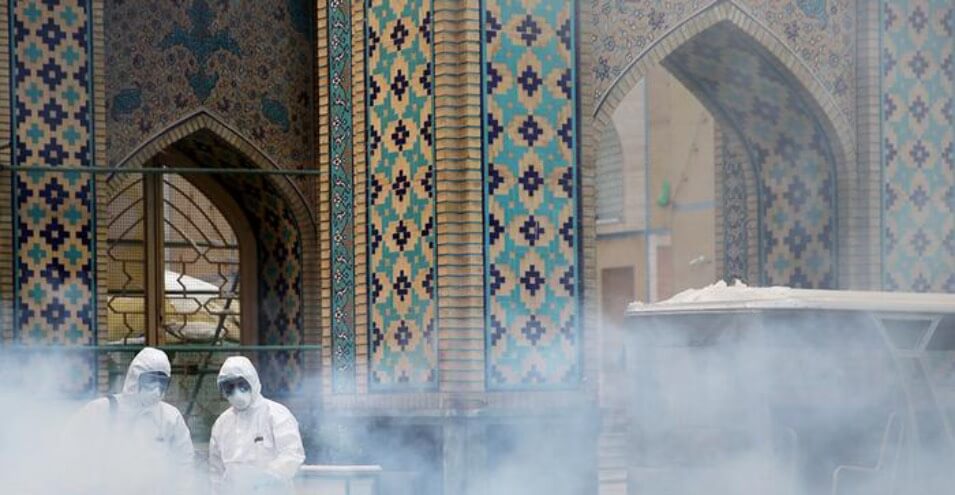
According to the Minister of Interior, the plan to control the coronavirus in three or four areas of Iran with the highest levels of contamination will begin on March 5. The number of coronavirus victims in Iran has reached 107, and all schools and universities have been closed until the end of the year.
Saeed Namaki, Minister of Health and Medical Education, announced that a plan aimed at identifying all cases of the new coronavirus throughout Iran has been launched on the morning of Thursday, March 5.
He says that there are more than 17,000 health homes and more than 9,000 comprehensive health centers in cities and villages in Iran, and that the identification and treatment of suspected cases of the coronavirus, known as COVID-19, is planned to begin with "organized work" in these centers and in cooperation with the Basij bases.
According to the Young Journalists Club, the Minister of Health announced on March 1 the "launch of a national mobilization to combat Corona" by sending 300,000 screening teams to the doors of all citizens, and said that this plan would be implemented in Iran "for the first time in the world."
Saeed Namaki had said: "300,000 specialized teams have been mobilized to screen compatriots door-to-door and identify suspected coronavirus patients nationwide; starting Tuesday, we will go to each and every house of the people and identify the patients. If necessary, the patients will be referred to the relevant centers and transferred to hospitals at the next level."
The plan was met with strong criticism from many experts, who expressed concern that involving hundreds of thousands of untrained personnel with meager resources could deepen the coronavirus crisis.
Cancellation of the door-to-door screening plan
Apparently, due to these concerns, the Ministry of Health has abandoned the previous plan and, with a two-day delay, has begun implementing a new plan in which visiting "every single person's home" has been ruled out.
The Iranian Broadcasting Corporation (IBC) reported, quoting the Minister of Health, that in the new plan, people with symptoms of the novel coronavirus will be invited to "screening centers" "to first receive the necessary medications and training for home care, and then have their condition monitored on a daily basis."
Saeed Namaki said in a joint meeting with the head of the Basij organization on Wednesday evening: "These people will be evaluated every day through the system or by phone call. If they do not improve physically after 3 days, they will be referred to hospitals, or if necessary, they will be isolated with the presence of a treatment team, disinfecting homes, and other family members."
The Health Minister says the plan will initially be implemented “in three or four parts of the country,” and then, after three days, it will be extended to other provinces. He added that traffic control will also be implemented in the bottleneck cities with severe outbreaks of the coronavirus.
So far, the city of Qom is known as the main epicenter of the coronavirus outbreak in Iran, but cases identified in other cities such as Rasht and Tehran are also increasing sharply.
Quarantine, an enemy conspiracy?
Some experts believe that if the city of Qom had been quarantined in a timely manner, the containment of the novel coronavirus would have been more successful. A number of clerics, senior commanders of the Revolutionary Guard, and government officials have opposed this, with some calling it an enemy conspiracy.
President Hassan Rouhani said at the March 27 cabinet meeting that there was no decision to quarantine a locality or city, and that people should not pay attention to rumors.
According to Tasnim News Agency, Rouhani said: "The decision on the closure or creation of any restrictions due to Corona rests with the National Headquarters for Combating Corona. Corona should not become a weapon of our enemies to force the closure of work and production in the country."
Kianoush Jahanpour, head of the Public Relations and Information Center of the Ministry of Health, wrote in a Twitter message on Thursday afternoon that quarantining a city or a province is "neither possible nor desirable," and the only way is to convince citizens to "reduce interactions."
The city of Wuhan, the capital of China's Hubei province, is known as the epicenter of the Covid-19 outbreak, and so far the most cases of infection and deaths from the new coronavirus have been recorded in this region.
IRGC Commander: Coronavirus is likely a US biological attack
However, it is still not clear how the coronavirus entered Iran and spread in the city of Qom. Hossein Salami, Commander-in-Chief of the Revolutionary Guards, said at a ceremony in Kerman on the morning of March 5, referring to the coronavirus outbreak, that Iran is “engaged in a biological battle” but will end the year with “stability and resilience.”
According to ISNA news agency, Hossein Salami said: "Today, even in the fight against this virus, which may be the product of America's biological invasion, which first spread to China and then to Iran and other parts of the world, we will be victorious, and America will know that if it does this, it will return to its people, and if it is not America's fault, this virus will still be contained."
The IRGC Commander-in-Chief has not commented on the evidence suggesting that the United States was involved in the spread of the coronavirus. One possibility that has been raised in some Western media outlets is that the virus originated in a laboratory near the Chinese city of Wuhan.
So far, a number of members of parliament, senior government managers, and political and religious figures have been identified as infected with the coronavirus, and some of them, including a member of the Expediency Discernment Council, an advisor to the head of the judiciary, a member of the 11th parliament, and two relatives and close associates of a Shiite religious authority in Qom, have died from COVID-19.
According to the latest statistics from the Ministry of Health, as of noon on Thursday, March 6, 3,513 cases of the new coronavirus have been identified in Iran and 107 people have died from it.
The high risk of contracting the coronavirus in closed and crowded places has made prisoners' relatives and friends concerned about their health. The judiciary has responded to these concerns in recent days by issuing several circulars, including those on granting leave to prisoners, controlling and reducing the entry of new prisoners into prisons, and postponing the execution of final sentences issued until 2020.
However, it seems that the release of prisoners does not include many political and security prisoners. One of these prisoners is Hengameh Shahidi. His lawyer, Mustafa Turk Hamedani, wrote a message to the head of the judiciary on March 3, demanding that his client be released.
Concerns of the families of prisoners about the environment
The families of prisoners in the environmental case also wrote a letter to the head of the judiciary on March 4, praising the issuance of circulars related to preventing the spread of coronavirus in prisons, but complained that this decision did not include their imprisoned relatives.
According to the IRNA news agency, the letter addressed to Raisi states: "We humbly ask Your Excellency whether expediency and justice dictate that our loved ones who have been detained and even held in solitary confinement for a long time be exempted from this dangerous and worrying situation!"
The defendants in this case were arrested two years ago by the IRGC Intelligence Organization, tried on charges such as espionage, and sentenced to long prison terms.
Niloufar Bayani, one of the defendants in the case who was sentenced to ten years in prison, revealed in recently published letters that she was forced to confess during long interrogations using torture and sexual threats.
Kavous Seyed Emami, one of the detainees in this case, died suspiciously in prison two weeks after his arrest, and the cause of his death was declared “suicide.” The Ministry of Intelligence has declared the espionage charges against these defendants baseless.
Worrying warnings about the coronavirus outbreak
With the spread of the COVID-19 virus in Iran, the National Headquarters for Combating Corona, headed by the Minister of Health, has put new measures on the agenda to prevent its spread.
Saeed Namaki announced on Thursday that all primary and higher education centers in Iran will be closed until the end of this year. He warned citizens about observing hygiene rules and the possibility of spreading the infection in crowded places, saying, for example, that not observing hygiene rules at gas stations could infect 8,000 people in a single day.
Dr. Masoud Mardani, an infectious disease specialist and member of the National Influenza Committee, described the outlook for the spread of the coronavirus in the capital as much more worrying, telling Iran Online: "The coronavirus is circulating rapidly, and since one person can infect four people at the same time while contracting the disease, we estimate that 30 to 40 percent of Tehran's population will be infected with the coronavirus by the end of March."
Although the official number of coronavirus cases and deaths in Iran has increased sharply in the past few days, many citizens and some members of parliament, such as Masoud Pezzekian, believe that the real number of coronavirus cases is far greater than the official figures.
Saeed Namaki said on Wednesday night: "What we have today regarding the management of Corona in the country is much more organized than in previous days. If the number of infected people has increased today, it is because of the increase in the number of laboratories in the country, which has increased the speed of identifying patients."
One of the issues that has raised concerns about the extent of the coronavirus outbreak in Iran is the identification of cases among travelers who have traveled from Iran to about twenty other countries. According to statistics from Johns Hopkins University in the United States, as of Thursday, 95,748 cases of coronavirus have been registered worldwide, more than 80,400 of which are related to China. Iran and Italy have announced the highest number of cases of coronavirus after China and South Korea.
Source: DW