“Sanctions punish patients”
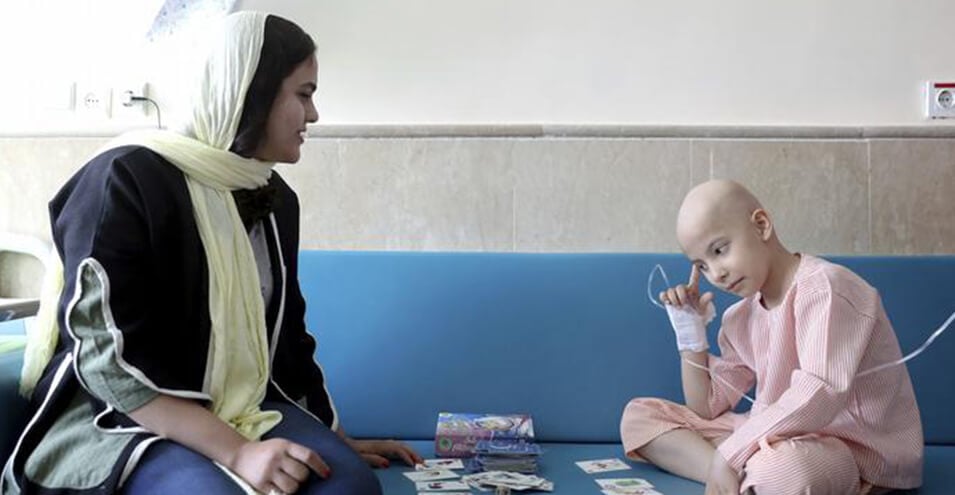
“Taha Shakouri is playing in the playground of Tehran’s Children’s Cancer Hospital. He is unaware that his doctors at Mahak Hospital are in need of the drugs needed for his chemotherapy. Mohammad is eight years old,” begins Associated Press reporter Mohammadi Nasiri’s report on the shortage of medicines in Iran.
Iran's economic situation is deplorable after the US unilaterally withdrew from the nuclear deal and reimposed sanctions against the country.
With the fall in the value of the rial, the cost of imported medicines has skyrocketed. Domestically produced medicines have also become more expensive. Paying for treatment has become a serious challenge for many Iranians.
UN data says that the average income of Iranians is $450 per month. However, this figure is calculated with 4,600 tomans per dollar. The dollar exchange rate has more than tripled in the past year and a few months, and the average income of Iranians is two-thirds lower.
The Associated Press has written that many Iranians blame Donald Trump and his maximum pressure policy on the Islamic Republic for this situation.
In this situation, the healthcare system is unable to support low-income and disadvantaged segments of society.
Taha's mother, Leila Taghizadeh, told The Associated Press that just one chemotherapy session for her son costs more than a thousand dollars at a private hospital.
Mahak Charity Hospital has been a lifesaver for the family. Mahak has paid for all of Taha’s medical expenses. His 30-year-old mother said Taha’s family is indebted to the hospital’s doctors and staff. “Without their help, we wouldn’t have been able to afford my son’s treatment,” Leila Taghizadeh told The Associated Press. “My husband is a simple laborer, and my son’s illness is a serious and very expensive one.”
Mahak Hospital is run with charitable donations and currently treats 32,000 children and adolescents under the age of 16 from across Iran.
Dr. Araseb Ahmadian, CEO of the Mahak charity, told the Associated Press: “Our biggest concern is the disruption of financial channels with the world. With the US financial sanctions against Iran, it is not even possible to pay aid to Iranian charities.” Ahmadian said he admits that he is gradually losing hope. “Medicine should be available to everyone, there should be a solution in the banking system to buy medicine,” he said.
After the signing of the nuclear agreement between Iran and the West and the lifting of international sanctions against the country, many Iranians expected a better life ahead. But now, despite the insistence of US government officials that food and medicine are not on the list of US sanctions against Iran, US financial sanctions against the Islamic Republic have made it virtually impossible to trade with foreign countries - even to buy medicine or raw materials for medicine production.
Iran insists that it produces about 95 percent of its medicine needs domestically and even exports some of its products to its neighbors. However, the country needs medicines for specific diseases.
Now these medicines are in short supply. Many prefer not to go to government hospitals because they cannot afford to wait in long lines. Government hospitals are not in good condition. Last week, Iran’s Health Minister Saeed Namaki announced that the ministry under his leadership “has no money at all and is going through a very difficult year.” “When we don’t sell oil, we, who depend on it, will run out of money,” Namaki said.
Long lines are also seen every day in front of the 13 Aban Pharmacy. This pharmacy on Karimkhan Street is the hope of those looking for rare medicines for their sick family members.
Hamidreza Mohammadi, 53, is seeking medication for his wife and daughter, both of whom suffer from muscle weakness. He told The Associated Press that the situation wasn't this bad until two or three months ago.
Peyman Keyvanfar, who is a referee, says that the purchasing power of many Iranians has decreased and they can no longer buy foreign medicines because the price of foreign medicines has sometimes increased three to four times, and many are now buying medicines produced domestically.
Those who can still afford the price of foreign drugs often turn to the black market. Like Mahmoud Alizadeh, a 23-year-old student who searches for his mother’s medicine on Nasser Khosrow Street. His 24-year-old mother has multiple sclerosis. He told the Associated Press that without the medicine, his young mother would be paralyzed. “I don’t understand who Donald Trump is imposing these sanctions on,” he said, having paid three times the price last spring for his mother’s medicine. “These sanctions are punishing patients.”
Source: DW