Public inquiry in Malta into murder of whistleblower journalist
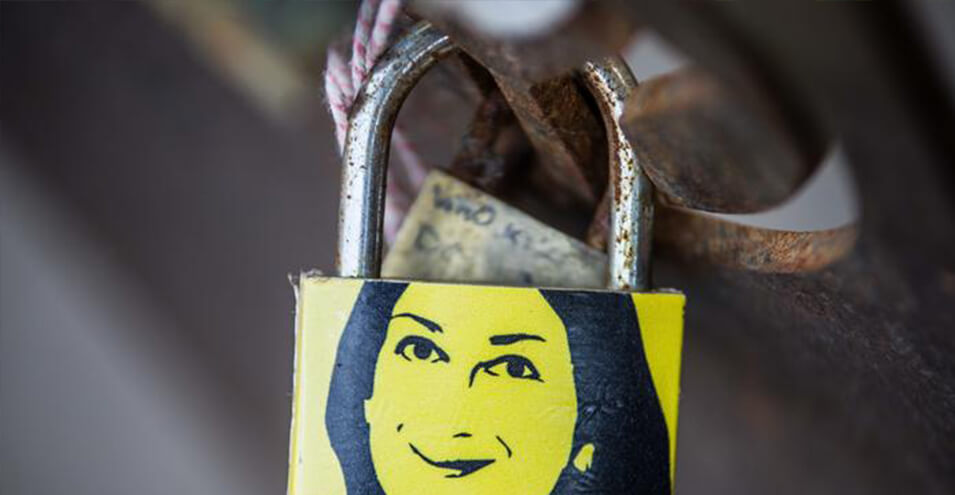
It has been two years since the assassination of Daphne Caruana Galizia, the 53-year-old journalist who exposed the collusion of the Maltese government and businessmen in the Panama Papers scandal. Now, under pressure from Europe, a commission of inquiry is investigating the circumstances of the murder.
Two years after the murder of a whistleblower and critic of the Maltese government, an investigation into the murder has been launched under foreign pressure. Maltese Prime Minister Joseph Muscat has ordered the formation of a commission of inquiry and asked the judge in charge of the commission to submit a report within a maximum of nine months.
The Maltese Prime Minister's directive states that the investigation should clarify whether the Maltese government bears responsibility in this regard and whether the government could have fulfilled its duty to protect the right to life of citizens by taking preventive measures.
Ms. Galizia was investigating government corruption and a money laundering network in Malta when she was killed by a bomb planted under her car near her home on October 16, 2017. Three men were arrested in connection with the attack, but many questions remain unanswered about the hands behind the scenes and their supporters.
Ms. Galizia was one of those who exposed the involvement of members of the Maltese government in the Panama Papers scandal, exposing money laundering and tax evasion on the island. She had provided information on this matter to the European Commission before she was assassinated.
It is to be examined whether the government could have prevented the assassination. Muscat's decision to set up a commission of inquiry follows pressure from the Council of Europe to investigate the circumstances of the murder. Ms Galizia's three children, who have been following the case of their mother's murder for two years, have expressed doubts about the independence of the investigation.
Ms. Galizia's family had called for an independent investigation after her death, but media reports say the Maltese prime minister did not consult her children or relatives before forming the commission of inquiry. "There is a risk that the traces of state agents involved in the incident will be erased," said the journalist's son, Matthew Caruana Galizia.
The Council of Europe, based in Strasbourg, France, oversees the protection and observance of human rights in the member states of the union. The council had given the small Mediterranean country until September 26 to investigate the murder of Ms. Galizia. The island of Malta, with a population of 400,000, has been a member of the European Union since 2004 and is the smallest country in the bloc.
Plaintiff vs. Plaintiff
Ms. Galizia's sons have long been embroiled in cases brought on their behalf by the state and private plaintiffs. Last week, the Council of Europe's human rights commissioner, Dunja Mijatovic, called on Malta to drop the claims against the family.
In an open letter to the Maltese Prime Minister, Ms. Mijatovic wrote that the family has faced at least 30 lawsuits for “defamation.” The letter states that these cases are unfairly putting financial pressure on the family and calling into question the rule of law and media freedom in Malta.
The plaintiffs, government officials and businessmen whom the murdered journalist accused of corruption and money laundering, have placed the onus on Ms. Galizia's family to respond to these complaints.
Reporters Without Borders welcomed the formation of a commission of inquiry in Malta to investigate Ms. Galizia's murder, but at the same time warned that "the Maltese government should not think that public opinion can be calmed by forming this commission."
The organization's statement said: "We are following the issue with a critical eye; whether the commission will work truly independently and impartially. We remind the Maltese government of its responsibility to clarify the reasons for Ms. Galizia's murder."
The assassination of the whistleblower journalist sparked a response from the European Union, Reporters Without Borders and journalists' unions. After Ms. Galizia's assassination, hundreds of journalists gathered in front of the country's parliament in Valletta, holding placards and newspapers with red spots.
Source: DW