Persepolis and the Curse of Time: From Land Subsidence to Acid Rain
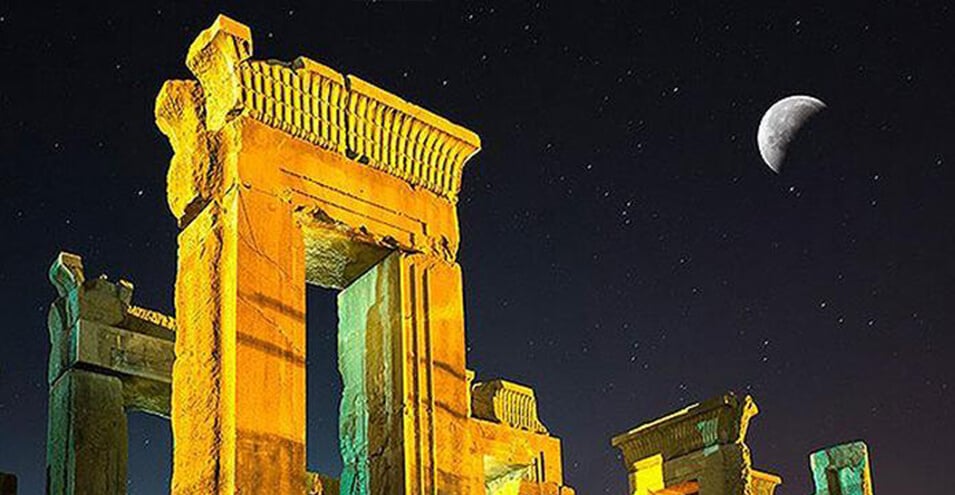
Cultural heritage experts, such as Bijan Rouhani, warn of the danger that acid rain can pose to stone buildings. The foundation of Persepolis is not very solid either; we ask Dr. Raisi Ardakani, can subsidence be prevented?
When it comes to the names of ancient and historical monuments in Iran, the name Persepolis is one of the first names that comes to the mind of every lover of these ancient relics. It is rare to find a foreign tourist who has traveled to Iran and has not taken a souvenir photo next to this monument.
But Persepolis has changed a lot over the centuries; aside from the invasions of enemies, weather and geological factors have left their mark on the face of Persepolis over the years, and looters of antiquities have looted everything they could from Persepolis in the past 100 years. What remains of this great world heritage has not been safe from the inhospitability of uninformed visitors or enemies of ancient Iranian culture. But what is the condition of what remains of Persepolis today?
While in previous years, cultural lovers and archaeologists were concerned about the preservation of this historical monument due to the risks such as the humidity of the Sivand Dam or the subsidence of the land in Marvdasht, now a new concern has been added to this complex, which is called Shiraz Petrochemical. Experts say that the pollution caused by the Shiraz Petrochemical activity has a destructive effect on the world-class complex of Persepolis and warn that a quick solution to this crisis is needed.
The huge Persepolis complex is spread out in the north of Marvdasht County (northeast of Shiraz).
Acid rain and its danger to Persepolis
Experts believe that Shiraz's petrochemical activity could cause acid rain on the columns and petroglyphs of Persepolis. Mehdi Kara is one of these experts who, according to "JamJam", believes that current conditions have increased the erosion process of the Persepolis World Heritage Site 20 times faster than in previous years.
On the other hand, some experts believe that, given the high humidity in the air in Marvdasht County, the combination of gases and morning dew can lead to the production of acid, in which case there is no need for acid rain. While Masoud Rezaei Monfared, former director of the World Heritage Site, does not deny the vulnerability of Persepolis to acid rain in an interview with news sites in Iran, he believes that this phenomenon is less than other damages that threaten this complex.
Bijan Rouhani: The statement about the role of acid rain in the destruction of stone architecture is correct
Bijan Rouhani, a senior researcher at the Institute of Archaeology at Oxford University, says about the potential damage that acid rain can cause: "If we measure the risk of acid rain on a large scale, such as in metropolitan cities that also have other pollution, these rains have an impact. But we may consider this option in the vicinity of ancient sites when, although there is no large city nearby and pollution is not high, the risk of gas emissions and, as a result, acid rain increases next to industrial complexes and centers." According to this expert, this issue is more important where there is "stone architecture," because the stone corrodes due to falls and acid.
In response to the question of how to determine whether these rains have affected Persepolis, Bijan Rouhani says: "To answer this question, a research team must test the rainfalls that have occurred in different time periods and the materials within them, examine the changes in different seasons of the year, and see whether these rainfalls have had an effect over time or not? And what will happen if this trend continues?"
Bijan Rouhani points to the atmospheric factors that cause erosion of historical monuments, including sand particles, precipitation, cracking of rocks due to the difference in temperature between night and day, and the penetration of moisture into the cracks, and the enlargement of the cracks due to the freezing of water within the cracks.
The expert further points to surface floods and heavy rainfall as a danger to buildings, saying: "If groundwater tables rise, they will damage the foundations of buildings." Rouhani believes that, from the perspective of cultural heritage experts, water is not a blessing for these buildings and that it should be kept away from historical monuments and directed to where rain is a blessing.
Dr. Raisi Ardakani: "There is a plan to prevent land subsidence"
If groundwater tables go down, not up, another damage mentioned in the threat to Persepolis is land subsidence.
Dr. Ezzatollah Raisi Ardakani, a professor at Shiraz University and one of Iran's leading hydrologists, in an interview with Deutsche Welle, believes that the land subsidence is due to the lowering of the water level, over-abstraction, and unauthorized wells in the Persepolis area. This expert says that the current subsidence has occurred in agricultural lands and is not in the Persepolis and Pasargadae areas themselves. Pointing out that continued over-abstraction may lead to new subsidences, Dr. Raisi Ardakani believes that the only way to prevent subsidence is to control the water level and not to withdraw, and believes that this is a management measure. Raisi Ardakani says that there is a management plan in this case and points to the installation of smart meters on the wells in the region and believes that the only way to prevent subsidence is to control withdrawal.
Restoration of Persepolis in different periods
Whatever the cause of the damage to Persepolis, Persepolis, like any other historical monument, needs restoration to survive.
In order to preserve these ancient works, various restoration activities have been underway in Persepolis at various times. These activities, which began in the early years of the present solar century, were continued by Italian archaeologists and restorers between 1343 and 1357. The Italian group Ismeo, led by the Tilia couple, was invited to Iran in 1343 to prevent the destruction of Persepolis.
Shahram Rahbar, who previously headed the Persepolis restoration team, refers to the activities of “Izmeo” and says: “During this period, the restoration team took steps in the field of stone, and if there was a shortage of stone in the building, they would extract it from the same mines and use various materials, including resin, to connect it to the historical structure.” This cultural heritage expert says: “Resins lose their chemical and physical properties over time and become problematic in some areas. For this reason, new restoration teams must delicately remove worn-out materials and materials and use new restoration materials such as “Ladan” instead.”
It has been some time since international cooperation for the restoration of Persepolis resumed.
Among the most recent measures taken in this regard, we can mention the cooperation between Restorers Without Borders and Iranian cultural heritage experts, the first season of which ended in the second half of June 2019. The second season of these activities in Persepolis ended on Wednesday, November 12. IRNA News Agency writes that filling the seams and cracks with “Ladan” lime mortar to prevent damage caused by moisture was the most important activity of the Italian and Iranian restorers in the second period.
The historical complex of Persepolis, built during the Achaemenid period, is one of the four monuments of Fars Province registered on the World Heritage List. The construction of Persepolis dates back to 518 BC. This historical site has been listed as one of the monuments of Iran on the UNESCO World Heritage List since 1979.
Source: DW