"Complete destruction of Ahvaz mass graves by the municipality"

The Justice for Iran website reported in a report on the "complete destruction of mass graves" of victims of the 1960s and other graves of political prisoners in Ahvaz by the city's municipality.
The "Justice for Iran" website published this news on Wednesday (August 25) and wrote that "in the last days of July, Ahvaz municipality officials completely destroyed the mass graves of the victims of the 1967 massacre and other graves of political prisoners under the pretext of building a boulevard and green space."
According to a report by the Justice for Iran website, the news, videos, and photos of this action by the "Ahvaz Municipality" have been verified by the "Justice for Iran" website.
The report states that “the entire area that was formerly the site of mass and individual graves of political prisoners executed in the 1960s has been leveled with the use of excavators” and that the area is currently “under tight security surveillance.”
Some "eyewitnesses" have also told "Justice for Iran" that "the entire operation to remove all the monuments and stones left by the families took less than 24 hours."
The "Justice for Iran" website, quoting a number of families of victims of the 1960s, wrote, "In 1967, during the killing of political prisoners, at least 44 male and female political prisoners in Ahvaz were buried in mass graves in the Padadshahr area."
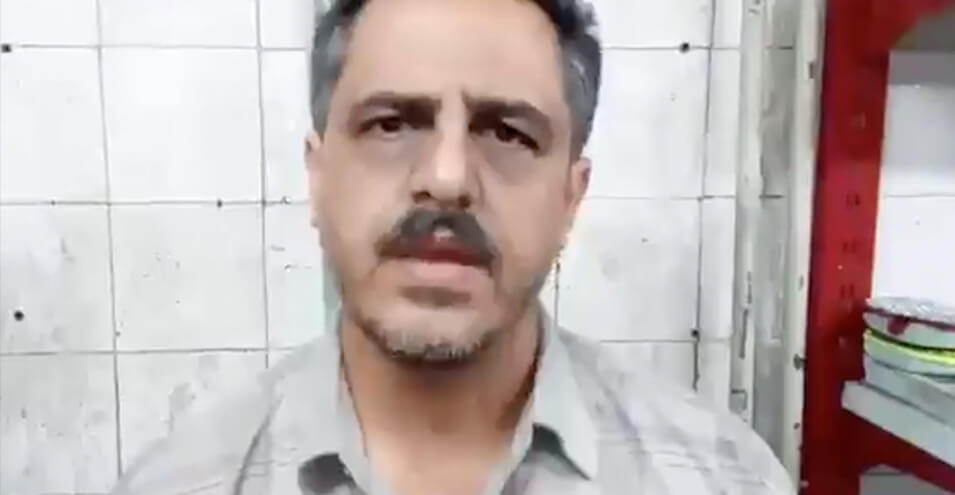
A person named Issa Baziar also told Justice for Iran as an "eyewitness" that "in early August 2018, he witnessed bodies being dumped into newly dug pits at night. The families believe that the authorities poured concrete over the bodies immediately after burying them so that they could not dig up the ground and find the bodies of their loved ones."
According to Justice for Iran, these graves have been "constantly subjected to desecration and government officials' efforts to conceal them" over the years, and "for more than a decade, the area had been covered with garbage and construction debris to hide it from public view and make it difficult for families to access."
According to the report, although the "municipal operation" in this area began in early 2017, "it was stopped after families were informed and human rights organizations and the United Nations warned about the possibility of destroying mass graves."
In May of this year, Justice for Iran and Amnesty International published an investigative report warning against the destruction of "mass graves with the intention of destroying evidence of the 1967 massacre."
According to a report by these two organizations, Islamic Republic authorities have "deliberately" destroyed mass graves of victims of the 2018 massacre of political prisoners in at least seven Iranian cities.
The Islamic Republic's security agencies have also repeatedly destroyed the Khavaran Cemetery in Tehran over the past three decades.
Islamic Republic officials have rarely spoken about the mass execution of prisoners in the summer of 2018, and the burial sites of these prisoners have never been officially announced.
Most of the prisoners executed that year were members of groups such as the People's Mojahedin Organization of Iran, the Tudeh Party, the Fedayeen, and other leftist groups who had previously been tried and were serving their prison terms.
According to Ayatollah Hossein Ali Montazeri, the then deputy leader of the Islamic Republic, Ayatollah Ruhollah Khomeini personally ordered the execution of those who, he said, "have persisted in their hypocritical stance in prisons across the country."
Many of those executed were buried anonymously in mass graves in the Khavaran cemetery.
Source: Radio Farda