The international community should not forget the Iranian president's dark record of human rights violations.
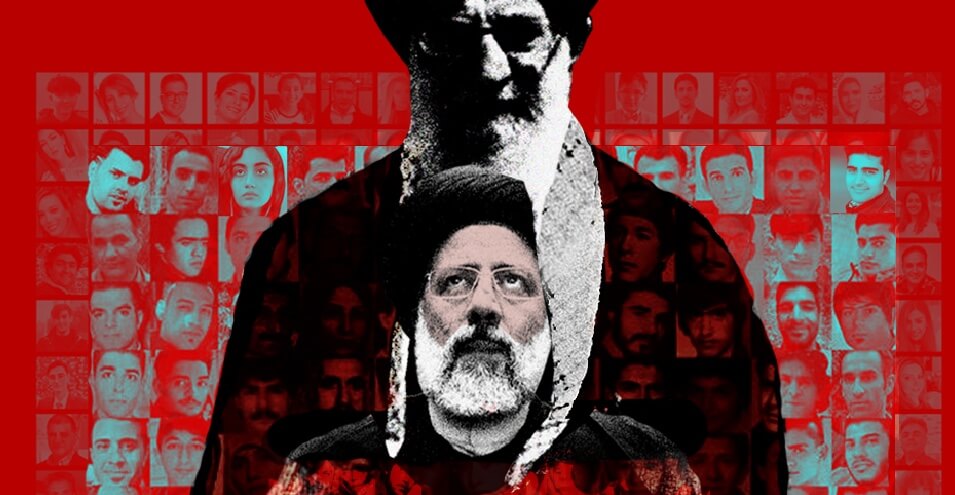
After Ebrahim Raisi's confirmation that he will be the president of Iran for the next four years, concerns have increased about the continuation and increase in human rights violations in Iran. Ebrahim Raisi's announcement of his positions on human rights in his first press conference as President of the Islamic Republic of Iran and his firm defense of his record as one of the most senior and powerful figures in Iran's judiciary over the past forty years, demonstrates the government's determination to continue security and judicial confrontations with civil and political activists and the lack of accountability and transparency regarding human rights violations in Iran.
Hadi Ghaemi, director of the Human Rights Campaign in Iran, referring to Ebrahim Raisi's dark record in the judiciary, said: "The presence of Ebrahim Raisi as President of the Islamic Republic of Iran should not cause his dark record in the judiciary and his direct role in numerous human rights violations, such as the executions of 2018, to be forgotten."
Ghaemi emphasized: "Creating a special mechanism to initiate criminal investigations into Ebrahim Raisi's accusation of crimes against humanity is the most necessary step that must be pursued by the UN Human Rights Council, in collaboration with human rights institutions and civil society, so that the political positions of individuals do not hinder the pursuit of justice to discover the truth and implement justice."
The Human Rights Campaign in Iran, while condemning the illegal process of holding presidential elections in Iran and the government's attempt to take advantage of one of the most important manifestations and paths of people's participation in determining their own destiny, namely "elections", to "appoint" people close to power, considers Ebrahim Raisi's presence in the presidency a clear warning to civil society and critics of the status quo; Ebrahim Raisi's record of suppressing political critics and opponents, intensifying violent confrontations with civil activists such as ethnic and religious minority rights activists, and the increasing influence of security forces in the country's judicial system, especially during his short term as head of the judiciary, indicates that this view will continue to be pursued in the Raisi administration.
Ebrahim Raisi's assumption of the presidency increases the possibility of using repressive forces in the face of popular protests; protests by various segments of society, who mainly have livelihood demands and hold the government directly responsible for resolving their crises, and the history of judicial clashes in the government under Ebrahim Raisi with labor activists and protesters, increase the likelihood of continuing and escalating security and judicial clashes.
The Human Rights Campaign in Iran calls on the international community and human rights organizations and institutions to hold the 13th President of Iran accountable for the continued and repeated violations of human rights over the past forty years, taking into account Ebrahim Raisi's long and dark history of repeated human rights violations and his direct participation in the execution of more than 4,500 political prisoners in 1988.
The Human Rights Campaign in Iran considers Ebrahim Raisi's statements about his role in the 1988 executions as a clear and unambiguous example of his admission of responsibility for this act, and calls on the international community not to forget that Ebrahim Raisi is one of the most important human rights violators in Iran, and that the necessary grounds must be provided for summoning and investigating him regarding the 1988 executions of prisoners in Iran.
In his first press conference, which was held in the presence of domestic and foreign media, Ebrahim Raisi, in response to a question about the numerous accusations of human rights violations during his many years in the judiciary, said, "I am accused of human rights, but I should be encouraged."
Referring to Ebrahim Raisi's statements in his first press conference as President of Iran, Hadi Ghaemi said: "Ebrahim Raisi's defense of his role in the 1988 executions in Iran reflects the government's thinking about human rights violations in the country and the authorities' insistence on continuing their methods of suppressing civil and political society in the future."
According to Hadi Ghaemi, "Any silence or appeasement in the face of the government's repressive thoughts and actions against the people could weaken emerging civil movements in Iran, including the rights movement in the coming period."
After Ebrahim Raisi was appointed president of Iran, Amnesty International issued a statement calling on the UN Human Rights Council to establish a mechanism to investigate Ebrahim Raisi's crimes against human rights, so that justice can be administered independently by analyzing evidence and documents that indicate his role in committing serious crimes under international law.
Source: Human Rights