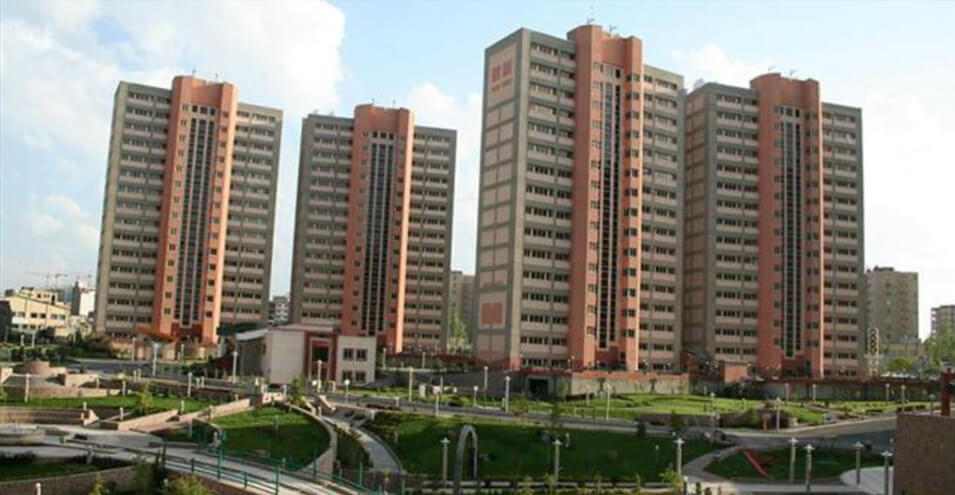
National uprising in Zahedan by the Baloch people and support of "Mawlawi Abdul Hamid" for the prince's call
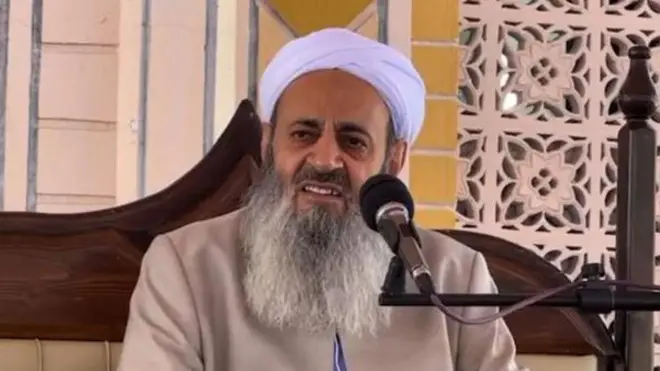
On the thirteenth day of the national uprising, internet shutdowns and security threats failed to stop the protests, and Zahedan became the center of the national uprising, and "Mawlawi Abdul Hamid" supported the protests and the prince's call.
Today, Friday, January 9, is the 13th day of the Iranian national uprising against the Islamic Republic, with a nationwide internet blackout and heightened security threats. Reports from inside the country indicate that popular protests are continuing in several cities, especially in the province of Sistan and Baluchestan. Although the widespread internet blackout has seriously disrupted free information, it has not been able to stop protesters from taking to the streets.
According to reports and information published by those who have access to the Starling Internet, on Friday, January 9, protesting citizens took to the streets in cities including Zahedan, Konarak, and Mashhad. The main focus of the protests was reported to be in Zahedan and its surrounding areas.
Local Baloch sources announced that on Friday afternoon, as protests by Baloch citizens began in Zahedan after Friday prayers, military and security forces near the Makki Mosque opened fire directly at the protesters. According to these reports, a number of citizens were injured during the shooting.
Videos released by the Baloch Activists Campaign show that, amid a heavy security environment, a group of women in Zahedan held street demonstrations and chanted slogans including "Death to Khamenei" and "From Zahedan to Tehran, I will sacrifice my life for Iran."
The campaign also reported that on Friday afternoon, protesting citizens in Konarak city took to the streets from the area of the Grand Mosque to the Lanej Square. According to local sources, at the same time as this gathering, the presence of military and law enforcement forces on the main streets of the city increased noticeably, and the atmosphere in Konarak became highly secure.
In one of the most important positions in recent days, Mawlavi Abdul Hamid, the Sunni Friday prayer imam of Zahedan, openly supported the nationwide protests and the call for the resignation of Prince Reza Pahlavi in his Friday prayer sermons on January 9.
Referring to the massive demonstrations last night, he said, "Last night, everyone witnessed that Iranian people of all orientations came to the scene." Abdul Hamid added, "There is a call for tonight as well, and people will come to the streets again."
He also explained the living conditions of the Iranian people and said: "A large number of Iranian people are in need of bread."
"And many citizens barely eat one meal a day." The Friday prayer leader of Zahedan warned of the consequences of this situation continuing, adding: "Cemeteries may be created due to hunger."
However, Abdulhamid stressed that the protests go beyond economic demands, continuing: “The Iranian people have risen up for their greatness and dignity.” He added, referring to the ruler’s corruption and mismanagement: “They have plundered many national resources.”
He also reminded that the people of Iran have protested and died many times in recent years.
Abdul Hamid stated, “The Iranian nation is determined to place worthy individuals at the top of power, and the protesters’ slogans show that the people want freedom and justice.” He continued, referring to his change of position, saying, “A few years ago, I was saying a referendum, but now I am saying surrender to the will of the nation.”
In the end, Molavi Abdul Hamid warned the military and security forces: "Do not stand against the Iranian nation." He also emphasized: "The will of the nation today is stronger than their will in 1979."
Hours after the millions of people protested on Thursday night, the internet in Iran remains cut off or severely restricted. This situation has made it nearly impossible for Iranians inside the country to communicate with their families and media outlets outside Iran, and has caused widespread concern among citizens inside and outside the country.
Meanwhile, in a video message, Prince Reza Pahlavi thanked the large turnout and urged those who were still hesitant to join the protests. “I am proud of each and every one of you who took to the streets across Iran on Thursday night,” he said. “Those who were hesitant, join your fellow countrymen on Friday night (January 19, 8 p.m.) and increase the number of people so that the regime’s ability to suppress them will be even less,” he added.
Prince Reza Pahlavi also said, referring to the internet shutdown: "I know that despite the internet and communications shutdown, you will not leave the streets. Be assured that victory is yours."
After the presence of millions of people in the streets and the statements of Mowlavi Abdul Hamid and his support for the prince's call and the people's protests, the Islamic Republic's authorities issued more explicit threats against the protesters. Gholamhossein Mohseni Ejei, the head of the judiciary, called the protesters "rioters and troublemakers" and said: "They will be dealt with decisively, maximally and without any legal concessions."
At the same time, the Secretariat of the Supreme National Security Council of the Islamic Republic announced in a statement that security and judicial forces would not compromise with "saboteurs" and claimed: "Those who protested against economic conditions will not do anything that will worsen the economic damage."
Alongside domestic protests, Iranians abroad also continued their support rallies. For example, a number of Iranians living in London, Manchester, Germany, and Sydney held protest rallies yesterday and today, Friday, in support of the Iranian national uprising.