The Islamic Republic's judiciary opposed the "conditional release" of Vida Movahed, a woman protesting compulsory hijab.

Payam Darfashan, the lawyer for Vida Movahed, a woman whose protest against compulsory hijab has made headlines in the past two years, says that despite her request and the conditions, judicial authorities are opposing her request for conditional release.
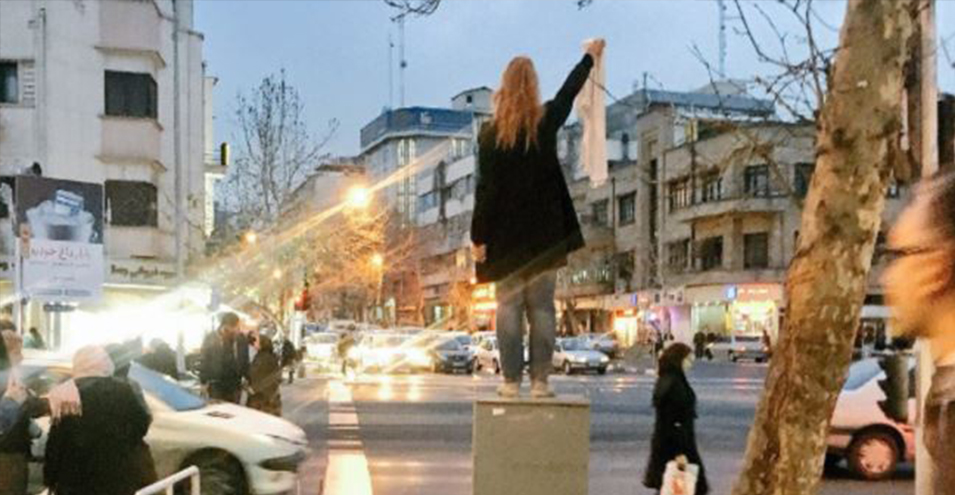
In January 2017, Vida Movahed protested against the mandatory hijab by climbing an electrical box on Enghelab Street without a hijab and hanging a white scarf on a pole. After her, other girls protested and became known as the Girls of Enghelab Street. Ms. Movahed was arrested for a while at the time, but in November 2018, she protested in a similar manner in Enghelab Square. She, who has a young child, was sentenced to one year in prison by the Iranian judiciary.
Ms. Movahed's lawyer, Payam Darafshan, wrote on her Instagram on Wednesday, June 1, that the "Ershad Court" had not agreed to her request for conditional release.
Under the laws of the Islamic Republic of Iran, individuals who do not have serious crimes can apply for conditional release after serving a certain period of their sentence. Judicial authorities usually reject these requests from imprisoned political critics and civil society activists.
Her lawyer wrote in an Instagram post that Vida Movahed was bored and had lost weight in prison. He also expressed concerns about the custody of Ms. Movahed's young child.
Previously, the US State Department strongly condemned the severe repression of women's rights activists in Iran in a statement and called for an end to the harassment and imprisonment of women who are only demanding their basic and fundamental rights.
The statement also refers to the unjust one-year prison sentence for Vida Movahed, the initiator of the Girls of Revolution Street protest movement, and the 20-year prison sentence for Shaparak Shajarizadeh.
Source: Voice of America