The unquestioning hand of state religion in the pockets of the people
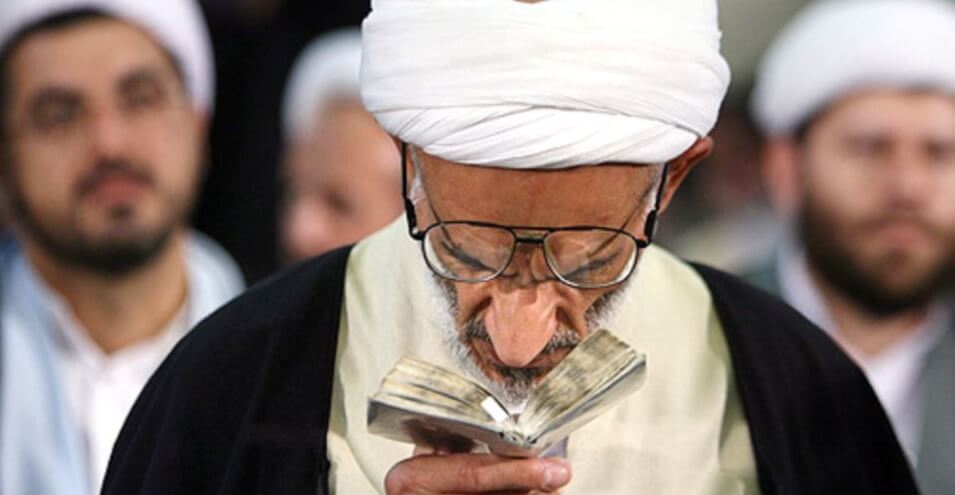
For several years, the debate and controversy surrounding the financial costs of government-affiliated religious organizations and institutions has been brought to the public arena, with the amount of money allocated in the country's annual budget for a number of religious organizations being made public and reported in the media.
These large and small figures, which include the costs of seminaries, Islamic (Shiite) propaganda agencies, and various religious foundations and "study centers," have raised many questions about the benefit of these heavy costs and why they are paid for from the people's pockets.
In the list of organizations that receive generous government assistance, alongside seminaries and Basij, there are names of centers such as the "Ahl al-Bayt World Assembly", "Representation of the Supreme Leader in Hajj and Pilgrimage", "Quranic Culture Development Partnership Fund", "World Assembly of Islamic Denominations", "Coordination Council for Islamic Propaganda", "Islamic Culture and Communications Organization" or "Hajj Qassem Soleimani Cultural Foundation", but no one knows what their real duties are, what they were created for, what their output is, and to whom they answer.
In addition to these ambiguities, what makes it difficult to judge these organizations is their actual financial turnover, which, despite receiving assistance from the public budget, is non-transparent and not publicly known.
What has become more questionable for public opinion in a context of economic crisis, numerous social problems, and significant government financial constraints is the comparison of these figures with other budget lines, especially those related to public services, the environment, or culture.
The government's proposed budget figures for these organizations, which have grown by 34 percent in 1400 compared to the previous year, are compared in the media and social networks with the budgets of the Environment Agency, the Lake Urmia Restoration Headquarters, or the National Emergency Organization, and the government's hand-holding of such advertising institutions is criticized.
For 1400, the government's proposed budget for the environment is about half of the budget for seminaries or the Basij budget, and less than one-fifth of the total money that is supposed to be spent on these opaque "cultural" and religious propaganda institutions and organizations.
Another example is the amount that the government has earmarked for the restoration of Lake Urmia, despite its environmental and economic importance, which does not exceed the budget of the Supreme Council of Seminaries.
Another major victim of this government bias is independent culture, which not only has to deal with security and ideological pressures and restrictions, but also has no financial support from official institutions.
Government budget: the tip of the iceberg of religious advertising spending
The figures that are being interpreted and criticized in the media and social networks these days are not all that is spent in Iran on state religion, the clergy, various religious organizations, or what officials call "cultural engineering" and "valued culture and art."
Large organizations such as the Mostazafan Foundation, Astan Quds Razavi, or the Executive Headquarters of the Imam's Decree, which are among the richest economic organizations in the country, are completely under the supervision of the clergy and are also very active in the field of "culture," that is, Islamic propaganda by the government.
All ministries, public agencies, and even government or private production centers inevitably have a budget line for religious affairs and clergy. To show their loyalty to the theocracy, they must help religious rituals and ceremonies or religious organizations in various ways.
For example, municipalities allocate part of their budget to religious affairs. For example, the Tehran Municipality, especially during the Ahmadinejad and Ghalibaf eras, generously provided financial assistance to various organizations, associations, religious boards, and foundations, some of which were established in the last 10-15 years, and this practice continues to this day.
Education should hold religious ceremonies and rituals in schools, send clerics to schools and pay them travel expenses (the same salary). Factories and economic centers should set aside a share for Friday prayer leaders, clerics, and religious organizations, or spend money on religious ceremonies and activities.
All of these expenditures can be called the "economy of state religion" that drives the vast apparatus of religious propaganda in the service of the Shiite political system. Such a close economic and organizational relationship between religious institutions and the government is a special phenomenon that is perhaps rarely seen in other countries in the world. What makes this characteristic of the Islamic Republic even more prominent is that the heavy expenditures of this pervasive propaganda and ideological system in the service of the government are also taken from the pockets of society.
The transformation of the why and function of religious institutions
The discussion about the budget of religious organizations and institutions and their sources of funding has a financial aspect that is related to the economy of state religion. This part of the discussion has serious limitations due to the lack of transparency of many of the financial sources of state religious organizations and clergy, and the controversy over the share of state religion in the public budget shows that matters related to the turnover of state religious propaganda are not transparent and no one is accountable in this.
Besides the economic aspect, another important debate over the functioning of these religious organizations is their reason for existence and their place in the political order of the theocracy. A number of Iranian media outlets (including the newspaper Jomhoori Eslami), either themselves or through the words of one or another political, social or religious figure, have criticized this government meddling and the dependence of religious institutions on the state budget, calling the current situation worrying compared to the pre-revolutionary era when such centers were financially independent.
The Islamic Republic newspaper, December 7, 2020, writes, among other things, "Before the victory of the Islamic Revolution, both propaganda, research, and religious education were carried out with public money, and the output of the seminaries was very positive, efficient, and effective. Today, when these institutions are funded by the government, there is no news of that previous output, nor do they have a strong connection with the people."
It is correct to point out this fundamental change in the functioning of the institutions affiliated with the Shiite clergy, but it seems that the author is not paying attention to the fundamental transformation that has occurred in the Islamic Republic.
Over the past four decades, we have witnessed a fundamental shift in the purpose and goals of these organizations and institutions, making them difficult to compare with the past. Unlike in the past, today the religious system and a large part of its affiliated organizations have become state-owned and have become tools in the service of the theocracy. Shiite religious institutions and apparatuses in Iran no longer deal with religious issues in the same way as before, nor do they have a relationship with the people as they did in the past.
The religious government does not provide these financial donations without expectations and expects these organizations to be followers and supporters of the religious political order. A significant part of the historical institutions and other colorful organizations that have emerged in these years are responsible for legitimizing and justifying the rule of the Shiite clergy or have officially become its propaganda mouthpieces. It is enough to look at the fate and isolation of disaffected clerics, opponents of the religious government and the guardianship of the jurist, to realize the turn that has occurred in the functioning and status of religious institutions in these four decades.
The statehood of the Shiite religion means that the main institutions of this religion in Iran have also become a subsidiary of the ruling political power and have lost their traditional relative independence. The main function of the state religion, represented by the clergy affiliated with the power institution, is to participate in what the government itself calls “cultural engineering” with the aim of preserving and strengthening the political system. This is the main concern and the supreme interest for which one can even “abandon the night prayer”. The main turn has occurred in this area.
The main duty of a religion that feeds on government money is to unquestioningly support the ruling political order. This is the cost that the religious government pays from society's pockets to the Shiite religious institutions in exchange for their religious and political services.
The financial cost of the vast army of government clergy
The issue of the functioning of religious institutions (Shiite) is also linked to the status of the clergy in the Islamic Republic.
Although there are no figures in Iran's official statistics on the exact number of clerics, it can be said that they constitute the main workforce of the state-run religious economy. In fact, perhaps a significant part of this network of government propaganda organizations is also responsible for creating jobs for clerics.
In the four decades since 1979, being a cleric has become a thriving career, and one of the reasons why the number of seminary students has increased by about 7 times in the last 40 years (from about 15,000 in 1979 to more than 100,000) is due to this government and semi-government job market. The government's meddling in paying for Shiite religious organizations actually means paying part of the expenses of the army of clerics, whose numbers are increasing every day.
The clerics who are present in the executive body of the government, educational or military centers, and large and expensive religious-ideological organizations also act like members of a political party. From the Ayatollah and Hojjatoleslam to the madhhab and students, all of them use the available spaces and facilities to "keep alive" the Shiite government and its velayat-e-faqih. Some have government jobs or run the seminary and the Islamic propaganda organization, some are involved in the training of Iranian and foreign students loyal to the government, others organize mourning ceremonies, and some take "fans of the Ahl al-Bayt" to Karbala on foot.
The unprecedented expansion of religious ceremonies and rituals and the transformation of their activities in recent years, led by the clergy, serve this pervasive cultural engineering.
That part of the clergy that does not want to participate in this grand government show and sit at this colorful table will remain on the sidelines and will not receive anything from this "blessings-giving."
Independent clerics or those who do not want to become pawns in this propaganda system or become tools in the service of the government face the risk of isolation and even repression, and their voices are less heard in the din of state-run religious propaganda.
Source: Radio Farda