Zarif defends government's position at Caspian summit: We saw the greatest benefit for Iran
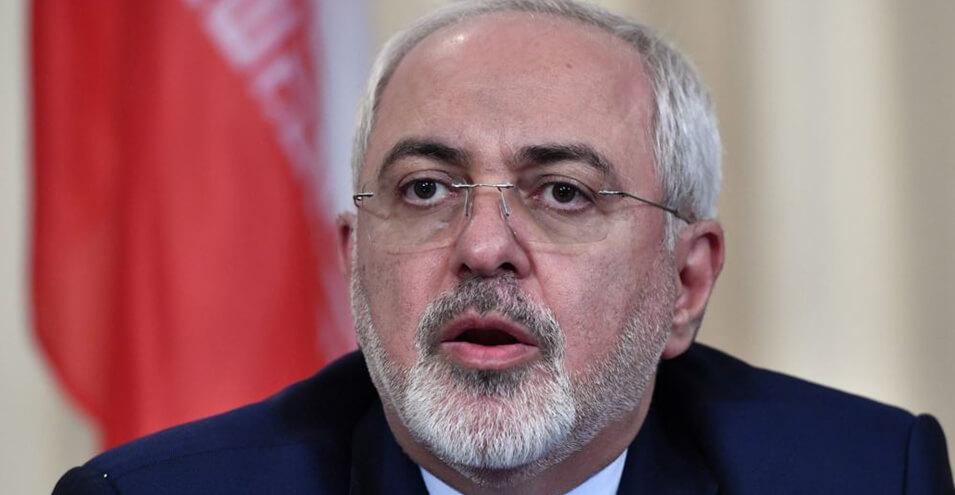
In a renewed defense of the position and actions of the Hassan Rouhani government regarding the legal regime of the Caspian Sea, Foreign Minister Mohammad Javad Zarif says that the new convention does not define "any borders or territories" and that both notions of 50 percent or 11 percent of the Caspian Sea belonging to Iran are "incorrect," "baseless," and "imaginary."
On Wednesday night, in a special news talk show on Iranian TV Channel 2, Mr. Zarif defended Tehran's presence at the Aktau meeting in Kazakhstan and the signing of the Convention on the Legal Regime of the Caspian Sea.
Following speculation and reports that emerged after the Caspian Summit about Iran's share of the sea, Hassan Rouhani, Mohammad Javad Zarif, and Mahmoud Vaezi, the President's Chief of Staff, on Wednesday denied that Iran would be disadvantaged among the five countries that border the Caspian Sea.
The leaders of the five Caspian littoral states signed the Convention on the Legal Regime of the Caspian Sea in the Kazakh city of Aktau on Sunday. The convention made no mention of the countries' share of the Caspian Sea and postponed the resolution of the dispute to the future.
However, immediately after this summit, speculation arose, especially in cyberspace, that Iran had agreed to a share less than its rightful share.
Responding again to these speculations, Mohammad Javad Zarif said on Iranian television on Wednesday night: "This convention has been under negotiation for 21 years," and "the negotiations related to this convention took place in the best conditions in Iran, when sanctions had been lifted and public opinion towards Iran was good."
According to the Iranian Foreign Minister, the Convention on the Legal Regime of the Caspian Sea "not only preserves our territorial integrity, but also enables us to maintain and expand our friendly and cordial relations with our northern neighbors."
Contrary to most comments on this subject, especially in cyberspace, the Iranian Foreign Minister added that in this convention, the government saw "the greatest benefit" for Iran's national interests and expediency.
He considered both speculations about Iran's 50 percent and 11 percent share of the Caspian Sea "illusory" and "baseless," saying that "neither 50 percent has any basis nor 11 percent, which is based on an illusory notion that the former Soviet Union wanted to impose on Iran, and which has never been formed and will never be."
In response to speculation that Iran was "coming short" of its share, he added that "no border or territory has been determined" in this convention and that "a preparation has been made for future negotiations so that, God willing, the baseline will be preserved and drawn in accordance with the country's national interests."
Regarding the allocation of the five countries in the Caspian Sea, he also said that "there has been no division of subsoil resources or areas where each country can exclusively use subsoil resources" between Iran, Turkmenistan, and Azerbaijan.
Zarif emphasized: "We did not agree on the baseline. If someone is talking about determining the share, Iran has not had anything formed for them about determining the level. There has only been an agreement between Russia and Kazakhstan for the subsoil, which dates back 20 years."
The Iranian Foreign Minister stated that negotiations on determining the baseline are scheduled to begin in three to four months, adding: "The parliament has the opportunity to review this convention because it will not be effective until it goes through the legal process."
Following the signing of the convention, and especially after BBC Persian's interview with Rajab Safarov as "one of the Russian experts participating in the negotiations on the legal regime of the Caspian Sea," speculation was fueled that Iran had given up its 50 percent share and had proposed a 20 percent share for each country, a speculation that the Iranian Foreign Ministry rejected and called "baseless."
Mahmoud Vaezi, Rouhani's chief of staff, also said in this regard that "the issue of Russia's 50 percent share of the Caspian Sea has never been raised" and "foreign media made statements that, unfortunately, had some resonance domestically."
Hassan Rouhani also said in a cabinet meeting that "Russia, which once considered most of the Caspian Sea to be its own, is today content with a 17 percent share of this sea."
Iran has been emphasizing the equal division of the Caspian Sea for years, but Russia and other countries have signed bilateral agreements to divide the lake before signing the convention.
Before the collapse of the Soviet Union, Iran and the Soviet Union each had a 50 percent share of the Caspian Sea, but after the country was divided into its satellites, the sea's coastline actually extended to five countries.
Source: Radio Farda