Opposition to public executions: Don't execute in my city
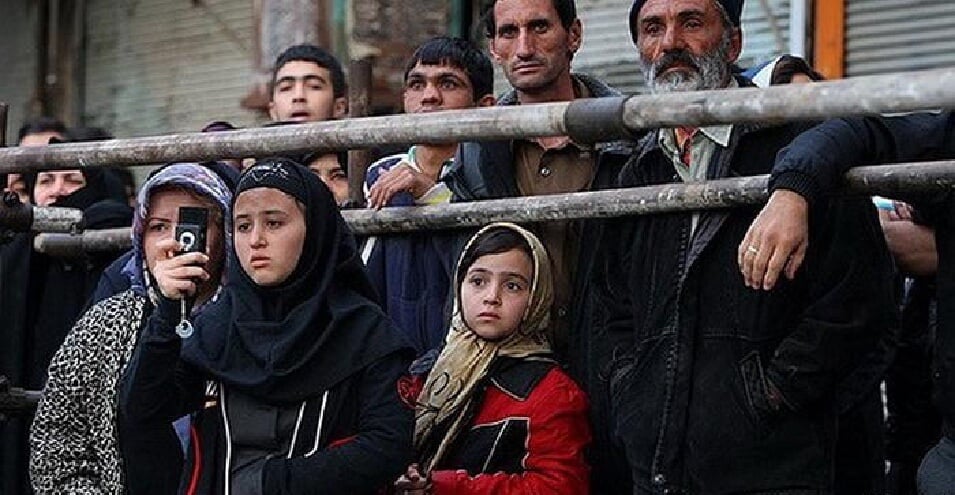
The Iranian Human Rights Organization warned against the resumption of public executions. The organization's statement was issued after news broke that two defendants had been sentenced to death in public in Foladshahr, Isfahan.
According to Iranian media reports, two defendants in premeditated murder, Mohammad. Q, 38 years old, and Sadeq. M, 25 years old, have been sentenced to public execution in a primary court in Foladshahr, Isfahan, on charges of murdering a police officer.
According to Masoud Masoudifar, the head of the court, the cases of the two defendants were processed "quickly" and the death sentence was issued "in the shortest possible time."
In a statement, the Iranian Human Rights Organization has warned against the resumption of public executions, referring to these sentences.
The statement said: "Given that in the past year and a half, public executions have been suspended after decades due to the COVID-19 pandemic, the return of this cruel method of carrying out the death penalty must be met with strong opposition from Iranian civil society, human rights activists, and the international community."
Mahmoud Amiri-Moghaddam, the director of this organization, emphasized that the death penalty is a cruel punishment and that public executions “not only do not have a deterrent effect, but also fuel the cycle of violence in society and its sole purpose is to intimidate people.”
The statement also referred to the "lack of transparency" in the way the judiciary works in the Islamic Republic, and in this regard, mentioned "the attribution of murder charges to protesters, such as the case of Navid Afkari and Mustafa Salehi," although, according to the organization, the details of these cases are not available.
In this regard, the Iranian Human Rights Organization has also published a tweet with the Persian and English hashtags #NoDeathPenaltyInMyTown.
Creating local campaigns
The human rights organization has recalled that, according to documents from the United Nations Human Rights Committee, public executions are contrary to the provisions of the International Covenant on Civil and Political Rights. Article 7 of the Covenant states: “No one shall be subjected to torture or to degrading treatment or to inhuman or cruel punishment.”
The Iranian Human Rights Organization referred to a survey commissioned by the organization and the Global Coalition Against the Death Penalty, writing: "More than 86 percent of 20,000 participants living in Iran said they opposed public executions."
In its statement, the organization called on Iranian civil society to address local authorities to abolish public executions through campaigns, "because the Provincial Security Council, headed by the governor, who is considered a representative of the government, has the authority to veto public executions."
Source: DW