Iran's rank in the annual corruption index: 146 out of 180 countries
Transparency International's indicators show that bribery, corruption, and government collusion are particularly bad in southern Africa, and that wealthy industrialized countries are also lagging behind in combating corruption. Iran scored 26 out of 100 points.
Transparency International says the fight against corruption around the world is faltering. The organization's latest report shows that many of the 180 countries surveyed do not have an acceptable record in combating government and financial corruption.
Transparency International annually ranks countries on a scale of zero to 100 to determine the extent and intensity of corruption. The most notable finding in the organization's 2019 assessment is that more than half of the countries scored less than 50 points. The best scores went to Denmark and New Zealand, with 87 points. Finland, with 86 points, followed by Singapore, Sweden, and Switzerland, with 85 points.
The average rating is 43%, and no country has achieved a perfect score of 100. Two-thirds of countries have scored below 50.
Iran is ranked 146th in the survey, scoring 26 out of 100 points, its worst ranking in several years. In 2018, Iran was ranked 138th in the table with 28 points, and in 2017, it was ranked 130th.
Angola, Bangladesh, and Mozambique are ranked alongside Iran in Transparency International's 2019 ranking.
Transparency International notes that corruption thrives in an environment where legal and democratic structures are in decline; where democratic institutions are weakened and the space for civil society and independent media is narrowed.
Industrialized countries have regressed.
Statistics show that even in the seven major industrialized countries of the world, there has been no significant improvement in the fight against corruption. On the contrary, in four countries - Canada, France, the United Kingdom and the United States - corruption has actually increased.
The situation in Germany and Japan remains the same (ninth place and 80 points), and only in Italy has the situation improved slightly compared to 2018.
Transparency International evaluates bribery, political and financial collusion, and government and commercial corruption, and its criteria and standards are the opinions of experts and country managers.
The clear link between corruption and instability
The worst scores were for Somalia, South Sudan, Syria and Yemen, which are countries with war, unrest and violence, highlighting the link between corruption and instability, said Marwa Fattafeh, a Transparency International advisor for the Middle East and North Africa.
After the four examples mentioned, sub-Saharan Africa ranks worst in Transparency International's charts. One reason for this is the region's rich raw material resources and the fact that foreign companies do not invest locally and for the benefit of the people of this region.
"What can we expect from an economy that doesn't even have any infrastructure for healthcare to combat corruption?" Mokgabo Kope, a fellow at Transparency International in Southern Africa, told DW.
“The lack of progress in this area is disappointing and has had a devastating impact on the lives and fates of citizens,” says Patricia Moreira, Director of Transparency International. She notes that improving people’s lives and ending corruption requires challenging the relationship between politics and finance.
Protest as hope
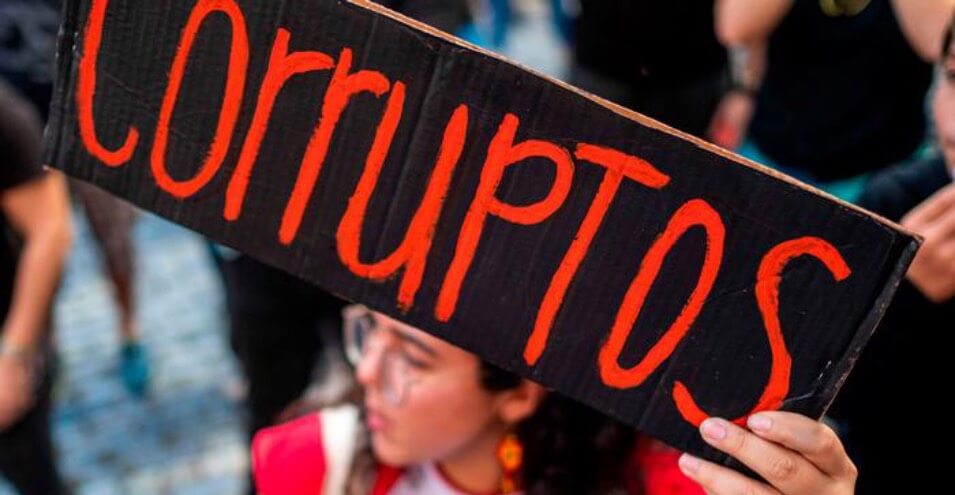
However, all over the world, whether in Iraq, Chile or Lebanon, people have taken to the streets to protest against bribery, nepotism and financial and political undercurrents.
Although progress is limited and the signs are discouraging, the fact that people continue to take to the streets against economic corruption and put pressure on governments is in itself hopeful.
Ms. Marwa says: "I am almost certain that we will see changes in the future. The popular uprisings show that they have not given up and are continuing to resist to get their rights."
Source: DW