North Korean leader accepts nuclear disarmament; parts of the content of the joint document

An hour after the leaders of the United States and North Korea signed a "joint document," the first details of the document reveal Kim Jong Un's acceptance of North Korea's nuclear disarmament.
AFP and the Associated Press have confirmed that Mr. Kim has committed to denuclearization.
The US president said during the signing of the document that nuclear disarmament would begin "very soon." The US wants disarmament and has said it will not lift heavy sanctions on North Korea until it is sure of its good intentions.
AFP also reported that, based on the agreement between the leaders of the two countries, the talks will continue under the chairmanship of the US Secretary of State and a senior North Korean official.
Signing a joint document
North and South Korea have only signed one armistice agreement since the 1953 war, along with China and the United States. The document the president signed today is not a treaty, due to the absence of China and South Korea, and is therefore considered a comprehensive document that could include issues such as denuclearization, a halt to the missile program, and the lifting of sanctions by North Korea.
After signing this document, President Trump said that what was signed covers everything and that he was happy to sign this comprehensive document.
The US President emphasized that "today's meeting opens a new page in relations between the two countries," adding that after these meetings, the world will witness great changes.
After signing the comprehensive document, Kim Jong-un thanked Trump and said that this meeting will close the past. A new era will begin and the world will see a great change.
Historic meeting
The historic meeting between US President Donald Trump and North Korean leader Kim Jong Un took place at 9 a.m. local time on Tuesday at the Capella Hotel on Sentosa Island in Singapore. It is the first meeting between the leaders of the two countries since the end of the Korean War in 1953.
The leaders of the two countries shook hands at the beginning of the meeting and, before beginning their talks, which were held behind closed doors and only in the presence of translators, they stood in front of the cameras of various media outlets around the world for a few minutes and spoke with reporters.
President Trump expressed hope for a fruitful meeting today, predicting that he would have a "tremendous relationship" with Kim Jong Un. The North Korean leader also said he hoped to be able to resolve all the misunderstandings that have existed between the two countries in the past.
After the two leaders' private meeting, which lasted less than an hour with only two translators present, President Trump called the meeting "very, very good" and said the relationship was going to be great.
After a private meeting, President Trump and the North Korean leader, accompanied by high-level delegations from both countries, continued their unprecedented talks. The meeting was followed by a working lunch.
Before this meeting, President Trump had spoken to reporters, emphasizing that North Korea must move toward complete, irreversible, and verifiable nuclear disarmament, and said that this meeting should lead to the formation of a "framework of tough actions that must be followed."
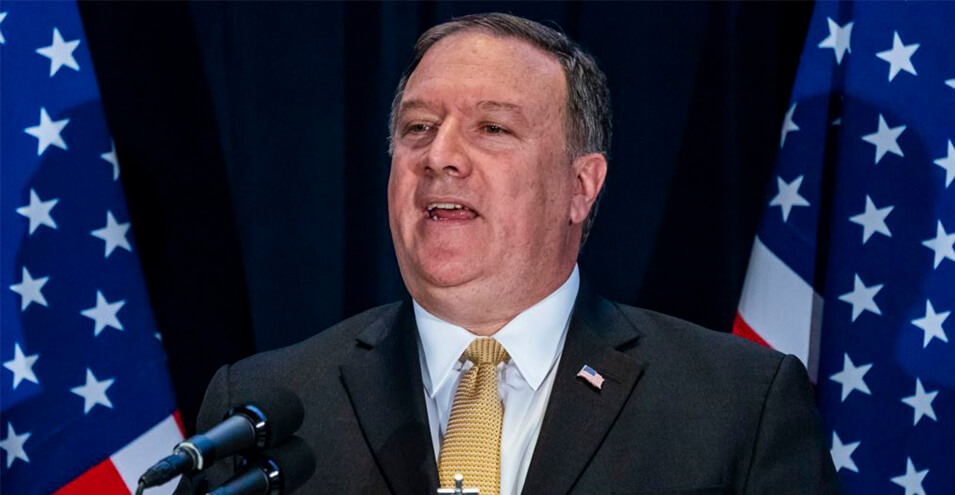
He had previously emphasized that the goal of this meeting was to stop North Korea's missile and nuclear threats, and his administration's Secretary of State Mike Pompeo said earlier on Monday that our demand is the complete disarmament of North Korea and we are willing to provide security guarantees in return.
This historic meeting took place about a year ago, following North Korea's increased missile and nuclear tests, tensions between Washington and Pyongyang rose to such an extent that global concerns about a military conflict on the Korean Peninsula increased sharply.
The war of words between the leaders of North Korea and the United States escalated to the point that both sides, in addition to personal attacks, also threatened military strikes; to the point that President Trump warned in August 2017 that if North Korea continued to threaten, it would face "fire and fury" from the United States.
Read more: The ups and downs of US-North Korea relations under President Trump
Following the US threat, North Korea announced it was finalizing plans to fire four ballistic missiles at the US Pacific territory of Guam. This was met with a strong response from President Trump, who said that if Pyongyang behaved foolishly, the military option was ready.
However, in a sudden U-turn in March, the North Korean leader invited the US president for a direct meeting, which President Trump welcomed. Although the first summit between the two leaders was at one point canceled, it was eventually announced that it would take place on the scheduled date.
After the end of the Korean War and the signing of the Armistice Agreement in July 1953, the Korean Peninsula remains in a state of "neither war nor peace" and a permanent peace agreement has not yet been reached. Currently, about 28,500 US military personnel are stationed in South Korea.
Source: Voice of America