Reuters: US aims to reduce Iran's oil exports below 1 million barrels
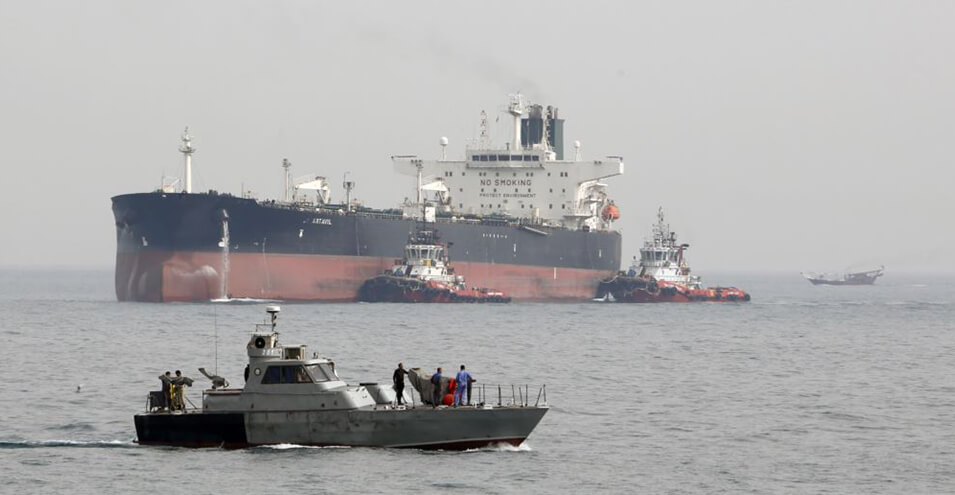
Reuters news agency, citing news sources, says that the Donald Trump administration plans to reduce Iran's oil exports by 20% starting in May, bringing the total to below one million barrels per day.
A source familiar with the latest developments told Reuters: "The [government's] current goal is to reduce Iran's total oil exports to below one million barrels per day."
The news sources mentioned in the March 12 Reuters report said that the Donald Trump administration is aware of the consequences of cutting off all Iranian oil exports on global markets and that "it may be difficult to bring it to zero."
Just one day before the report was published, US Secretary of State Mike Pompeo, in a meeting with executives from major global oil companies and a number of oil ministers, said that the US remains committed to completely cutting off Iranian oil exports.
Brian Hook, the US special representative for Iran, also said at the same conference that the global oil surplus would help the US accelerate its plan to reduce Iran's oil exports to zero.
Officials in the Islamic Republic say that cutting off Iran's oil exports is not possible. Iran's vice president said that Washington's plans in this regard have "failed." A number of senior military officials in Iran have also threatened again to "close the Strait of Hormuz," which, of course, is not very possible from the point of view of a number of experts and analysts.
One of the sources told Reuters that oil prices at $65 per barrel were “the last limit that Donald Trump can handle,” meaning the US president was not keen on raising prices above $65 per barrel, while Brent crude had risen above $67 on the day the Reuters report was published.
At the same time, oil production in Venezuela, a country that ranks first in the world in terms of oil resources, has also affected the increase in oil prices.
US President Donald Trump, who was a frequent critic of the negotiations and then the nuclear deal reached between Iran and six world powers during the Obama administration, has withdrawn from the deal. The US has twice reimposed all previous sanctions and added new entities and names to the sanctions list.
In addition to saying it intends to reduce Iran’s oil exports “to zero,” the US government says it has launched a “maximum pressure” campaign to force Iran to “change its behavior” by imposing “the most severe sanctions in history.” The US Secretary of State has set 12 conditions, mostly related to Iran’s actions and activities in the region, its development of ballistic missiles, and other issues. US officials say they do not intend to harm the Iranian people.
The Islamic Republic says the US withdrawal from the JCPOA, an agreement that was also approved by the UN Security Council, is “illegal.” Tehran has denied the accusation of interfering in the regional situation and says its missile program is “defensive” and that it has no intention of giving it up. Of course, Islamic Republic officials have repeatedly threatened Israel with “annihilation,” an issue that has itself faced criticism from various countries and the UN.
News sources speaking to Reuters have stated that the US government may refuse to extend some exemptions for those countries that have not taken advantage of Iran's oil exemptions.
Greece, Italy, Taiwan, China, India, Turkey, South Korea and Japan are among the countries that have been granted exemptions. India, China and Turkey are among the most important buyers of Iranian oil.
Amos Hochstein, the official responsible for Iran sanctions under President Barack Obama, told Reuters that China and India alone buy between 800,000 and 900,000 barrels of oil per day from Iran.
Looking at the market, Mr. Hochstein says, “it seems reasonable that Iranian oil exports will remain between 800,000 and 1.1 million barrels per day.”
Source: Radio Farda