Shadow of War Over Iran; US Army on High Alert Amidst Domestic Crisis
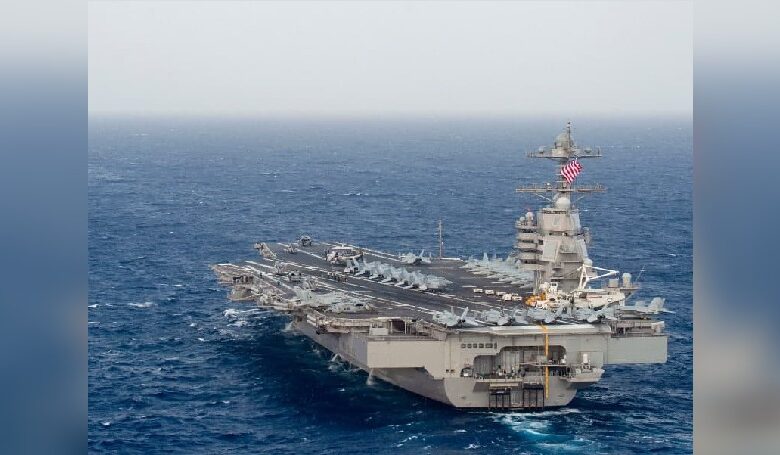
The US military's readiness in the Middle East indicates the shadow of war looming over Iran, and it is spreading at a time when the Iranian people are living under the pressure of repression and insecurity.
As the Iranian people continue to face a wave of repression, mass arrests, economic pressures, and ongoing human rights violations, a new report on US military preparedness has heightened concerns about a more tense future.
According to two American officials, the country's military is preparing for a possible operation against Iran in the coming weeks; an operation that, if ordered by Donald Trump, could turn into a much more serious conflict than previous tensions between the two countries.
The information was released by officials who spoke on condition of anonymity due to the sensitivity of the matter. The release of such details comes just a week after Tehran and Washington held a new round of talks in Muscat, the capital of Oman, which began with the aim of reducing tensions but are now facing new uncertainties.
Reuters also reported that this time, US military planning is more complex than in the past. One US official said that in the event of a sustained operation, possible targets could include Iranian government and security facilities, not just nuclear infrastructure. Such a scenario would significantly expand the scope of the conflict.
Washington announced on Friday, February 13, the deployment of the aircraft carrier Gerald R. Ford, the world's largest, to the Middle East. The ship joins a raft of other military equipment, including the USS Abraham Lincoln, several guided-missile destroyers, fighter jets and surveillance aircraft, that have been deployed to the region in recent weeks. The moves send a clear message of increased US military preparedness in a region already plagued by instability.
Speaking to US troops at a base in North Carolina, Trump also referred to the difficulty of negotiations, saying: “It’s difficult to reach an agreement with Iran.” In response to a question about regime change in Iran, he said: “This is the best thing that could happen.” However, in response to who would be in power in Iran after the Islamic Republic’s regime change, he only added: “There are people.”
The US president, who had previously made reducing Iran's nuclear program his top priority, this time emphasized that this is just one of the things the US wants from Iran. Washington is seeking to include in the negotiations, in addition to the nuclear program, the issue of ballistic missiles and Iran's support for armed groups in the region.
In contrast, Tehran has announced that it is ready to discuss restrictions on its nuclear program in exchange for the lifting of sanctions, but it denies linking this issue to its missile program.
Referring to last year's US airstrikes on Iranian nuclear facilities and asked what was left to target, Trump said: "Dust. If we do that, that would be the least part of the mission, but we'll probably grab whatever is left."
Iranian officials have also warned that any attack will be met with a retaliatory response in response to the transfer of another ship to Iran and possible US attacks on Iran. Ayatollah Khamenei has declared that if war breaks out, this time it will be a “regional war.” Other officials have also warned that if a conflict occurs, energy security will be jeopardized and the Strait of Hormuz will be closed.
The United States has numerous military bases in countries in the region, including Jordan, Kuwait, Saudi Arabia, Qatar, Bahrain, and the United Arab Emirates. However, reports indicate that some Arab governments, including Saudi Arabia, the United Arab Emirates, and Jordan, have stressed the need to avoid military action in talks with Trump and have ruled out using their territory and airspace for a potential attack on Iran.
While political and military actors talk about war and negotiation scenarios, the Iranian people continue to pay the ultimate price for the crisis. There are numerous reports of arrests of civil society activists, pressure on families of those seeking justice, severe religious and social restrictions, and violent confrontations with protesters. For a society that has been grappling with years of sanctions, hyperinflation, and organized repression, the prospect of a full-scale military conflict could be catastrophic.
For Christian media and the world’s awakened consciences, the fundamental question is not just about the balance of power, but about the fate of the people caught in the middle of this conflict; people seeking freedom, security, and human dignity. The future of Iran, whether through negotiations or under the shadow of military threat, is tied above all to preserving civilian lives and ending the cycle of violence.