“Dam construction was destructive to the environment”
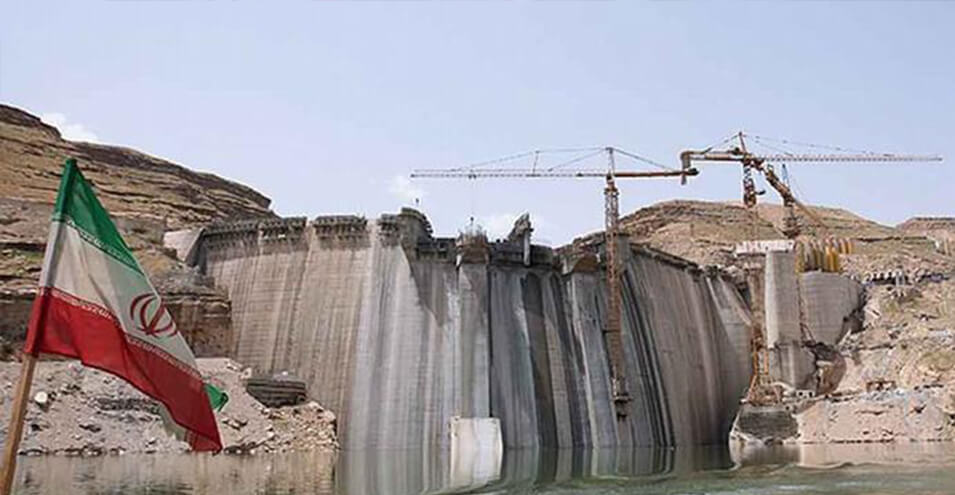
President Hassan Rouhani defended the government's dam-building policy during a visit to flood-stricken areas of Lorestan province. Experts, however, warned that the floods could only impose heavy costs on the government and should not be used as an excuse to build dams in Iran.
During a visit to flood-affected areas of Lorestan province on Saturday, April 20, at a meeting of the Lorestan Provincial Crisis Coordination Council at Khorramabad Airport, Iranian President Hassan Rouhani defended the government's dam-building policy, saying that these dams have had an impact on reducing the damage and losses from the country's recent floods. Rouhani emphasized: "A few years ago, everyone was asking why you built so many dams. You destroyed the environment and spent a lot of money. Let's not forget our judgments of past years."
But the government's dam-building policy, once referred to as "dam-building madness," has been criticized by experts. Anoush Nouri Esfandiari, a member of the strategic council of the Tadbir Ab think tank in Iran, told ILNA news agency: "We may once again forget that the water scarcity adaptation program is very important and once again embark on some ambitious and high-flying programs that cannot be sustained and will only cost us dearly."
A member of the strategic council of the Iranian Water Management Institute also explained the role of dams in controlling floods: "We relied too much on dam construction. We should make decisions based on long-term averages, not on one-year events. Many dams were unable to be filled and were empty for years, and building a dam just because of the possibility of flooding is not a logical and correct way to go. We must adopt better solutions that are more compatible with nature. The effects of dams on the environment are destructive, and we have not found an answer to it, and we have tried to forget about it."
But experts have no doubt that proper management of the water behind the dams could have prevented flooding in some parts of the country. For example, one of the main reasons cited for the Turkmen Desert floods was the failure to drain the water behind the dams before the rains began. Water distribution officials in the region sell the water from these dams to farmers, which prevented the water from being drained from the dams. However, following the torrential rains, the dams were opened, which resulted in a disaster, with many cities and villages being flooded, forcing the Rouhani government to immediately dismiss the governor of Golestan.
Ancient hill slopes
In addition to causing loss of life and property, the flood has also destroyed many ancient monuments. Many of the provinces' ancient monuments are now buried underwater.
Mohammadreza Mohammadian, the head of Lorestan's archaeology department, told ILNA that 20 ancient mounds in Kohdasht have been submerged. According to the head of Lorestan's archaeology department, the most damage has been done to the ancient sites on the banks of the Seymareh River. He said that currently, 20 historical sites in Seymareh, Kohdasht County, have been submerged, and among these sites, 17 sites and artifacts are nationally registered, and three sites have not yet been nationally registered.
He said about the destruction and damage to other flooded areas of Lorestan: "One monument in Pol-e-Dokhtar, two monuments such as the village of Fahra in Aligudarz, which included a historical hill and castle, collapsed, five monuments such as the Deh Mohsen hill in Khorramabad, four monuments in Darood, four monuments such as the Sarab-e Chenar hill in Al-Ashtar, and two monuments such as the Sharafabad hill in Noorabad faced problems with flooding. In Pol-e-Dokhtar, we witnessed the collapse of the historical castle of Baba Bahram. In Borujerd, the Bazazna and Tanjur hills were also damaged."
Source: DW