Three members of the 10th Parliament sentenced to prison
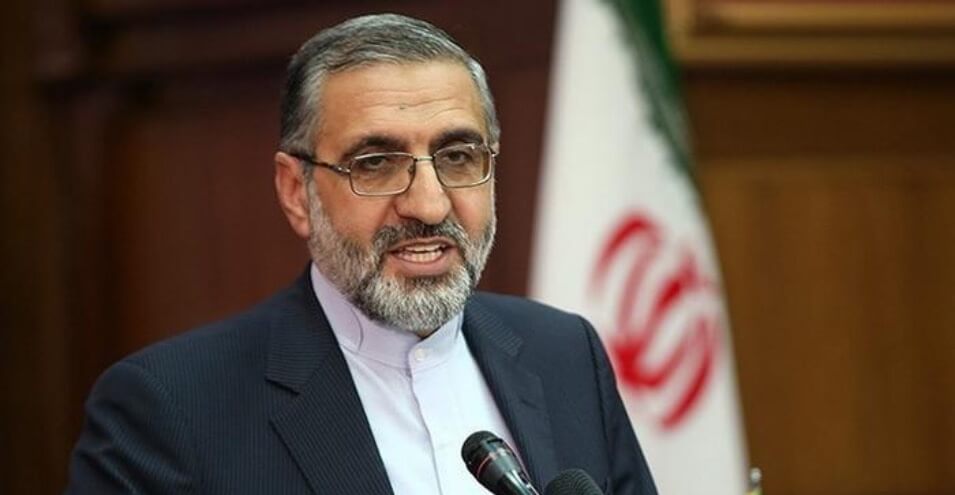
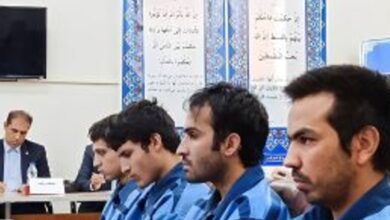
A spokesman for the judiciary announced that two members of parliament have been sentenced to 61 months in prison each. The prison sentence of another member was also confirmed. One of the members said that the judiciary is caught up in the “lust of case-making” and is sacrificing justice for political expediency.
On Tuesday, May 20, Gholamhossein Esmaili announced to reporters that more than forty people had been indicted in the case of disrupting the automobile and currency markets, and said that 34 defendants in the case had been convicted in court.
According to ISNA news agency, a spokesman for the judiciary said that Vahid Behzadi and his wife Najwa Lashidai, whom the media refers to as the "Sultan of Cars and Coins," have been sentenced to death on charges of "participating in a major disruption of the monetary and foreign exchange system," which can be appealed to the Supreme Court.
Behzadi and his wife are accused of disrupting the distribution system of public needs through the pre-purchase of more than 6,700 vehicles from Saipa, participating in money laundering operations worth more than 3 trillion tomans, and smuggling foreign currency through the registration of a formal order. It is said that law enforcement officers have discovered and confiscated 24,700 Tambahar coins and 100 kilos of gold from Najwa Lashidai's home.
The Judiciary Spokesperson also announced that in this case, Mehdi Jamali, the former CEO of Saipa Automotive Company, was sentenced to seven years in prison for participating in disrupting the distribution system, and Reza Taghizadeh Makoei, Saipa's former vice president of marketing, was sentenced to 15 years in prison.
Two MPs convicted of disrupting the distribution system
Fereydoun Ahmadi, a representative of Zanjan and Tarom, and Mohammad Azizi, a representative of Abhar in the 10th term of the Islamic Consultative Assembly, have been introduced as two other defendants in this case, each of whom has been sentenced to 61 months in prison on the charge of "assisting in disrupting the distribution system of public necessities by facilitating the commission of a crime."
On August 20, 2018, some Iranian media outlets reported the arrest of representatives from Zanjan and Abhar in connection with the Saipa company case, writing that they had been released after posting a bail of ten billion tomans set by the prosecutor.
Yesterday (May 19), in his last speech in the parliament, Ahmadi strongly criticized the judiciary, accusing it of continuing to act "as a tool to cover up the country's weaknesses and mismanagement."
Referring to corruption cases in which the main defendants are introduced as "sultans" of automobiles, currency, sugar, or dried fruits, he said: "Carving out the sultan and then eliminating the sultan is a vicious cycle that may work in politics but does not work in economics."
Hiding the consequences of wrong policies?
According to Khabar Online, a representative from Zanjan in the parliament says that wrong decisions, such as announcing a single-rate dollar at 4,200 tomans or the advance sale of coins and cars, "cannot be hidden by executing people and destroying their homes."
Fereydoun Ahmadi added: "The harmful effects of the US withdrawal from the JCPOA and the sanctions that followed it, and the grounding of the country's automotive industry, cannot be eliminated by lynching and executing them, extensive case-building, and strange sentences."
The MP described his accusations and conviction as the result of case-building, and accused the judiciary of being caught up in the "lust of case-building" and of measuring justice "based on political expediency and not fairness and justice."
A member of the Parliament's Industries and Mines Commission stated that the country's poor economic conditions are the result of underemployment, mismanagement, gang warfare, and recklessness, noting: "This economy is the product of abandoning experts, brain drain, and capital. This dysfunctional system cannot be fixed with executions and prisons."
The Origin of Corruption and the “Destroyed Economy”
In another part of his speech in parliament, Ahmadi said: "The country's economy has been destroyed. We have created a ruin that cannot be cured by killing hundreds of other sultans. If we execute and imprison all economic activists, this ruin will not be repaired. The solution must be sought elsewhere."
Many critics believe that corruption and rent-seeking have become institutionalized in the Islamic Republic and have penetrated the fabric of the system. In addition, a large part of Iran's economy is in the hands of government institutions and "special" companies that have no effective oversight over their performance, and their ties to power centers pave the way for them to abuse and remain safe from legal action.
Some observers also believe that the Islamic Republic has suffered from systemic corruption, and this is a stage in which the regulatory agencies and the judicial system have also been infected with corruption. In such a situation, the handling of some cases could be the result of behind-the-scenes economic and political competitions, and in any case, the corrupt decision-making and system are not being confronted.
Mohammad Azizi is another MP who has been sentenced to five years in prison in connection with the corruption case in the car distribution system. Mohammad Mosaed, an Iranian journalist who published an article in connection with the same case last month, was summoned to the Evin Prosecutor's Office by Azizi's complaint and is temporarily free on bail. He wrote in a tweet:
Azizi, who is a member of the Iranian Sports Faction, also strongly defended the bill in recent discussions in the parliament regarding the bipartisan bill to legally ban any contact or communication with Israel, saying that even at the cost of excluding Iranian sports from international competitions, Iranian athletes' competitions with their Israeli counterparts should be completely banned.
Mahmoud Sadeghi's conviction confirmed
Another member of the 10th Parliament who was sentenced to 21 months in prison by the court is Mahmoud Sadeghi, whose conviction was upheld by the Court of Appeal on Monday, May 10. Sadeghi wrote in a Twitter message that the verdict of the first instance court hearing his case was upheld exactly.
The verdict issued against the Tehran representative in the 10th Parliament was based on several cases, the most important of which is “insulting Sadegh Larijani,” the former head of the judiciary. Sadeghi had demanded transparency regarding Larijani’s various bank accounts as head of the judiciary and the functioning of these accounts.
He is one of 75 members of the 10th Parliament whose eligibility was not confirmed by the Guardian Council to participate in the 11th Parliament election.
According to "Ferraro," Mahmoud Sadeghi said: "Contrary to the news that has been published, Amoli Larijani himself has not directly filed a complaint. It is interesting to know that the main plaintiff in the complaints filed was the Tehran Prosecutor, or he himself or the deputy prosecutor of the Tehran Prosecutor's Office filed these complaints."
Sadeghi Abbas Jafari Dolatabadi is the former prosecutor of Tehran. Jafari Dolatabadi was appointed to this position by Larijani in September 2009 and was dismissed in May last year by his successor, Ebrahim Raisi.
Source: DW