Amnesty International: Pourmohammadi's defense of the 1967 massacre indicates his immunity
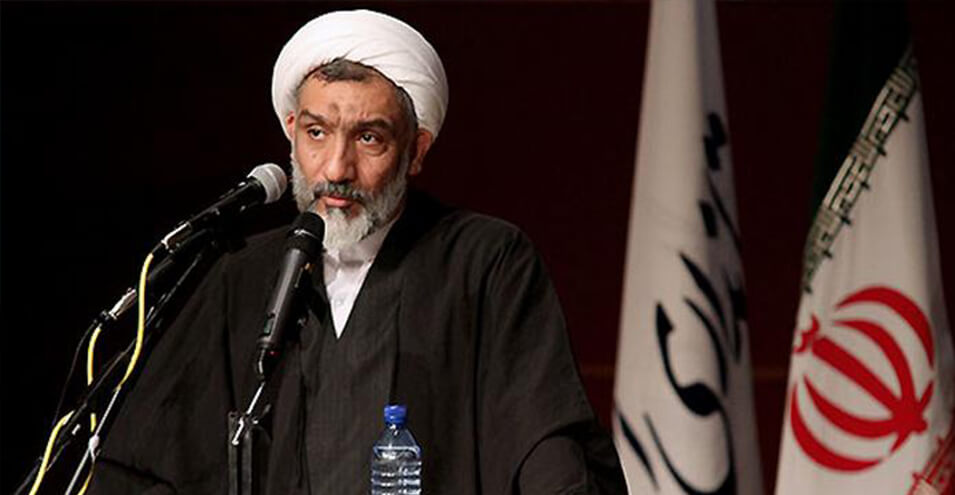
Amnesty International has reacted to the recent defense of Mostafa Pourmohammadi, an advisor to the judiciary, of the mass executions of political prisoners in 2018, considering it as a reason for the immunity of those responsible for the massacre from punishment, and has called for justice to be established.
In a press release issued on Tuesday, July 30, the human rights organization Amnesty International described Mostafa Pourmohammadi's recent statements about the massacre of political prisoners in Iran in 1988 as a sign of his and other perpetrators' immunity from trial and punishment.
Mostafa Pourmohammadi, former Minister of Justice and current Advisor to the Judiciary, whose head, Ebrahim Raisi, is also known as one of those responsible for the mass killing of political prisoners in the summer of 2018, defended these executions in a recent interview. Amnesty International considers Pourmohammadi’s defense to be an indication of his immunity from punishment and accountability.
In an interview with the weekly “Triangle,” Pourmohammadi defended various murders, such as “chain murders” in the 1990s, and regarding the massacre of political prisoners in 1988, he said that he was not the one who should be held accountable for political executions, but rather that “the hypocrites should be brought to trial and each one of them should be held accountable.” The Islamic Republic uses the term “hypocrites” to refer to the “People’s Mujahideen of Iran.”
In the early days of August 8, 1988, Ruhollah Khomeini, the founder of the Islamic Republic of Iran, issued a decree appointing a four-member committee known as the Death Committee to re-examine the cases of political prisoners, many of whom had previously been tried and sentenced to prison. In this letter and in its margins, he emphasized that anyone who continued to “hold a hypocritical position” should be treated “with revolutionary anger and hatred” and executed.
These executions, which violated many international treaties and conventions and domestic laws, were so widespread that they attracted many opponents. The most famous of these opponents at the time was Hossein Ali Montazeri, who was removed from his position as deputy leader for criticizing the practice.
There are no exact statistics on the number of people killed in the summer of 2018. In his memoirs, Montazeri cited reports he received as 2,800 to 3,800, while some sources estimate the number to be close to 5,000.
Threats to those demanding accountability and truth
Amnesty International is particularly concerned about the accusations of “supporting terrorism,” “conspiracy,” and collusion with Iran’s geopolitical enemies that Mostafa Pourmohammadi has leveled against those who are calling for accountability for the killings of political prisoners and the truth. Pourmohammadi believes that these are the individuals who should be prosecuted.
Amnesty International warns that Pourmohammadi's statements, as well as the appointment of Ebrahim Raisi to head the Islamic Republic's judiciary in March 2019, mean that survivors of mass executions, families of those executed, and human rights defenders are at risk of persecution simply because they are demanding the truth.
This international human rights organization, referring to the Islamic Republic’s authorities’ use of force to intimidate and suppress those seeking accountability and truth, writes that current and former officials of the Islamic Republic should not be allowed to have a protective shield against accountability for the mass executions of political prisoners, which Amnesty International has called “extrajudicial.” Some human rights activists have criticized the use of the term “extrajudicial” for mass political executions in a system where the entire judiciary is in question.
For this reason, Amnesty International has once again called on the United Nations to speak clearly and explicitly about the immunity currently enjoyed by those responsible for the massacre of Iranian political prisoners in 1988.
Amnesty International calls on the international community to find concrete ways to achieve truth and justice, ways that ensure that those responsible for the crimes are tried and held accountable. Amnesty International calls for such trials to be held without resorting to the death penalty.
This human rights organization writes about the duty it has towards the survivors and families of victims of mass executions: "The survivors and families of the victims must be provided with compensation in accordance with international standards. This compensation should include facilitating the return of the bodies of the victims to their families, as well as providing them with the opportunity to bury and hold mourning ceremonies."