Falak-ol-Aflak Castle; A fortress that became a prison, a prisoner that is being released
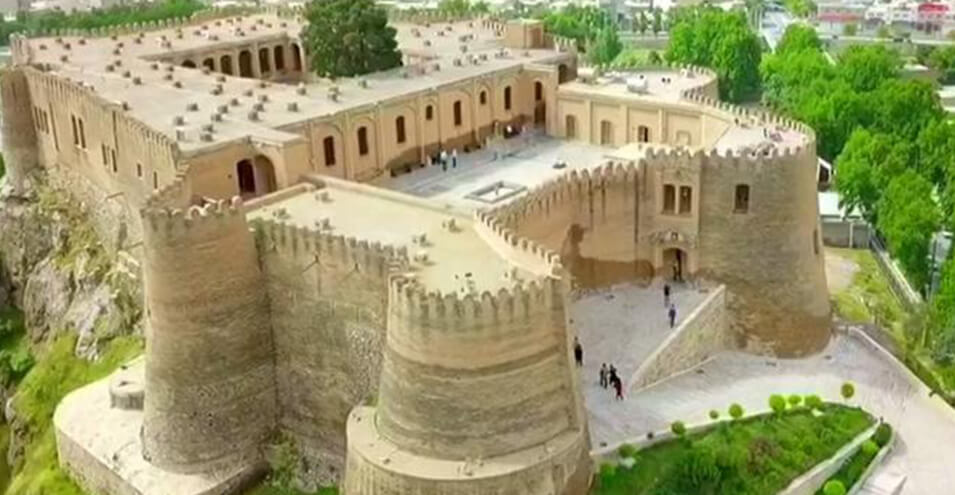
Lorestan cultural heritage officials say that by paying 15 billion tomans, the IRGC's claim on cultural heritage will be zero and the IRGC must leave Falak-ol-Aflak Castle. This news and the story of the castle and its prisoners have had repercussions on social media.
In the past few hours, news was published in Iranian domestic news agencies, which was especially good news for fans of Iranian ancient and historical monuments and the preservation of these monuments. IRNA wrote that, according to a report by officials from the Ministry of Cultural Heritage, all installments of 69 billion tomans have been paid for the liberation of Falak-ol-Aflak Castle; good news that immediately brings to the reader's mind the question of what this debt is for?
Falak-ol-Aflak Castle or "Shapur Fortress" is one of the historical sites in Khorramabad (Lorestan Province). It is said that the Sassanids built a city called Shapur Khast near the present-day Khorramabad area, a city that was later destroyed and the present-day Khorramabad was built on its ruins. It is believed that Falak-ol-Aflak Castle is the same as Shapur Khast Fortress, which had governmental and military use during the Sassanid period.
Debt of 69 billion to the IRGC is an obstacle to the world registration of the work
This massive brick building, which is believed to have been renamed Falak-ol-Aflak during the Qajar era and is also known as the "Twelve Tower Fortress", is registered nationally but not internationally.
The requirement for registering this monument worldwide and submitting its file to UNESCO was to create a boundary for the castle. This was precisely where the problem arose; according to domestic websites, two military barracks belonging to the army and the Revolutionary Guard were located around Falak-ol-Aflak Castle, which is considered the boundary of the castle.
While the army abandoned the castle after the Cultural Heritage Organization's decision to register the monument as a world heritage site, the IRGC resisted until the last moment. The IRGC's condition for abandoning the castle, or more accurately, vacating the castle, was 68 billion tomans for the construction of a new garrison.
If the IRGC's demand for cultural heritage becomes zero
In an agreement reached in 2019 between the Governor of Lorestan, the IRGC, and the Ministry of Defense, it was planned that, according to the Minister of Defense, the IRGC would vacate the castle grounds by October 2019, but according to the Governor of Lorestan, the IRGC postponed the evacuation of the area due to delays in payments.
In September 2019, the governor of Lorestan announced that he had paid 28 billion tomans in cash to the IRGC to vacate the site. The governor also spoke of converting the credits into two-year bonds following financial difficulties. The official also said that the IRGC had initially “rejected the bonds and then was convinced” to receive the bonds “with interest.”
Now, cultural heritage officials say that 48 billion tomans of this “debt” has been paid, and the final installment has been in the form of securities that will be paid to the IRGC if the castle is liberated. Zahra Baharvand, deputy head of Lorestan’s cultural heritage, announced the news, saying that the last 15 billion tomans have been secured in the form of treasury bonds, and that if the IRGC evacuates the area according to the memorandum of understanding, it will receive this 15 billion from the cultural heritage, and the IRGC’s claim on the cultural heritage will be zero.
Reactions to the news and different uses of Falak-ol-Aflak Castle
The release of the news of the payments to the IRGC to vacate the castle grounds also had a great impact on social media. From the reactions of users who asked why the Cultural Heritage Organization should pay the IRGC this amount, to the joy of cultural friends over taking a step to register this monument worldwide, to the reactions to the reports that had been published about Falak-ol-Aflak Castle and its famous prisoners.
Some published reports mention names such as Mossadegh and Shamloo as prisoners of Falak al-Aflak Fortress, which has sparked debates in cyberspace; from journalists who consider the published names to be false to those who point to the fortress' continued use as a prison in the years after the revolution.
The historic Sasanian citadel has had different uses over the centuries; from a strategically located fortress in the 4th century and a government headquarters during the Buyid era, to the government headquarters of the Atabakan of Little Lor and the governors of Lorestan during the Safavid and Qajar periods, to finally a military garrison and prison during the first and second Pahlavi periods. In a report published by Amnesty International in 2018 on the 1967 massacre, one of the survivors of the massacre of prisoners in August to September 1967 speaks of being held in a detention center under the Falak-ol-Aflak Castle in Khorramabad. (You can see this report in the link below the article)
A fortress that became a prison, a prison that became a museum
But 1349 was a fateful year for the fortress; on November 8 of that year, it was decided that Falak-ol-Aflak, the Sassanid fortress that was originally a prison and one of the most important military fortresses in Iran, would be turned into a museum. In 1354, the fortress became a museum with the establishment of the Museum of Anthropology and Lorestan Bronzes.
Now, lovers of culture and the preservation of historical and ancient monuments in Lorestan and Iran hope that with the release of the Falak-ol-Aflak Fortress site by the Revolutionary Guard, the file for this amazing monument will be activated for submission to UNESCO, and this tourist attraction will be able to attract more tourists to Iran.
Source: DW