"Chastity and Hijab" Bill: "Partial" nudity carries a fine of 2 million and "complete" nudity carries a fine of 24 million tomans.
On Wednesday, June 22, the media in Iran published the full text of the "Chastity and Hijab" bill that Ebrahim Raisi's government had sent to the Islamic Consultative Assembly on May 19. In this text, the failure to comply with the mandatory hijab is referred to as "nudity."
The bill states that "partial nudity" will be subject to a maximum fine of the seventh degree, and "complete nudity" will be subject to a maximum fine and deprivation of social rights of the sixth degree.
According to the Islamic Penal Code approved in 2013, the maximum fine for the seventh degree is two million tomans and the maximum fine for the sixth degree is 24 million tomans.
The "Chastity and Hijab" bill also states that if the driver or passengers of a vehicle fail to comply with the mandatory hijab, after two cash fines, the vehicle will be confiscated on the third occasion and a fine of one million tomans will be imposed for each day and night.
Based on the new government bill, owners and managers of businesses and public places such as stores, restaurants, cinemas, and sports, entertainment, and art venues will be sentenced to sealing and deprivation of tax exemptions and government tariffs, in addition to fines.
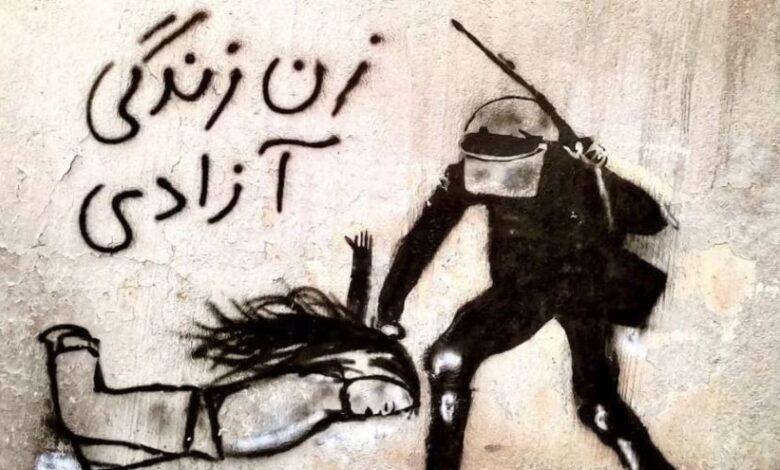
Hijab is one of the most challenging issues for the Islamic Republic. Many Islamic Republic officials refer to it as the "red line of the system," which seems more fragile than ever after the "Women, Life, Freedom" protests and women's civil actions protesting its mandatory nature.
Meanwhile, the support of well-known figures for the protests and protesters, and their presence in public gatherings without the mandatory hijab, has led to a section of the "Chastity and Hijab" bill being specifically dedicated to these individuals.
This section states that "whenever individuals who have a reputation and social influence through social, political, cultural, artistic, or sports activities" act against the hijab law, in addition to the aforementioned fines, they will be sentenced to deprivation of professional activity and activity in cyberspace for a period of three months to one year, and in case of repetition, they will face a sixth-degree punishment, which includes six months to three years in prison.
Despite all the heavy penalties imposed on citizens for not complying with the mandatory hijab, the "Chastity and Hijab" bill has been described by government supporters of the mandatory hijab as not being very restrictive and restrictive, and has been heavily criticized by them.
Part of this bill includes penalties, including fines, to prevent supporters of compulsory hijab from interfering with the clothing of others.
Imprisonment, flogging, and a fifth-degree fine ranging from eight to 18 million Tomans are among the punishments for these individuals.
Article 8 of the bill emphasizes: "No one has the right to commit criminal acts such as insulting, slandering, threatening, assaulting, or violating the privacy of women who have not observed the Islamic hijab under the guise of enjoining good or forbidding evil, and if committed, the perpetrator will be sentenced to the punishment prescribed by law."
The death of Mahsa Amini in the custody of the Ershad patrol due to her "inappropriate" clothing, which occurred in late September 1402, led to protests that are still ongoing after eight months and have encouraged many women in Iran to engage in civil disobedience.
It seems that this incident, which put Iran's name at the top of the world's news for a long time, has raised concerns among high-ranking government officials that the severity of the enforcement of compulsory hijab will once again fuel protests that will be very difficult to counter.
As Iranian women have continued their civil protest in recent months by attending public places without the mandatory hijab, numerous reports and images of verbal and physical clashes between supporters of this social restriction and forces known as "Amer beh Ma'ruf" and "Arzhi" have been published on social media, and a number of religious and government-affiliated figures have repeatedly called for "freedom of fire" against supporters of the mandatory hijab in dealing with these women.
Source: Radio Farda