Oil slicks have returned to Qeshm, Iran's largest island.
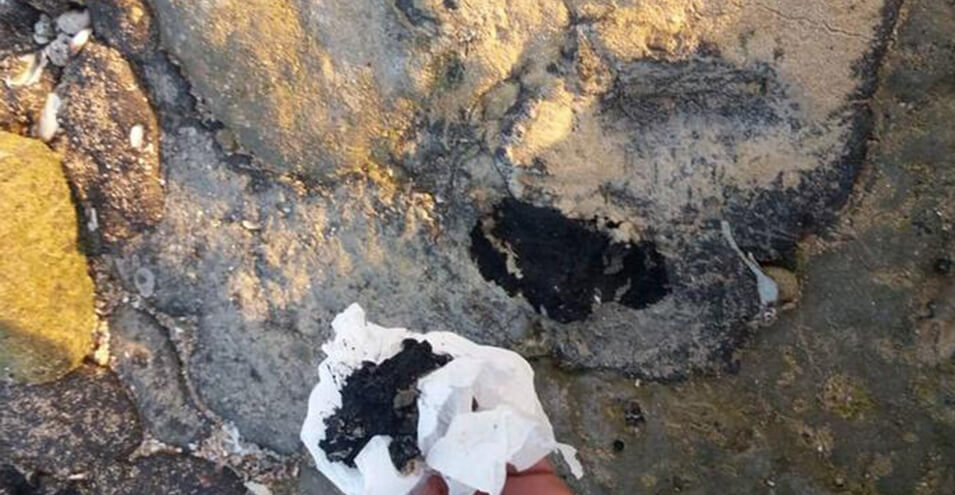
Two months after oil pollution hit the coast of Qeshm Island, the area is once again hosting oil tar balls of unknown origin. In September of this year, with the first contamination, there was talk of the possibility of tanker tanks being washed or smuggled cargo being unloaded.
According to eyewitness reports, once again a significant amount of oil slicks are visible 2 to 5 kilometers from Qeshm Island. The IRNA news agency, in publishing this news, refers to the abundance of stains (tarballs) on the shore and writes that it is far from the imagination that these pollutions are remnants of tarballs spread in the past.
Experts say that the sighting of an oil slick on the coast is usually one of the first warnings of oil pollution. According to existing definitions, a tarball is a “lump or ball” of oil that has formed after it has flowed into seawater. Crude oil or oil that accidentally enters the sea from facilities, oil rigs, pipes or tankers is carried to the shore by wind and waves in a mass due to atmospheric factors, sunlight and evaporation of lighter components, thickening and taking on a bituminous state.
Where does this pollution come from?
The main reason for the existence of these oil tarballs in Qeshm has not yet been announced by official authorities.
A report on oil pollution on the Qeshm and Lark coasts was first published in September of this year. A few days after the first warnings were issued in September, the environmental director of the Qeshm Free Zone Organization announced the dispatch of 100 personnel to collect oil tarballs. According to this official, although marine pollution and its cleanup are defined in the field of ports and shipping, various institutions and departments such as the Environment, Ports and Shipping Administration, diving clubs, and even the public have come forward to clean the Qeshm coasts from oil pollution.
In an interview with IRNA in September of this year, the head of the Qeshm Ports and Maritime Administration had raised the possibility of the pollution finding its way into the sea as a result of oil tanker tank washing or dumping smuggled cargo. The director general of Hormozgan's Environmental Protection Department had also spoken about the possibility of oil tanker tank washing.
A danger to humans and the ecosystem
Since tarballs become sticky when exposed to sunlight, they can stick to any object, shoes, feet, or the body of swimmers, and are very difficult to remove. On the other hand, tarballs are also a danger to the ecosystem. According to the Qeshm environmental director, these pollutants can kill seabirds and small animals such as snails and crabs due to their high stickiness.
Experts say that the persistence of tarballs depends on various factors, including the type and material of the beach. These masses are resistant to weather changes and may sometimes be hidden from view by being covered with a layer of sand. The IRNA reporter who reported the tarballs' renewed attack on the Qeshm beach, however, believes that given their abundance, he may have encountered new masses.
Qeshm Island, with an area of 1,491 square kilometers, a length of 135 kilometers, and an average width of 11 kilometers, is the largest island in Iran. It is spread out in the Persian Gulf and the Strait of Hormuz and has a coastline of 300 kilometers.
Source: DW