Senior UN official in the Security Council: Don't you want to hear the voices of the children of Idlib?
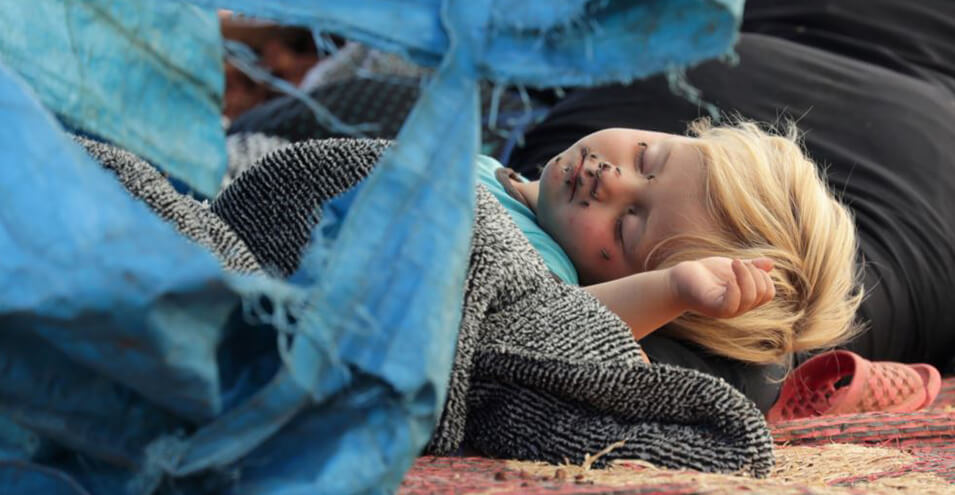
The UN's top humanitarian official has described the situation in Idlib, the last major area under Syrian rebel control, as dire, saying action must be taken now to end the "bloody attacks" and prevent a "humanitarian catastrophe."
On August 29, Mark Lowcock criticized members of the UN Security Council for what he described as their "ignorance" of the body's previous calls to stop bombings and airstrikes.
On Tuesday, Mr. Lowcock told the members of the United Nations Security Council in a sharp tone, "Are you going to continue to be complacent... or are you going to hear the voices of the children of Idlib and do something?"
The Syrian central government and its main backer, Russia, have been accused of carrying out heavy air and missile attacks on Idlib. Damascus and Moscow say the rebels have "violated" the ceasefire, that they are responding to rebel attacks and are not targeting civilians.
Reports from a group of observers and international news agencies indicate that the central Syrian government and its supporters are making an all-out effort to control the last major base of Arab rebels.
The UN High Commissioner for Human Rights said last Friday that at least 100 civilians, including 26 children, have been killed in Syrian army airstrikes in just ten days.
Idlib is largely controlled by Islamist groups, particularly Tahrir al-Sham, a renamed al-Qaeda affiliate in Syria. Current reports suggest that the Syrian central government's military campaign in Idlib has currently hit a snag, with rebels "with Turkish assistance" resisting attacks.
However, the UN has repeatedly expressed concern in recent weeks about the conditions and situation of civilians caught in the middle of the fighting.
The UN Security Council has adopted a dual approach towards Syria since the start of the fighting and civil war in 2011. Russia, Bashar al-Assad's main backer on the council, has a veto. Western countries are also opposed to Assad. In fact, no concrete or significant action has been taken by the council in recent years.
However, after talks and consultations between Moscow and Ankara, which ultimately led to agreements to establish de-escalation zones in Syria, it was expected that the intensity of violence would decrease. However, current reports from Idlib show a trend contrary to these expectations.
According to Reuters, two-thirds of the Security Council members have asked the Secretary-General to launch an investigation into reports of attacks on hospitals.
Reuters says the US, France and Britain are outraged by the increase in attacks on hospitals and schools, particularly in Idlib.
On the other hand, the Associated Press quoted the Russian ambassador to the United Nations as saying that "every time the end of a terrorist base in Syria comes, emotional accusations" are made against Assad and Moscow.
UN officials have expressed deep concern in recent days about the situation of civilians in Idlib and other parts of Syria, and Mark Lowcock's report is not the only example of this.
A day before Mr. Lowcock appeared before the Security Council, the United Nations had said in a report that airstrikes, landmine explosions, and the bombing of people with barrel bombs and cluster bombs in Syria killed and injured 1,854 children last year. In this regard, Syria was the worst place for children living in the midst of conflicts in every corner of the world, after Afghanistan.
Source: Radio Farda