Letter from 200 female prisoners from Qarchak Prison, Varamin; Deplorable conditions and continued indifference of authorities
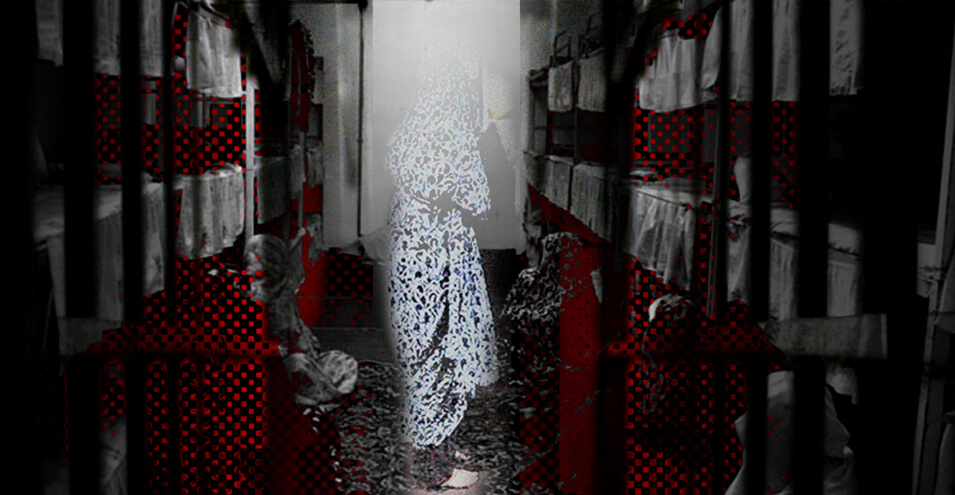
200 female prisoners in Ward 5 of Qarchak Prison in Varamin have published an open letter addressed to Hayat Al-Ghaib, Director General of Tehran Prisons Organization, in protest of the “extremely inadequate conditions of this prison” and announced that they will refuse to “receive their food rations at lunchtime” starting on August 16, 2019. The poor quality of food, lack of access to drinking water, very high prices for items needed by prisoners in the store, lack of access to medicine and fresh air, and unsanitary conditions in the prison are among the issues that these prisoners have protested against.
In their letter, these prisoners, while referring to the temporary measures that prison officers had taken a month before the date of writing the letter due to the visit of the Director General of Tehran Prisons Organizations, protested against the lack of opportunity for prisoners to talk to him and wrote: "Scene-setting such as pulling down the clothesline of the laundry room of prisoners whose only way of making ends meet for years has been washing other prisoners' clothes, washing the entire prison by prisoners, bringing a flower pot in the corridor for the same few-minute visit, etc. But we prisoners of Ward 5 of the Women's Prison in Qarchak, Varamin, tried to tell you and your accompanying delegation about the problems of the prison during that visit, but our efforts were in vain."
They wrote in their letter that they “are unable to meet their own living needs in prison” and have resorted to working for other prisoners to meet their needs, and some others have “self-harmed” under these pressures. They wrote: “Given that most of us prisoners have been brought here because of our living situation or in solidarity with the critical living situation in society, we are no longer able to meet our living needs in prison, such as food, drinks, clothing, and hygiene products. Isn’t it true that we prisoners also have basic rights and entitlements, and that proper treatment and provision of our lives and minds are the responsibility of the authorities? Some of us have resorted to self-harming, taking handfuls of pills to calm our minds, borrowing money, and being forced to do other people’s work because of these invisible pressures. "The painful thing is that if we prisoners had experienced a good living situation outside of prison, we wouldn't be here now, and there wouldn't be a letter. But the question we repeat every day is, 'How will we cover our expenses to survive?'"
The Human Rights Campaign in Iran has conducted research over the past months on the living conditions of female prisoners in Qarchak Prison in Varamin, which shows that not only is access to basic food and hygiene items in this prison subject to numerous restrictions, but also in other areas such as health and medical services, the work of prisoners, the situation of mothers and children living in prison, access to means of communication and family visits, the failure to separate prisoners based on crime, violence by prison officials and ignoring cases of harassment among prisoners, the failure to address violence and discrimination, especially against trans and LGBT women. The prison conditions are so harsh and unfavorable that even prison officials turn a blind eye to all these issues and suppress any complaints.
The quotes from female prisoners of Qarchak Varamin Prison mentioned in this report are all from people who have spent time in this prison over the past three years. Although some of the cases have been different for prisoners at different times (and therefore prisoners have had different experiences in different sections), the numerous experiences of prisoners from the conditions of this prison indicate the shortcomings and inefficiencies that exist regarding the conditions of women in this prison and also the way the prison is managed. Some of these conditions are raised in the letter from 200 female prisoners of Qarchak Varamin.
Clause conditions
The conditions outlined in the letter from 200 female prisoners of Qarchak in Varamin have continued over the past months and years, and prison officials have taken no action to change them.
In June 2019, Marzieh (a pseudonym used to protect the identity of a former prisoner in Qarchak) told the Campaign for Human Rights in Iran that due to a lack of sleeping space, a number of prisoners sleep on the floor without beds: “In fact, the wards of Qarchak prison are silos with 12 cabins, each about 9 meters long. Inside each cabin, there are 3 bunk beds, 3 of which are 9 people living in that cabin, usually with two bunk beds.” Regarding the number of people without beds, she added: “The number of bunk beds next to each cabin is usually 3 to 4 people.”
The lack of segregation of prisoners is another major housing problem in this prison. Although in August 2015, the Mizan News Agency, affiliated with the Iranian judiciary, announced the implementation of a plan to separate minor and serious criminals, according to people who were or are imprisoned in Qarchak Prison, the principle of classification is still not observed in this prison. Attorney Mohammad Moghimi confirmed in an interview with Majzooban Noor in late 2018 that not only “the principle of separating the convicted from the accused is not implemented in Qarchak Prison,” but also that its wards are not separated according to age and crimes in accordance with prison regulations, which sometimes threatens the security or physical health of prisoners. In this regard, in February 2018, five Dervishes prisoners wrote a letter to the director of this prison demanding the implementation of segregation of the wards of this prison and asked the director of the prison to separate them from the wards of prisoners with contagious diseases or a history of high-risk behaviors.
The prison’s large cells also lack heating or cooling systems, which exacerbates air pollution due to the prevalence of smoking and a defective sewage system. According to Zhila Bani Yaqoub, a women’s rights activist, prison officials respond to prisoners’ complaints about the ventilation system with the following response: “We won’t repair it because we don’t have the budget. So don’t follow up.” In May 2018, a prisoner told Ghoncheh Ghavami, a former prisoner in Qarchak, about the heat and cold conditions in Qarchak Prison, “In winter, we get chest pains from the cold, and in summer, we get headaches, dizziness, and severe heatstroke from the heat.”
Food and beverage conditions
Regarding the situation of access to safe drinking water, Shohreh Ebrahimi, a former prisoner in Qarchak, said in an interview with the Majzooban Noor website, "Qarchak's water is so salty that prisoners are forced to buy bottled water from the prison store at many times the normal price," which has caused many economic differences and discrimination among prisoners.
According to former prisoners of Qarchak Varamin Prison who responded to the Campaign’s questions about the situation in Qarchak Varamin Prison, since the construction of Qarchak Varamin Prison until today, the food provided to prisoners has been inadequate, to the point that the prison does not meet minimum health standards and does not provide the necessary proteins and vitamins for prisoners. Maryam, a former prisoner of Qarchak Prison, told the Campaign: “They brought whatever food was left over and garbage there. You wouldn’t believe it, you would eat it. They would make broth with soybeans [instead of meat] or they wouldn’t add any paste. It’s ridiculous, I mean, there were foods that smelled bad and would spoil.” In response to the Campaign’s question about what the prisoners’ main food was, she said: “We either ate bread and cheese or tuna fish.” Also, according to Marzieh, who has been in this prison for about a month, the food situation in this prison was “disastrous and a disaster.”
He told the campaign: “I am not exaggerating if I say that the nutritional situation was abysmal and catastrophic. Breakfast was usually either cheese or curd that was given to each person the night before with bread.” Regarding access to boiling water to make tea, he added: “Beer was given once in the morning, once at noon and once at night. Sugar, tea and sugar, along with other hygiene necessities, were delivered to the head of each cabin on the first of every month and he distributed them among the children in the cabin.”
He continued about other meals: "Lunch was also lentils, soybeans and lentil paste, pasta and vegetable stew without red meat and sometimes with a little chicken. These meals were repeated constantly. Sometimes they might give lentils or soybean paste for three days. Dinner was soup, a dish of beans and lentils."
Conditions of access to sanitary services and materials
In June 2019, Maryam (a pseudonym to protect the identity of the former prisoner), who was imprisoned in Qarchak for seven years, told the campaign about the very small number of bathrooms compared to the number of prisoners in each hall: “The number [of prisoners] was high, meaning there were 100 to 150 on average in each hall. At least 100 people in each hall. The name was that there were 10 bathrooms for this number of people, but from 10 to three or four, it was just right.” Regarding the bathroom, she added: “The bathroom was the same, and it was in shifts. During a period when we didn’t even have hot water, they had scheduled all the halls and suddenly you would see that it was your turn at 5 am. It was very miserable for a while. Imagine if 100 people wanted to take a bath in one hour and it was supposed to be your turn once a week or two. There was a period when we went to the bathroom in groups of three or four. Like in the old movie about women’s prison? The situation was the same.”
Marzieh also confirmed that there are approximately three bathrooms and toilets for every 100 people on average, adding: “Each ward has one bathroom with 3 toilets, 3 showers, and 3 taps for washing dishes.” According to her statements in an interview with the campaign, as a result of these shortages and the need to purchase basic hygiene items such as sanitary napkins, female prisoners with low financial means are unable to access the hygiene items they desire: “The first sanitary napkin is a monthly quota of one pack for each prisoner, which has recently been changed to one pack every two months. This increases the pressure on prisoners who do not have a deposit, because even when they were given sanitary napkins once a month, they had to buy them from the store due to the poor quality of the product.” She added: “During my entire imprisonment in Qarchak Prison, I did not see any soap.”
Medical services
The health weaknesses in Qarchak Prison are not limited to the ban on disinfectants. According to prisoners, access to a doctor is possible once a month and on a rotating basis, and only in very severe conditions, which prisoners described as “on the verge of death,” is access to a doctor outside of the rotation possible. Marzieh described access to the clinic as “a bitter joke.”
Maryam, who was released from Qarchak in the early months of 2019, told the campaign: “It was better at first, but then they made it once a month and made it a rotation. Unless you were dying, the officers would make you go to the doctor, and it wasn’t that easy.” Regarding medical care for patients, she added: “Going to the doctor was useless, because if you had cancer, they would give you ibuprofen, and if you had a headache, they would give you ibuprofen again. That was the only thing they gave you, nothing else.”
According to this eyewitness, it was almost impossible to send patients to a hospital outside the prison. He added: "It was also very difficult to send them to the hospital. One had cancer, so it was a case like that. They said we don't have an agent and they canceled sending that person. In every way you can think of, there was zero care."
In another example of the lack of timely medical attention, Fatemeh, a prisoner in Qarchak Prison in Varamin, told the Campaign that prison officials differentiate between political and non-political prisoners for medical attention. According to her, the situation would be worse if the prisoner was accused of murder and had a retribution order. “I had a co-passenger who was bleeding, and even though the prison gynecologist confirmed that she needed to be transferred to a hospital outside the prison for tests and samples, the prison authorities refused to do so,” Fatemeh told the Campaign. “After about two years of writing letters to various authorities, including the deputy prosecutor and the prosecutor’s office, she was sent to a hospital outside the prison. The doctors at the hospital told her that if she had come later, she might have developed cancer, and they eventually had to remove her uterus for treatment,” she said. According to Fatemeh, the prisoner was accused of complicity in murder.
Marzieh told the campaign about the lack of full attention to prisoners in urgent need of medical care: "One night, one of the prisoners fainted, and whenever they asked the staff to come and take him to the clinic, they said it would be in the morning; then when they realized the matter was serious, they said the nurse should come and confirm that he was not feeling well and then he could go to the clinic. Finally, when they agreed to take the servant of God to the clinic, they told him that he could not leave the door unless he put on his headscarf. This was while he was unconscious."
Prisoner work
Given that Qarchak prisoners are forced to purchase most of their basic needs, such as food and even water, independently through the expensive prison store due to the very low quality, and at the same time, a large segment of them are from low-income classes in society, earning money in prison has become a serious problem for these individuals.
Maryam, who was imprisoned in this prison for a long time, told the campaign that the prisoners’ situation was such that if their families did not support them financially, it would be very difficult for them to continue living. According to her, the prisoners were forced to provide the simplest basic needs themselves and buy items such as “sanitary napkins, bread and even water”: “We bought everything… There was nothing they wanted to give there.” She added: “If your family did not support you, you had to work there yourself, you had to be a laborer. Now, thank God, my situation was such that I was teaching there myself like a trainer. I taught about jewelry. I had a salary and my situation was okay, but for the first year or two, maybe the families would support them very well, and after that, maybe it would become normal for them, and maybe they really could not afford to support them anymore.”
Source: Human Rights Campaign