Narges Mohammadi in a letter to Raisi about environmental activists: Solitary confinement is an example of torture
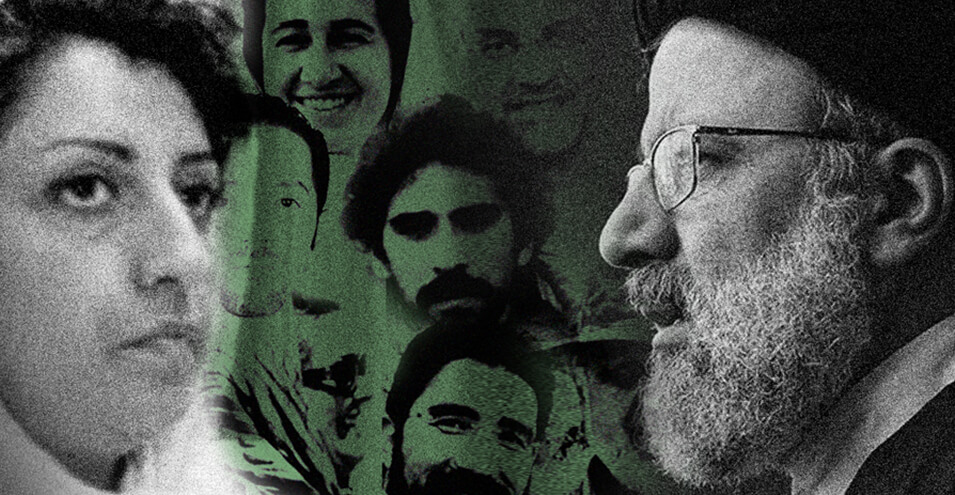
Human rights activist Narges Mohammadi wrote in a letter to the head of the judiciary from Evin Prison about eight environmental activists, saying that their detention in solitary confinement for more than a year and six months was “ illegal and an example of torture. ” She wrote that obtaining a confession under such torture is “ groundless ” from a legal perspective. The letter was published by the website of the Center for Human Rights Defenders on Friday, July 19.
Narges Mohammadi wrote at the beginning of her letter to Ebrahim Raisi, the head of the judiciary: " You are well aware that according to the ruling No. 435 dated 10/28/82, the investigating authority, the Administrative Court of Justice, declares that solitary confinement is a criminal offense and the imposition of punishment requires proof of the crime in a competent court and violates Article 36 of the Constitution. Solitary confinement is a clear violation of the rights, personality, and dignity of the prisoner and violates Article 39 of the Constitution. This ruling also points to the very destructive psychological consequences and torture of the individual in solitary confinement."
The human rights activist continued his letter, referring to the information received : " According to accurate and reliable information, a number of detainees were arrested at different stages and are currently in very difficult and painful conditions in terms of physical condition and mental and psychological pressure. They have contracted debilitating diseases and are being held in solitary confinement in the same condition."
Referring to their confessions obtained under torture, he wrote: " According to reliable news, they have attempted to state things under severe psychological pressure that are false and have no legal or religious validity and were obtained under pressure from the interrogators. A number of the defendants have attempted to deny and expose in court, but not only have no action been taken, but they have also been put under more pressure. Of course, you are also aware that many of the defendants who have made confessions against themselves or others in solitary confinement have denied their confessions after being released from those conditions, citing the excruciating pressures of interrogation and solitary confinement as the reason for their confessions."
Ms. Narges Mohammadi asked the head of the judiciary: "According to the law and Sharia, can the judges under your supervision consider these false confessions obtained under pressure and torture from the defendants as sufficient documentation and reason for issuing their sentences?"
Criticizing the judicial system and the judges' behavior, this human rights activist said: "For what reason and with what legal and religious authorization do the judges and investigators under your supervision, violating the explicit text of the Constitution and the court's ruling, imprison the defendants in solitary confinement and complying with the requests of interrogators from security agencies (the Ministry of Intelligence and the Revolutionary Guard) and imprison the defendants for months and years in solitary confinement in security wards and in inhumane conditions?"
Ms. Mohammadi, enumerating the letters of some prisoners who have lost their lives in solitary confinement in the Iranian judiciary, wrote: "So far, a number of defendants, including Zahra Kazemi, Zahra Bani Yaqoub, Sattar Beheshti, Kavous Seyed Emami, and others, have lost their lives in solitary confinement, and many defendants have suffered from life-threatening physical and mental illnesses. Physical and sexual assaults (verbal and behavioral) have also been carried out against the defendants, which have never been investigated, and unfortunately, this psychological torture has been systematically continued in security cells with the orders and support of judges, investigators, and legal assistants."
The human rights activist wrote at the end of his letter: "Isn't it time to put an end to this horrific, illegal, and un-Islamic torture? Given what happened to the environmental defendants, does their trial meet the standards of a fair trial? Doesn't keeping the environmental defendants in cells and in complete isolation, and even not having access to a lawyer during the trials, indicate that the accusations are baseless and that the case is being fabricated and the charges are being framed?"
Sepideh Kashani, Niloufar Bayani, Amir Hossein Khaleghi, Hooman Jokar, Murad Tahbaz, Abdolreza Kohpayeh, Sam Rajabi, and Taher Ghadirian are eight environmental activists who were arrested by the IRGC Intelligence Service on February 24 and 25. Some of them are accused of espionage and two of them are accused of the serious charge of “corruption on earth.” So far, two court sessions have been held for Niloufar Bayani and Murad Tahbaz in February 2018. However, Niloufar Bayani was not transferred to her second court session and only her lawyer was present. However, contrary to promises, the trials of the remaining detainees have not yet been held.
The families of these environmental activists have so far written letters to the Supreme Leader of Iran, members of parliament, and three letters to the head of the judiciary, demanding the release of their children and an account of their unjustified detention without providing a single document. However, none of these letters have received a response so far.
Human rights activist Narges Mohammadi, sentenced to 10 years in prison (out of a 16-year prison sentence), has written many letters about the dire situation of political prisoners like Nazanin Zaghari in prison, and also wrote a letter to members of parliament about the illegal existence of solitary confinement. However, her letters have also gone unanswered.
Source: Iran Human Rights Campaign