Iranian officials concerned about “poverty leading to infidelity”

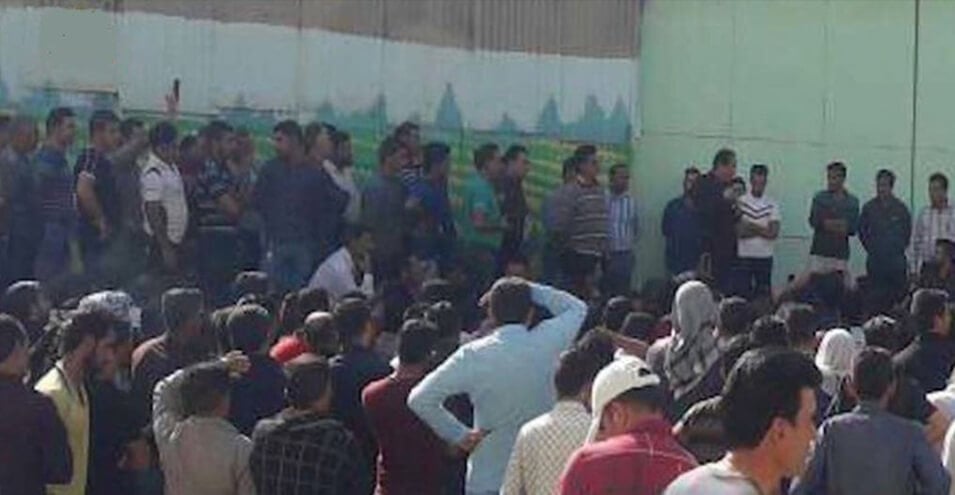
The interim head of the Expediency Discernment Council has said that some people have abandoned their religion due to dire economic needs. One expert, citing official statistics, says that 30 percent of the population has fallen below the poverty line.
Ayatollah Mohammad Ali Movahedi Kermani, the interim head of the Expediency Discernment Council, has said that the country is engaged in a war over “economic issues.” According to him, “the enemy is determined to weaken us economically and put us under pressure so that the people will abandon the revolution.”
According to the Iranian Student News Agency, ISNA, the Secretary General of the "Fighting Clergy Society" said on Wednesday evening (February 17) at the first joint conference of the "Jihad Headquarters for Empowering the Disadvantaged in the Country": "If people are in need, do not have a meal, cannot send their children to school, and do not have a home to live in, the meaning is the same as the hadith of Imam Ali who said: Poverty is close to leading to disbelief. Just as we are now hearing that some people have abandoned religion due to their severe economic needs."
The “dangerous reality of poverty”
Political analyst Abbas Abdi writes: "Reports published even by official institutions on this issue indicate a dangerous state of poverty."
In an analysis published on the website of the Islamic Republic of Iran News Agency (IRNA), Mr. Abdi points to two main factors for the intensification of poverty: increasing inflation and decreasing the country's financial reserves.
He writes about inflation: "The inflation index has at least tripled since the subsidies were paid, meaning we have had 200 percent inflation. In other words, 45,000 tomans in subsidies today had the purchasing power of about 15,000 tomans at that time. So the purchasing power of subsidies has decreased by one third."
He presents statistics and figures showing that a large group of Iranians, in both urban and rural areas, up to more than 30 percent of the population, are below the poverty line.
“The more important reason is the stagnation of economic growth and employment, which fuels poverty,” he notes, and then clarifies: “To eliminate poverty, serious investments must be made to increase the capabilities of the poor. These investments have the highest economic and social returns. Providing the necessary infrastructure for education, communications, and transportation for deprived areas is very profitable for both the poor and society.”
The Ayatollah's address is wrong.
The Ayatollah who sits at the head of the “Expediency Discernment” cannot be expected to offer solutions to complex economic issues. He is undoubtedly an expert in jurisprudence and religious matters, but when faced with the “dangerous state of poverty” and the horrific dimensions of class divides that experts believe are due to Iran’s flawed economic system, widespread systemic corruption, and the consequences of sanctions, he offers nothing but repetitive rhetoric and moral advice.
Movahedi Kermani links the issue to “astronomical salaries,” which is somewhat reminiscent of factional conflicts in Iran: “Those whose salaries are unconventional and who have accumulated a lot of money have actually taken for themselves the sums that others needed. So these sums must be pulled out of their throats.”
This is while various discussions have been held about the dimensions and roots of poverty and corruption in Iran in recent years, in which the issue of astronomical salaries does not constitute a figure in the opinion of experts, but rather thefts and embezzlements worth several trillion, from bank embezzlement and theft of huge rigs to gigantic oil tankers that suddenly disappeared, are considered more significant signs of Iran's economic turmoil.
Source: DW