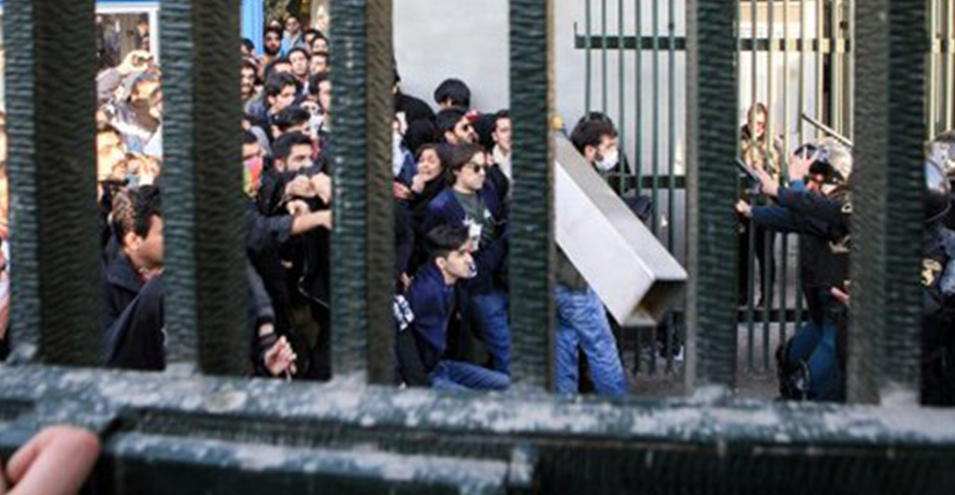
Journalist Masoud Kazemi's lawyer says after his arrest: "The court has failed in justice"
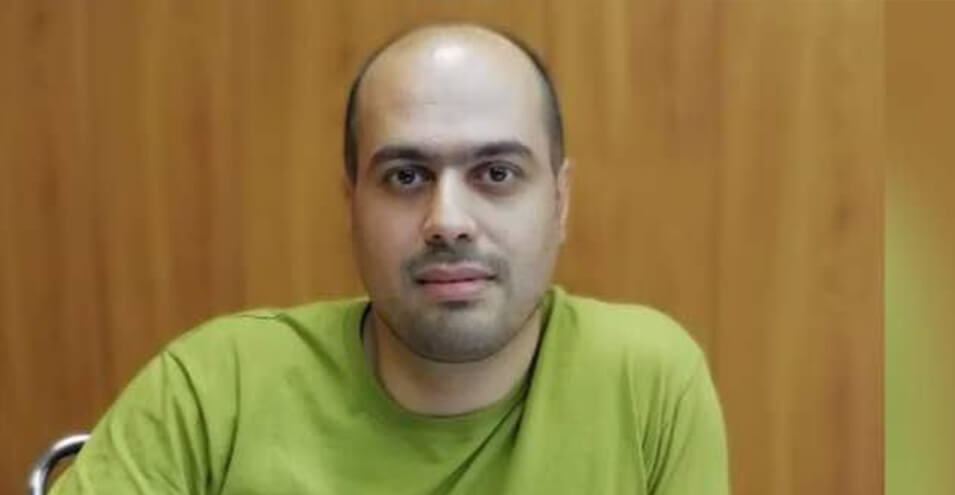
Masoud Kazemi, a journalist and former editor of the monthly magazine Saadeh Parsi, was arrested on the morning of Wednesday, June 1, after attending his trial at Branch 28 of the Revolutionary Court to hear his charges and was sent to Evin Prison. After the new charges were brought, Judge Mohammad Moghiseh issued a heavy bail of one billion Tomans for the journalist, who was transferred to Evin Prison due to his inability to secure such a heavy bail. His lawyer, Ali Mojtahedzadeh, told IRNAPlus that the charge of “gathering and colluding and acting against national security” was added to his other charges during the court session.
Ali Mojtahedzadeh, the journalist's lawyer, announced the arrest on Twitter, writing that during the court session, Judge Mohammad Moghiseh raised new charges against Massoud Kazemi that had not been raised before during the interrogation and prosecution stages. In a series of other tweets, Mojtahedzadeh criticized the illegal behavior of the judge of Branch 28 of the Revolutionary Court, writing that he had "cursed" Massoud Kazemi during the trial. The lawyer did not provide further explanation, but wrote that this behavior was far from the dignity of a judge and a cleric, and that they were stunned during the court session.
A few hours after the court session, the lawyer spoke to the state-run IRNA news agency about Judge Moghiseh's strange behavior: "I have never seen the kind of treatment I received today from the judge of Branch 28 in any court session. At the end of the session, they allowed me to defend myself. During the session, I stated that the court had failed to provide justice. However, I will submit a bill."
Mohammad Moghiseh, Judge of Branch 28 of the Revolutionary Court, has been known since 2009 as one of the main judges of the Revolutionary Court in handling cases of ideological and political defendants and issuing severe sentences.
Mr. Mojtahedzadeh wrote in his first tweet: "At the hearing of the charges... #Masoud_Kazemi At the branch #Twenty-eight Revolutionary Courts Appointment #Guaranty One hundred million to #Collateral It increased by one billion, as a result of which he #Arrest And to #Evin was dispatched and the new charges were #Prosecutor's Office It was not mentioned in #Court "Understood!!"
In another tweet, the lawyer noted that the judge had repeatedly "cursed" his client, writing: "The behavior of Mr. #Maghseh We witnessed in no way worthy of a #Judge That too #Spiritual His absence was frequent. #Masoud_Kazemi He cursed during the hearing, a strange behavior that could not even be imagined. Certainly, Mr. #Raisi Regarding such behaviors #Judges "They are responsible in this world and the hereafter."
Illegal behavior, insults to the accused, and even indictments that lack legal principles are part of the routine of the Revolutionary Courts in handling the cases of political and security defendants. Previously, an informed source told the Campaign for Human Rights in Iran about the session to receive the final defenses of Sepideh Qolyan, Asal Mohammadi, and other labor activists in the Seventh Branch of the Evin Prison Prosecutor’s Office that Prosecutor Shah Mohammadi treated the defendants with shouting and shouting, and in his indictment, one of the examples of their accusations was that they were upset with the Leader.
Ali Mojtahedzadeh, referring to the Iranian judicial system, wrote in another tweet to Ebrahim Raisi: "Mr. #Raisi You definitely know that it is necessary. #Justice Adherence to the principle #Neutrality By #Judge It is when the entire time of the hearing, Mr. #Maghseh Busy cursing #Masoud_Kazemi Must wait for the verdict #Fair Let's be together!? Soon what is in #Court "I will present what happened through an open letter."
According to Masoud Kazemi's lawyer's Twitter posts, after explaining the new charges along with a curse, Judge Moghiseh changed his previous bail of 100 million to 1 billion tomans and then issued an arrest warrant for the journalist due to his inability to pay.
Masoud Kazemi, a journalist who previously worked for the newspapers Shargh and Qanon and was the editor-in-chief of the monthly magazine Saadeh Parsi, was previously arrested at his home on November 4. Before his arrest, he had written on Twitter about corruption in the Ministry of Industry and Mines and had also asked critical questions about the serial killings of Hassan Rouhani’s advisor, Hesameddin Ashena. After his arrest, his lawyer wrote on Twitter that his arrest was illegal and without prior warning. He was released six days later, on November 10, on bail of 100 million tomans. In an interview with IRNA in February 2018, his lawyer said that his client’s charges include: “ spreading lies, insulting officials and officials, propaganda against the system, and insulting the leadership .”
Previously, Marzieh Amiri, a journalist for Shargh newspaper, was arrested on May 1, 2019. She was arrested while covering news of labor protests on International Labor Day. There is no information about her condition or charges. According to her colleagues' Twitter posts, she will be transferred to Ward 209 of Evin Prison after being detained in an unknown location for some time. Since April 2019, at least four journalists have been arrested: Marzieh Amiri, Keyvan Samimi, Masoud Kazemi, and of course Mohammad Reza Nasab Abdollahi, who was arrested on April 11 and released a month later on May 11. However, the reason for his arrest and the charges against him are still unknown. Marzieh Amiri, Keyvan Samimi, and Masoud Kazemi are currently in Evin Prison.
Despite Hassan Rouhani's campaign slogans about respecting freedom of thought and civil rights, many journalists have been arrested since his presidency began in 2014. Journalists such as Tahereh Riahi, Zeinab Karimian, Pouyan Khoshal, Amirhossein Mirasmaeili, Ehsan Mazandarani, Saman Safarzaei, Issa Saharkhiz, and Afarin Chitsaz, as well as many newspapers and magazines, have been seized.
In early November 2018, a few days before the first arrest of Masoud Kazemi, Zahra Ershadi, Iran's representative to the UN Human Rights Council, protested the report of David Kay, the UN Special Rapporteur on Freedom of Expression and Opinion, on Iran, saying: "The Iranian government seriously believes in maintaining an open and vibrant media environment for all its citizens." She claimed that all reports against Iranian media were lies and that "the Islamic Republic of Iran has been the target of a media war."
Source: Iran Human Rights Campaign