Behnam Mahjoubi Case: Report of a "Murder Under Torture"
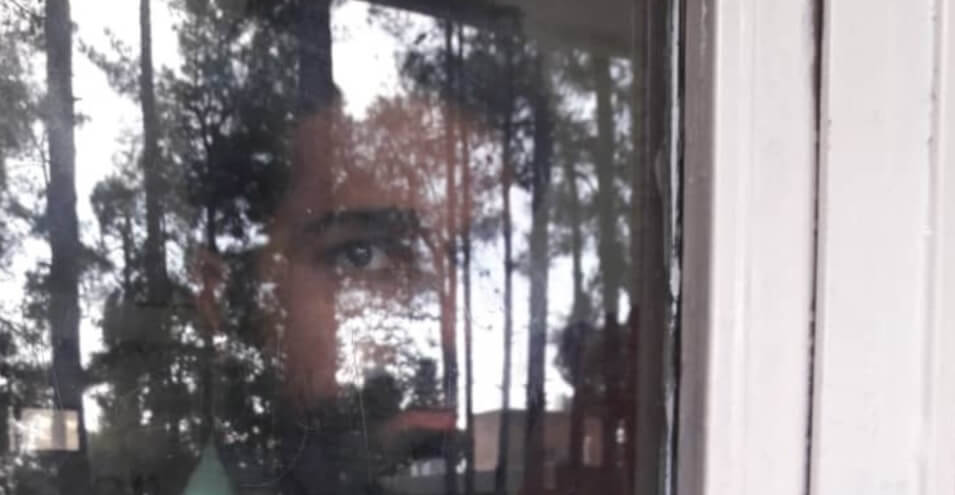
The case of the last five days of the life of Behnam Mahjoubi, a political prisoner, and Darvish Gonabadi, whose body was held hostage by judicial authorities in the hospital, has been described by many social media users as "murder under torture" and a "crime."
The news of Mr. Mahjoubi’s death was first announced on Tuesday, February 18, by some of his friends and relatives. On the same day, Mehdi Keshdar, CEO of the Mizan News Agency (affiliated with the judiciary), who acts as the judiciary’s spokesperson on Twitter, wrote that “counter-revolutionaries and some currents have repeatedly called Behnam Mahjoubi deceased,” but that the prisoner was “under special medical care.”
The denial of the news of Afa Mahjoubi's death was the prelude to a multi-purpose show whose direct result was the confusion and tears of the prisoner's mother and wife, and whose goal was to provide fodder for the judiciary's subsequent claims.
On the same day, Mehdi Keshdar also published the text of a letter claiming that a bail of 200 million Tomans had been issued for the release of Behnam Mahjoubi, and he blamed Mr. Mahjoubi's supporters for the failure to secure the bail and the circumstances that arose.
But in this letter, dated February 12, there was another point that was related to the premise of the show. The letter stated that if the prisoner could not provide bail, he would be “under the constant supervision of the prison medical doctor” and would have “quick, easy, and timely access to needed medications” and, if necessary, “sent to medical centers outside the prison.”
In this announcement, the judiciary was insinuating to the audience that it was constantly guarding the life of Behnam Mahjoubi.
This claim was also evident in two announcements by the Prisons Organization. The Prisons Organization wrote that the individual “was under the care of a doctor while serving his sentence” and that after poisoning due to “overdose of medication,” “all necessary medical care during his imprisonment, as well as special treatment measures during the defendant’s hospitalization, were fully provided, and he is currently under special medical care.”
In these announcements, the judiciary also emphasized that it had allowed the prisoner to visit his mother while in prison, and that there was "no prohibition" in the hospital for Mahjoubi's relatives to visit the patient without permission.
All of these announcements were actually different scenes in a play centered on playing with the body of a prisoner to make the judiciary appear innocent and even compassionate.
Not based on tweets from Behnam Mahjoubi's relatives, but rather according to the prisoner himself, he had been the victim of organized and targeted pressure from judicial and security authorities since June 21 of this year, when he presented himself to prison to serve a two-year sentence.
Realizing that the physical and mental pressures of the past few months were the main cause of Behnam Mahjoubi's death, the judiciary tried to buy five days to announce his death and during these five days carried out heavy publicity about the prisoner's ongoing medical care.
Saleheh Hosseini, Behnam Mahjoubi's wife, wrote in a letter she published on September 26 of this year to the authorities of the Islamic Republic that her husband, according to a doctor's certificate, "cannot tolerate the conditions of imprisonment" and that he has been threatened in prison that "they will not provide his medication and will not allow us to provide it for him from outside the prison."
He wrote at the time that "I am worried about losing Behnam" and "The Islamic Republic is responsible for my wife's life."
In a phone call from prison, the audio of which was released on November 27, Behnam Mahjoubi, 33, emphasizes with difficulty and in a tired and sad tone that he is being told, "They are telling you that you must die here like a dog."
For several months, the judiciary ignored these documents, which reported the gradual death of a protester in prison, but when the knife reached the bone, it staged a media show to tarnish these documents.
The next step of the judiciary, which has already taken a mournful and demanding stance, is predictable in this case.
A few hours after announcing the death of Behnam Mahjoubi, the Tehran Provincial Prisons Directorate issued a statement, reiterating that "all medical care was provided during the prisoner's imprisonment" and that "special treatment measures" had been taken for him in recent days. It also claimed that "when Behnam Mahjoubi was admitted to the hospital and underwent specialized examinations, doctors noticed several packages containing black powdery substances in his stomach."
The announcement quotes fellow inmate Behnam Mahjoubi as saying that the prisoner "attempted to arbitrarily consume several medications for himself and others simultaneously."
The two phrases “arbitrary consumption” and “several packages of black powdery substances in the stomach” will clarify the lines of the judiciary’s subsequent explanations. They will say that Behnam Mahjoubi died due to “arbitrary actions” or committed suicide.
"Suicide," depicting the death of Behnam Mahjoubi, is the final act of a planned scenario that was designed and executed from June 11 to February 2, 2020.
The components of this drama include pressure on the prisoner, torturing and humiliating him, threatening and intimidating his family, ignoring the prisoner's health status, denying the news and playing with words and the media to distort the situation and fake reports about the prisoner's condition or cause of death. All of these are repeated scenes of a play full of evil and horror that the Islamic Republic's judiciary has played on the lives of many people over the past forty years.
Behnam Mahjoubi, whose sad and horrific death has angered and shocked thousands of people on social media, is one of these thousands of victims; people who, in Behnam Mahjoubi's own words, have fallen victim to the "decline of humanity."
Source: Radio Farda