Fire spreads in Derer "due to lack of access"
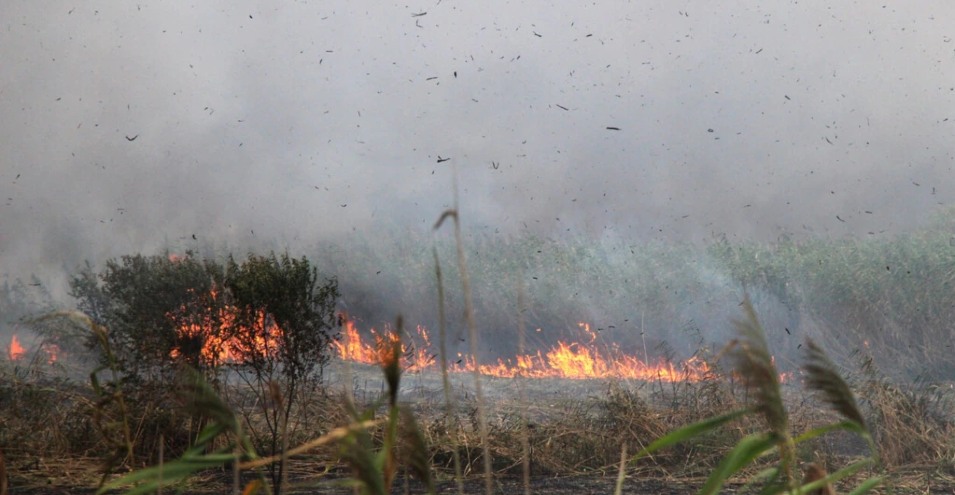
On Friday, September 1, the Bandar Anzali Wetland caught fire for the umpteenth time in recent months.
Anzali Wetland, with an area of about 20,000 hectares, is located in Gilan Province and is considered one of the most important and largest natural habitats for Iranian animals.
According to the IRNA news agency, citing Mohammad Pourkhosh, the governor of Anzali, the fire "started on Friday morning in the central part of the wetland in the Cheragh Poshtan area, and its scope expanded due to the inability to access the surrounding areas."
According to Mr. Pourkhosh, when the fire started, the area of the fire was 2 hectares, but by Friday evening its area had reached 40 hectares and was expanding due to the lack of human and vehicle access and the size of the fire.
This is the second large-scale fire in the Anzali Wetland in recent months.
Local authorities have repeatedly declared these fires "deliberate" and aimed at "seizing land in the region."
In the first fire of this year in this wetland, which occurred on July 21, approximately 15 hectares of the wetland burned.
The IRNA news agency had previously reported that in 1400 alone, nearly 90 hectares of Anzali Wetland land was set on fire and destroyed by "profiteers" with the intention of "land grabbing".
Despite the occasional news of the arrest of the perpetrators of the Anzali Wetland fire, this trend continues.
Prosecutor Anzali had previously announced that, according to Article 675 of the Constitution, intentional arson of land is a crime, and the legislator can consider the death penalty for those who commit this act with the intention of "waging war and disrupting social order."
In addition to fires in previous years, factors such as industrial, domestic, and hospital sediments and wastewater, slaughterhouse waste, agricultural pesticides, waste and debris, the spread of invasive plants, and the reduction in water volume have seriously endangered the health and life of the Anzali Wetland.
Hassan Khastaband, a former Anzali representative in the Islamic Consultative Assembly, had previously said that 700,000 tons of sediment enter the Anzali wetland annually, which has caused the depth of the wetland to decrease over the past few decades, and its depth has decreased from 10 meters to 2 meters, and in some areas it has even become completely dry.
Source: Radio Farda