Artemis Ghasemzadeh: I sought asylum in the United States, but they did not conduct any interviews for my asylum application.
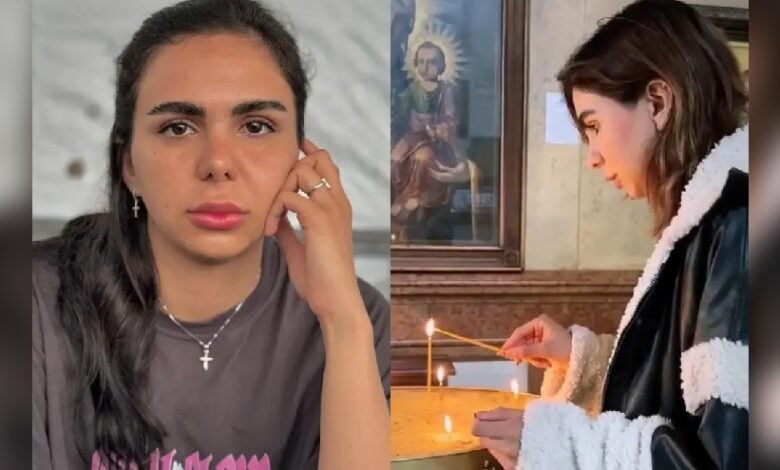
Artemis Ghasemzadeh, a Christian citizen, said: "I sought refuge in America, but they did not conduct any interviews for my asylum application."
Artemis Ghasemzadeh, a Christian citizen who recently sought refuge in the United States, talks about her conversion to Christianity, her escape from Iran, her arrival in the United States, her arrest, and her transfer to Panama. In an interview with The New York Times, she talks about the challenges and secret life she had in Iran, as well as the hardships of the migrant camp in Panama.
He explains his Christian life as follows: “I first stepped foot in a church during my trip to Turkey. I felt so strange, I bought a small Bible, hid it among my clothes, and took it with me to Isfahan with great difficulty. My faith in Jesus Christ was formed between 2019 and 2022 in house church meetings and online teachings, but I never dared to talk about my faith in Jesus Christ with my religious family.
"I was baptized three years ago and experienced a new birth. Converting to Christianity was very dangerous for me because Christian converts in Iran face severe persecution. After a while, a number of members of the house church, of which I was a member, were arrested. That's why I decided to leave Iran and go to America."
He says about his faith in Jesus Christ and his feelings, as well as about house churches in Iran: "Christianity is very attractive because it is full of love and peace, and its rules are not strict compared to Islam. The house churches I attended held meetings with great caution. Members received messages to enter these meetings that could only be viewed once, and the meeting locations changed regularly. My older brother Shahin, who is 32 years old, also believed in Jesus Christ."
Artemis returns to 2022 and continues by referring to the nationwide uprising: “In 2022, with the death of Mahsa Amini in the Gasht Ershad detention center, a women-led uprising began, in which I also participated more or less in the protests and chanted the slogan “Women, Life, Freedom.” Like many Iranian women and girls, I removed my hijab and freely displayed my hair as a sign of protest. The government sent me numerous messages and summoned me to court, but I refused to appear in court.”
He said of his trip to the United States after leaving Iran: "In December 2024, my brother Shahin and I left Iran for the United States. We were also aware of the Trump administration's strict immigration policies, but we thought these policies only targeted criminals and criminals.
We first went to Abu Dhabi, then to South Korea, and finally to Mexico City. There, after a lot of searching, we found a smuggler who took us by boat to Tijuana for three thousand dollars each. In Tijuana, he took us to a border point at night and pointed to a ladder and said, "Go. Climb the wall and move quickly." I remember crying when my feet reached American soil and telling Shaheen, "It's over, we've finally arrived."
Artemis said that this happiness did not last, and minutes later, border agents arrived and arrested them and transferred them to detention, but she was separated from her brother Shaheen. She said that she has not seen or spoken to her brother Shaheen since then, but her mother informed her that Shaheen had been transferred to a facility in Texas and was being held there.
He continued: "I repeatedly told the authorities that I was an Iranian Christian convert who had sought refuge in the United States, but they never interviewed me about my asylum application, and finally, on February 12, which happened to be my 27th birthday, they tied my hands and deported me to Panama on a military plane. On the plane, I met nine other Iranians who were also Christian converts and had almost the same stories. We were kept in a hotel under armed guard for about a week."
The New York Times, which has been in contact with Artemis every day since her arrival in Panama, said: "Artemis made a video of the miserable situation of herself and her companions and shared it with Persian-language news networks outside Iran, which has received widespread coverage on social media."
Artemis and some of his companions refused to sign documents related to their return to Iran, and as a result of this failure to agree to return, they were put on a bus and sent to a camp in the jungle. Artemis is one of the people who is being represented by federal court attorney Ali Harischi, who is representing them for free. Ali Harischi said in a statement that his top priority is to prevent their return to Iran. “We are asking American officials to change their policies and allow this group to re-enter the United States,” he said.
Artemis said of the camp they were transferred to: "This jungle camp is like a big cage and the conditions are very difficult. My hands are swollen and red from mosquito bites, and one of the 11-year-old Iranian children fell and injured his ankle. The camp doctor told the child's parents that there was no X-ray machine available to diagnose broken bones."
Artemis has a small notebook in which he writes sentences every night. On one page, he writes to Jesus Christ, next to which he has drawn a small red heart: "I'm sure you hear my voice from up there, so help me."