Amnesty International expresses concern over the fate of hundreds of Ahwazi Arabs
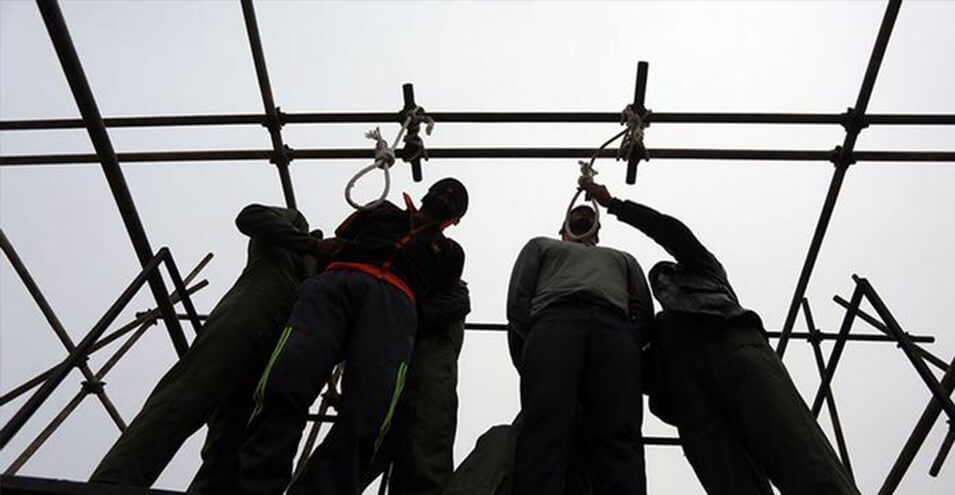
Amnesty International has expressed concern over the fate of hundreds of Ahwazi Arabs imprisoned in Iran, 22 of whom are said to have been secretly executed. The organization has called for the situation of these prisoners to be clarified as soon as possible.
Amnesty International called for immediate clarification of the fate and whereabouts of hundreds of Ahwazi Arabs who are being held without access to their families or lawyers, a statement issued on Tuesday (November 13) comes amid reports in recent days of secret executions of members of the minority in southern Iran.
Amnesty International said that in the past few days, Ahvaz Arab civil society activists living outside Iran have informed the organization that 22 men, including Mohammad Momeni Timas, a social activist, have been secretly executed.
The statement noted that up to 600 Ahwazi Arabs have been detained by Iranian intelligence agencies since September 24 in response to an armed attack on a military parade in Ahvaz. “If these reports are confirmed, the secret execution of these men would not only constitute a crime under international law, but also an abhorrent violation of their right to life and a mockery of justice, even given the shocking standards of the Iranian judicial system,” said Philip Luther, director of the Middle East and North Africa Division.
The Amnesty International official added that it “seems highly unlikely” that the detainees would have been tried in a fair trial within weeks of their arrest, let alone that they would have had the opportunity to appeal the death sentence.
Amnesty International in its statement named a 30-year-old man named Ahmad Heydari who was arrested a few days after the Ahvaz attack. The family of this young Arab, who according to Amnesty International worked in a ceramics shop, has not heard from him since his arrest. On November 11, the Ahvaz Intelligence Department called Heydari’s family and asked them to come to the office. According to Amnesty International, after visiting, the family was given a death certificate stating that Ahmad Heydari was executed on November 17. Security officials have refused to hand over the body of this young Arab to his family, telling them that they are not allowed to hold a mourning or memorial service for him.
On November 11, in an interview with IRNA Plus, Gholamreza Shariati, the governor of Khuzestan, denied the news about the execution of 22 detainees related to the Ahvaz incident, saying, "This news is fundamentally untrue."
Philip Luther responded to the denial by saying, "In the absence of any information about the whereabouts of detainees feared to have been executed, the governor's denial provides little comfort to families who have not been able to hear from or visit their loved ones since their arrest."
Amnesty International said the execution of these prisoners has raised concerns that hundreds of other Ahwazi Arab prisoners who were arrested after the Ahvaz attack may also face the risk of execution or severe punishment.
The organization has called on Iranian government officials to release information as soon as possible about the whereabouts of these individuals and their court hearings that have been held to date.
Amnesty International also stressed that families and lawyers of those detained should be allowed to visit and have access to them. The organization called for assurances that they were not being tortured or ill-treated. “While the Iranian authorities have a duty to bring to justice any suspects responsible for the Ahvaz attack, they must not use this duty as a pretext to purge members of the Ahwazi Arab ethnic group who have been persecuted,” said Philip Luther.
Ban on talking to the media
The Ahvaz Human Rights Organization issued a statement on Sunday, November 11, announcing that 22 Ahwazi Arab citizens who had been arrested on charges of involvement in the attack on the armed forces parade in Ahvaz, based on an announcement by the Iranian Ministry of Intelligence on October 1, 2018, were collectively executed in Ahvaz Central Prison on Thursday, November 7, 2018, without prior notification to their families.
Mohammad Momeni Timas (nicknamed Abu Nasar), 58, a resident of the Shekareh area of Ahvaz and director of the “Shams al-Janoob” cultural institution, Nassar Momeni Timas, the eldest son of Mohammad Momeni Timas, Ahmad Heydari, 30, son of Abboud, a resident of Koy Kamplo in Ahvaz, and Hatem Savari, 24, a resident of Koy Alawi in Ahvaz, are the four executed detainees whose identities have been confirmed so far, according to the Ahvaz Human Rights Organization.
A source close to the family of Mohammad Momeni Timas had previously told DW that intelligence agencies had prohibited Momeni's family from speaking to the media.
On Saturday, September 21, a group of four opened fire on the crowd during an armed forces parade in Ahvaz. In this armed attack, 24 people, including several civilians, were killed and about 60 others were injured.
Following the attack, for which ISIS claimed responsibility by releasing a video of the attackers, a wave of arrests took place in Ahvaz, and according to Ahvaz activists, around 800 men and women were arrested in Ahvaz, including political and cultural activists and ordinary citizens. These arrests prompted a response from Amnesty International.
Source: DW