The European Union sanctions 11 Iranian individuals and four entities for their role in the repression of protesters.
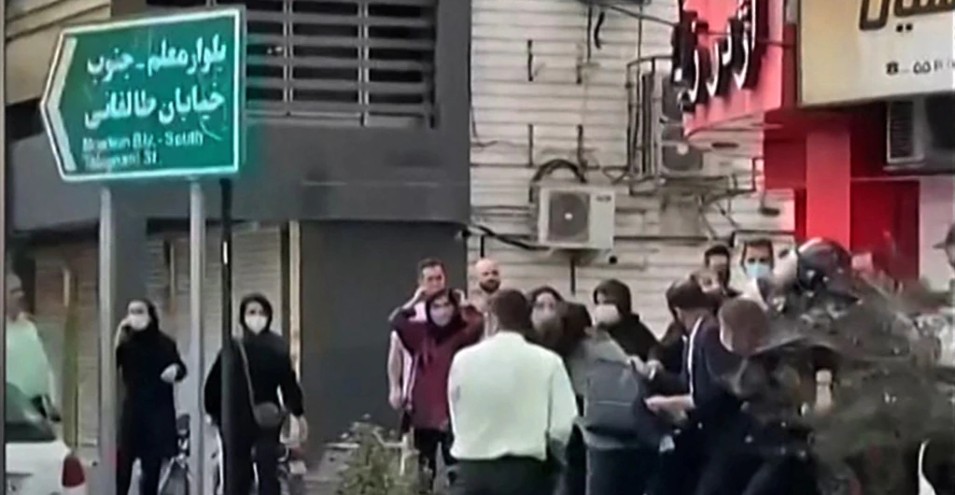
On Monday, the European Union sanctioned four entities and 11 senior Iranian military and security officials, including Communications Minister Issa Zarepour, for their role in the widespread suppression of popular protests.
According to the Council of Europe website, at their meeting today, the European Union foreign ministers sanctioned the Moral Security Police, the Basij of the Oppressed, the Cyber Defense Headquarters of the Revolutionary Guards, and the Police Command of the Islamic Republic of Iran.
Ahmad Mirzaei, head of Tehran's Guidance Patrol, and Mohammad Rostami, head of the Moral Security Police of the National Security Force, are also on the list of new European sanctions against Iran.
Other names of those sanctioned include: Hossein Rahimi, the commander of the capital's police, Abbas Abdi, the commander of the Divandarreh police force in Kurdistan Province, Ali Azadi, the commander of the Kurdistan provincial police force, Ali Safari, the commander of the Saqqez police force, Mohammad Hossein Sepehr, the commander of the Central Training Headquarters of the General Staff of the Armed Forces, Ali Reza Adiani, the head of the political ideology of Faraja, Mohammad Zaman Shalikar, the commander of the Babol police force, and Salman Heydari, the commander of the Bukan police force.
The report adds that the sanctions are due to the role of these individuals and institutions in the death of Mahsa Amini in the custody of the Guidance Patrol, the violent suppression of popular protests, the cutting off of people's access to the internet, and the widespread arrest of protesters: "The European Union and its member states condemn the widespread and disproportionate use of force against peaceful protesters. This is unjustifiable and unacceptable. People in Iran, like anywhere else, have the right to protest peacefully, and this right must be guaranteed under all circumstances."
The European Union has further stated that it expects Iran to immediately stop the violent repression of peaceful protesters, release those detained, and end restrictions imposed on the free flow of information, including access to the internet.
The statement also stated that the EU expects Iran to provide transparency about the number of deaths and detainees and to provide a proper process for the release of all detainees: "The murder of Mahsa Amini must be properly investigated and any factor proven to be responsible for her murder must be held accountable." The approval of the EU sanctions comes after the Politico magazine recently reported that Iran had sent a private letter to a group of European diplomats, threatening them for trying to pass human rights sanctions against Tehran for its deadly crackdown on popular protests, and had said that approving the sanctions could disrupt EU relations with Iran.
Before the European Union, Britain, the United States, and Canada had also sanctioned officials and institutions involved in the bloody suppression of peaceful public protests.
In the absence of government statistics, the human rights website HRANA reported on October 14 that, according to its sources, at least 240 protesters, including 32 children, were killed by the Islamic Republic's security forces between September 16 and October 13, 1401.
According to these statistics, 26 members of the Islamic Republic's security forces have been killed so far during the crackdown on protesters.
While the Islamic Republic has not provided an exact figure for those arrested in the recent protests, this news site estimates the number of those arrested at around 7,800, of which 738 people, including 175 arrested students, have been identified.
Source: Radio Farda