Mike Huckabee's Statements on Israel's Biblical Right to the Middle East and the Wave of Reactions
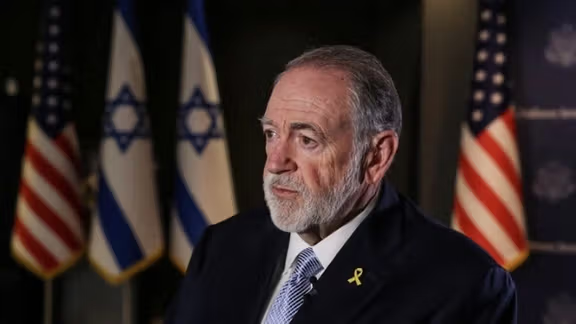
The controversial statements of Mike Huckabee, the US ambassador to Israel, who described Israel's sovereignty over large parts of the Middle East based on the Bible, provoked strong political and diplomatic reactions.
A number of Arab and Islamic countries have issued official statements condemning the controversial remarks made by US Ambassador to Israel Mike Huckabee, who said in a recent interview that Israel could seize a large part of the Middle East based on his interpretation of the Bible.
In response to a question from conservative American host Tucker Carlson about the meaning of a verse from Genesis, Huckabee said that in his understanding, the land promised to the Jewish people "from the Nile to the Euphrates" includes large parts of the Middle East, and when asked if Israel has the right to take it, he replied: "If everyone takes it, that's fine."
These remarks have been described in the media and in analysis as unprecedented and provocative, and have been met with strong reactions from Islamic and Arab countries, who have called them dangerous, provocative, and contrary to the principles of the United Nations Charter and international law.
Countries such as Saudi Arabia, Egypt, Jordan, the United Arab Emirates, Qatar, Kuwait, Oman, Bahrain, Lebanon, Syria, Palestine, Indonesia, Pakistan and Turkey, in joint or separate statements condemned the remarks. Many of these countries said that Huckabee's remarks not only threatened the security and stability of the region but also violated the national sovereignty of the countries in the region.
Some of these reactions were:
- Saudi Arabia called Huckabee's remarks "irresponsible" and "unacceptable" and demanded transparency from the US State Department.
- Jordan described these statements as an attack on the territorial integrity of countries in the region.
- Egypt stressed that Israel has no sovereignty over the occupied Palestinian territories or other Arab lands.
Following this diplomatic pressure, the US Embassy in Israel stated that Huckabee's comments were "taken out of context" and did not represent any official change in US policy. According to the statement, Huckabee stressed that Israel does not seek to occupy or take over other countries and that the topic of discussion in the interview referred to the country's current security and land.
Huckabee, an ambassador-designate to the U.S. government and a prominent figure in the Christian Zionist movement, has previously made comments that highlight broad support for Israel based on religious-political views. Some analysts have suggested that these views make his views on sensitive Middle East issues too harsh and outside of typical diplomatic approaches.
This controversy has occurred while political and military challenges in the region continue, especially in the instability related to the war in the Gaza Strip and tensions between Israel and Iran, an issue that international analysts also point to in analyzing the strategic perspectives of the United States and its allies.
Overall, Huckabee's remarks have led Arab and Islamic countries to once again emphasize the need to respect national sovereignty and international law, and to call on the international community to reject views that may fuel increased religious and political tensions.