Widespread protest by Iranians in Germany and Europe against death sentences in Iran

Iranian political movements abroad, along with the Iranian Political Refugee Center in Berlin and the Iranian Democratic Forum in Germany, protested in various ways against the death sentences handed down to those arrested in November in Iran.
The issuance of death sentences for a group of detainees from the November protests in Iran has met with widespread reactions both inside and outside Iran. The protests, which took place last fall over rising gasoline prices, were brutally suppressed. A group of activists and organizations abroad have tried to raise public awareness of the issue and have called for an end to the killings, imprisonments, and executions in Iran, in protest of the continued repression of November, which is reflected in the death sentences for those detained in these protests.
In this regard, a group of Iranians gathered in front of the Islamic Republic's embassy in Berlin on Tuesday, June 30, at the invitation of the Iranian Political Refugees Center in Berlin and the Committee for the Defense of Iranian Political Prisoners in Berlin.
In a statement on the occasion of this rally, these two organizations in Berlin pointed to the increase in "poverty and unemployment" and the worsening living conditions and livelihoods of the "majority of the Iranian people" and wrote that "the regime has begun a new round of repression and pressure on political activists, women, workers, and students out of fear that the atmosphere of struggle in society will return to November 2019."
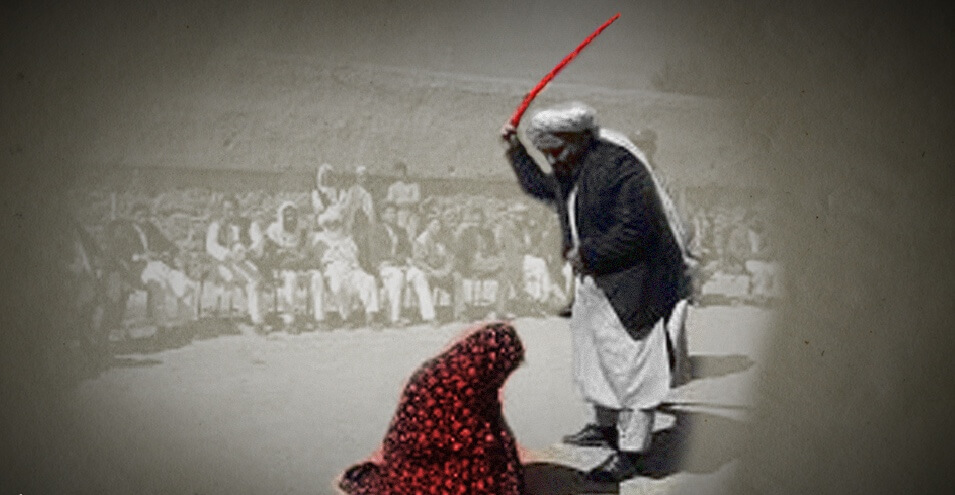
This call refers to a list of unjust sentences, including flogging, imprisonment, and execution sentences for Amir Hossein Moradi, Saeed Tamjidi, and Mohammad Rajabi, the "corruptor on earth" sentence for 8 of the protesters in January 2017 and November 2019, and prison sentences for 42 workers of the Azarab complex in Arak who were summoned and arrested during the strike and march in October 2019, or flogging and forced labor for them.
Also, the secret execution of Hedayat Abdullahpour, a Kurdish political prisoner, last month, the poor health of Zeinab Jalalian, a Kurdish political prisoner who has contracted the coronavirus in Qarchak Prison, and the five-year prison sentence for Sepideh Qolyan, one of the convicts in the Haft Tappeh sugarcane case in Khuzestan.
The Center for Iranian Political Refugees in Berlin and the Committee for the Defense of Iranian Political Prisoners in Berlin have called for the cancellation of all death sentences and the immediate and unconditional release of all imprisoned political and ideological activists.
" The government, fearing a popular uprising, has resorted to executing young people ."
On June 29, four other political movements, namely the "Union of Republicans of Iran", the "Left Party of Iran (Fedayeen Khalq)", the "Organizations of the Iranian National Front Abroad", and the "Solidarity of Republicans of Iran", protested the repression, imprisonment, and issuance of death sentences in Iran.
They wrote in a statement: “Seven months have passed since the bloody suppression of the people’s protests in November 2019. While Amnesty International has published details of the deaths of 304 protesters and news agencies, citing sources within the government, have announced the number of victims of the government’s massacre at 1,500, the government itself, after months, has announced the number between 200 and 220. The Islamic Republic does not consider the killing of hundreds of its compatriots enough and wants to commit more killings.”
In the view of these four political currents, the approval of death sentences and the threat to issue even more such sentences “indicates the government’s fear of a popular uprising, given the country’s chaotic situation” and “reflects the government’s inability and inability to respond to the people’s needs and prepare for a broader confrontation with them in the future.”
These four political currents have said that Iran is struggling with the coronavirus epidemic, but the leaders of the Islamic Republic "are threatening people with imprisonment and execution instead of solving the people's huge livelihood and health problems and preventing further deaths."
They pointed to the sealing of the "Imam Ali Society" organization and the arrest of its founders and wrote: "People-based relief organizations such as the Imam Ali Society are also not tolerated, as they have been able to gather more than ten thousand members by relying on public donations and provide many needy people with support. Instead of handing over the administration of the country to the people themselves and their true elected representatives, the government is trying to create as many barriers and obstacles as possible against the people's desire to change the current situation and transition to a free and democratic society."
These four political parties and organizations have called for the abolition of death sentences and the unconditional release of political prisoners.
Open letter from the Iranian Democratic Forum to the Federal Human Rights Commissioner of Germany
On Monday, July 29, the Iranian Democratic Forum in Germany in the city of Mainz also wrote a letter to Börbel Kofler, the German human rights official:
"You have repeatedly stated that the task of the Federal Commissioner for Human Rights is: 'to protect human rights and to work towards the implementation of human rights worldwide. This is a central task of German foreign policy. But the focus of the German government's international actions is not only to focus on protecting human rights and creating an international political climate in this regard, but above all to work to protect those who are threatened and harmed by human rights violations.'"
"With this open letter, we urge you to do everything possible to prevent further executions in Iran. You know that flagrant human rights violations are common in Iran and part of the Iranian regime's policy. It is also clear where Iran ranks in the world for executions."
They have asked Börbel Kofler to work in regular contact with the institutions of the European Union, the European Cooperation Organization, the Council of Europe, and the United Nations to protect human rights in Iran, and they wrote:
"You know that the Federal Republic of Germany has bilateral political and economic relations with Iran, which also began with an important 'critical dialogue'. We would like to ask you, as the human rights representative of the Federal Republic of Germany, to do everything possible to prevent the execution of the Iranian people and to condemn the totalitarian regime in Iran. We are concerned about the many political prisoners in Iran who, after being arrested, are either facing imprisonment and torture or are being executed. It is completely incompatible with the Universal Declaration of Human Rights that the Iranian regime enriches itself through economic pressure on the poor and treats the people of this country in this way."
Source: DW