Increase in arrested drivers coincides with Aegean order to deal with strikers
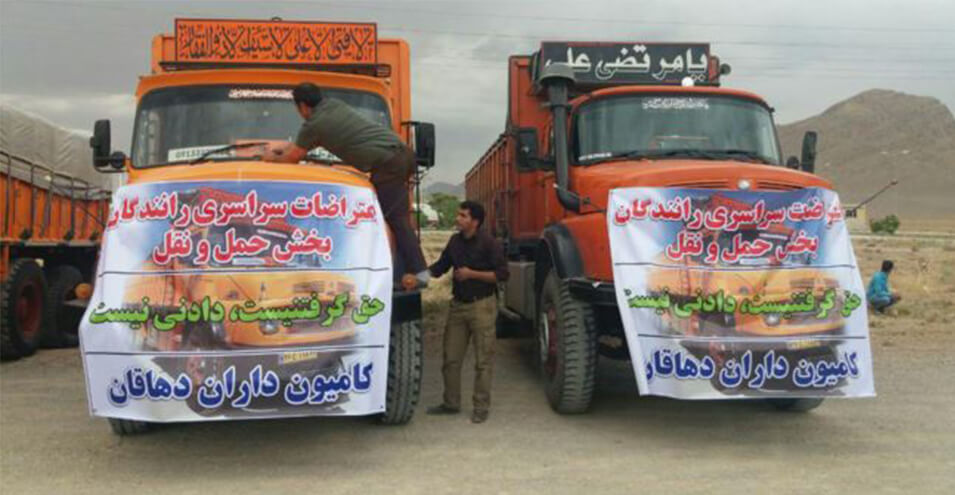
The arrests of striking truckers and drivers continued despite the warning from the First Deputy Chief of the Judiciary.
It seems that after Thursday’s arrests in big cities, arrests have also begun in small towns. According to Mehr News Agency, Zarand Prosecutor Mehdi Qavidel announced on Sunday, October 29, that seven people who he said were “provoking and threatening” drivers had been arrested. He said that the seven people “are accused of provoking other drivers and threatening active drivers with the intention of intensifying and disrupting the traffic of trucks on the roads and highways of this city.”
At the same time, Mohsen Ejei, First Deputy Head of the Judiciary, said that action will be taken against those who, according to him, "are trying to disrupt the transportation and goods transfer services at the instigation of enemies."
He spoke about the arrest of people who use stones and sticks to prevent trucks from moving on the roads and stop them.
These remarks come at a time when, at the same time as dozens of striking drivers and truckers were arrested across the country, judicial authorities in various provinces, including Fars, brought charges of "corruption on earth" and "road blockade" against the detainees.
It appears that the judicial system, by bringing charges such as corruption on earth, is seeking to issue severe sentences, including the death penalty or long prison sentences, for the planners of the widespread strike by drivers and truckers.
This is while truck drivers and truck owners, in two phases of a nationwide strike, demanded an increase in fares in line with the sharp increase in the prices of spare parts and tires.
In videos posted on social media of striking drivers, the drivers announced that they were no longer able to procure tires and transport cargo due to the sharp increase in tire prices.
In the first phase of the strike, which took place in June of this year, drivers demanded an increase in fares, a reduction in commission rates, and continued subsidy for their insurance premiums, to which the government ultimately agreed to a partial increase in fares. However, the sharp increase in the exchange rate, which led to a sudden increase in the price of tires and spare parts, once again prompted the drivers to strike.
These strikes have the support of global unions, including the International Transport Workers' Federation, which also supported the truckers' and drivers' strike. In recent days, other international support for the strike has also been received.
The North American Truck Drivers International Union also supported the striking truck drivers in Iran in June of this year.
Source: Voice of America