Economy under ceasefire: From destruction of livelihoods to nightly blackmailing of businessmen
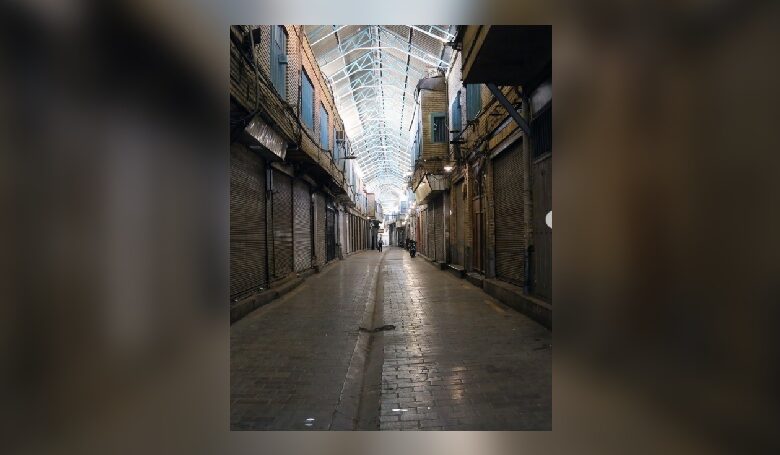
The economy under the ceasefire in the people's narrative: "Businesses have been destroyed, unemployment is widespread, and organized pressure on us businessmen has increased, to the point that they have resorted to nightly blackmail and threats."
While the temporary ceasefire and reduction in attacks are seen by many as a sign of calm, the narratives emerging from the cities paint a completely different picture: one of the gradual collapse of livelihoods, the closure of businesses, and increasing pressure on the productive sectors of society.
Limited access to the internet has meant that only a group of citizens, at great expense, can publish their narratives; narratives that have transcended unemployment and, as some would say, reached "complete economic ruin."
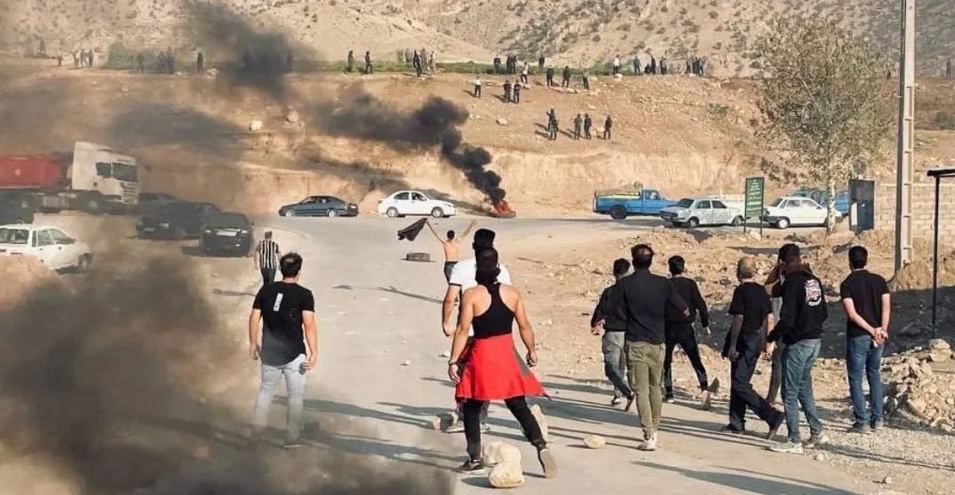
One of the less talked about aspects these days is the increasing pressure on local businesses. “Siavash,” a cattle farmer living in a city in Tehran province, says of the changing street atmosphere after the ceasefire: “They are staging Heydar Heydar and Jang Jang t’a-Viruyosh caravans in the neighborhoods, and they are taking bribes from businesses to feed the people who bring black money.”
He explains that the gatherings are now wider and longer: "They were there before. But anyway, the bombing and airstrikes caused them to gather in specific places, with a little eulogy and noise, and they would gather around 11 p.m. But now they come every night from six or seven in the evening and are on the streets until the early hours of the morning."
According to him, the provision of food for these gatherings is practically imposed on the businessmen. He says: "For example, they told me that I have to give them 100 kilos of milk, and we want to serve people with cocoa milk. They tell the butcher to give you meat. The restaurant has to provide food, coffee and tea. If anyone protests, they are threatened with sealing and confiscation of their property."
He described the situation as a form of extortion, adding: "They are feeding on us like parasites. They are forcibly extorting business owners, and the slightest protest is met with threats."
In industrial areas, conditions are reported to be even more critical. Farshad, a worker at a petrochemical plant, describes the situation this way: “I bought two gigabytes of internet for 2 million tomans, just to say that what we are witnessing in Bandar Imam and Mahshahr is not unemployment, it is destruction.”
According to him, the damage to critical infrastructure has created a chain of unemployment: "Tens of thousands of workers have been unemployed after the targeting of Fajr One and Two complexes, and hundreds of workers are on the layoff list."
He also refers to the deaths of workers and demands that their names be seen: "In this attack, six workers from Fajr Petrochemical were killed. Hossein Hashempour, Ali Emami, Mehdi Vaysitabar, Abuzar Reyhani, Ali Mombini, and Mohammad Torabi. Take their names, don't let their names be forgotten in this uproar."
The concerns are not limited to the unemployed; even formal employees are talking about their uncertain future: "Right now, there is no news of returning to work. Then they go on television and do interviews saying that everything will be back to normal in six months."
In various cities, small businesses, which are usually the most vulnerable part of the economy, are collapsing at a faster rate.
"Ustad Hossein," a veteran cleaner in Tabriz, talks about his efforts to help people during the crisis, but emphasizes that he cannot afford to continue this process: "I earned money, but it wasn't enough for two students. I had to tell one of them not to come."
He talks about clients for whom cars are a means of livelihood: "One is a courier, one works for Snap. People's cars were left under the rubble or smashed."
In Tehran, markets like Lalehzar, which once thrived, are now facing a severe recession. “I’ve auctioned everything off, but still no one buys,” says Ali, the owner of a chandelier shop.
He has decided to change his job: "All my hopes for sales were on Eid. This year, nothing. Even now that I have put more than 60 percent off on most things, no one is buying. The supermarket always makes money. You can't not buy food."
Financial pressures from banks have also fueled this crisis: "My bank, regardless of the circumstances, sends threatening text messages every day that they will take legal action. So where do we get it from?"
What emerges from these narratives is a picture of an economy that is being eroded not only by the direct impact of the war, but also by its indirect consequences; from disruptions in the supply chain and reduced demand to social and structural pressures on businesses.
Economic experts emphasize that in post-war periods or fragile ceasefires, the greatest damage falls on small businesses and daily wage laborers; groups that have limited financial reserves and are more likely to exit the economic cycle than others.
In such circumstances, the sentence that "Master Hussein" says at the end may be a summary of the current situation of many people: "No matter how much treasure Qarun has, if there is no market, it will run out. How much can you eat out of your pocket? Pray for us, the people of Iran."