"Fake Imamzadehs" and the Registration of 11,000 Imamzadehs After the Revolution
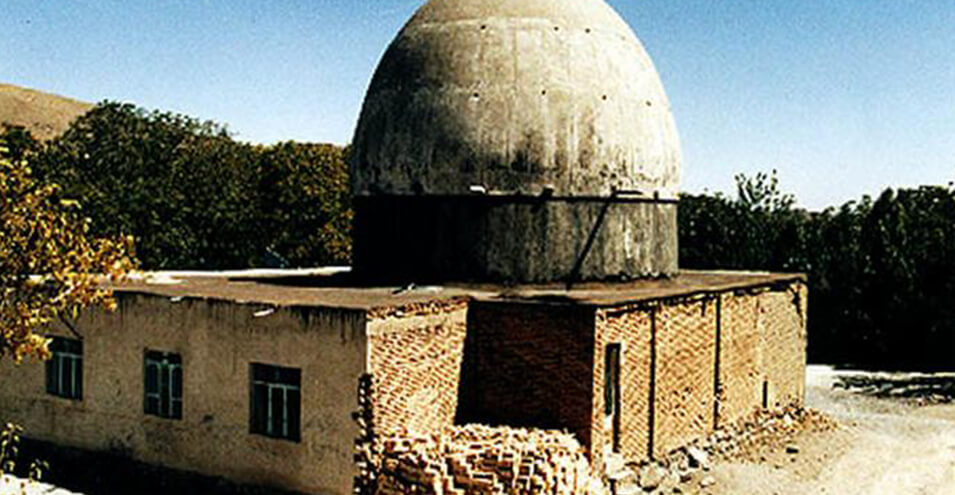
After the revolution, the number of Imamzadehs in Iran increased sevenfold. This statistic, which includes Imamzadehs such as Bijan, Ahani, and Zanjiri, has led some to question whether this is a "shop" or, as the deputy head of the Awqaf Organization said, a result of more accurate statistics?
More than seven years ago, Hassan Rabiei, spokesman for the Endowments and Charitable Affairs Organization, spoke of a sevenfold increase in the number of Imamzades in Iran in the years following the revolution, and this upward trend has continued to this day. In 2011, Rabiei announced the number of official and approved Imamzades by the organization at nearly 11,000, saying that they were buried in more than 8,000 tombs.
According to officials, the number of Imamzadeh shrines in 1979 was about 1,500, while in just three decades after the revolution, this number increased sevenfold.
Some believe that the reason for the unbridled increase in the number of Imamzadehs is the abuse of people's religious feelings for financial gain, as well as a sign of the intensification of superstition in Iranian society.
This new phenomenon has become so widespread that it has not only opened up space for expressions such as “fake Imams,” “unauthentic Imams,” and “Imam-making,” but has also repeatedly prompted members of parliament to protest. Khabar Online writes in a report that its follow-up shows that some members of parliament believe that the Awqaf Organization has not done much to combat “unauthentic Imams.”
Mohammad Ali Pourmukhtar, a member of parliament, has called for a “strong response to the increase in fake imamzades” in an interview with Khabar Online. He says that in this process, money is taken from the people and “tens of millions” are spent on the shrine. Therefore, the Awqaf Organization, which is the main custodian of this matter, should intervene in this issue “to prevent insults” and not allow “these abuses.”
Khabar Online writes that the Parliament's Article 90 Commission entered into this issue years ago and was able to prevent the spread of Imamzadeh construction to some extent. However, Gholamali Jafarzadeh Aymanabadi, a representative of the people of Rasht in the Parliament, says that this has not had much effect and "not much has happened yet to dismantle these Imamzadehs."
Jafarzadeh Aymanabadi, disagreeing with the statements of some officials of the Endowment Organization who believe that the reason for the statistical difference before and after the revolution is the inaccurate statistics before 1979, says that the statistics of Imamzadehs before the revolution "were accurate and this statistical growth has no legal basis."
According to him, despite the action of the Article 90 Commission of the Majlis, people still tie cloths or locks to some trees, "while some of these imamzades and tombs do not have any genealogies."
He has asked endowment officials not to allow people's religious feelings to be played with and not to let resorting to imams become "a business opportunity for a neighborhood or village council."
“Imamzadeh Bijan, Chained and Iron”
Gholamreza Adel, deputy director of the Cultural and Social Affairs Department of the Endowments and Charity Organization, told Khabar Online that pre-revolutionary statistics on Imamzadehs were mostly based on "guessing and speculation," while these statistics are now "accurate and up-to-date."
He points to the news of some names of Imamzadehs making headlines in the world of satire and says, “People’s incorrect use of some titles and terms for Imamzadehs… has further contributed to the spread of superstitions in the holy shrines.” According to him, “Imamzadeh Bijan” is actually Imamzadeh Seyyed Mohammad, known as “Bi-Jin,” which is pronounced “mistakes” Bijan.
The Imamzadeh of Seyyed Jalaluddin, next to the historic Nasir al-Molk Mosque in Shiraz, was also known as "Zanjiri" by the people because in the past a chain was attached to the door of that place that pilgrims would tie around it. The Imamzadeh of Mohammad in Mamasani County was also known as "Iron Imamzadeh" by the people because an iron door was installed for it in the past.
One of the endowment experts rejects the financial use of Imamzadeh construction and says in an interview with Khabar Online: "The income of some of these Imamzadehs does not even amount to one million Tomans in three months. The issue of Imamzadehs generating income has been exaggerated."
He also responds to the question of why there are more Imamzadehs in the north of the country, saying that there are "historical reasons" for this, and one of these reasons was the "rule of the Alawites of Tabaristan in this region."
Mehdi Izadi, deputy director of the Mazandaran Province Cultural Heritage Department, told Khabar Online that there are 110 tombs in the province, “some of which have genealogies.” He emphasizes that the organization does not enter into whether or not the Imamzadehs are fake, and that the responsibility for this lies with the Endowment Organization.
Seven years ago, cultural heritage expert Masoud Roshan told the ILNA news agency that only 2,000 Imamzadehs in Iran have documents and genealogies. He estimated the number of Imamzadehs in Iran at that time to be more than 10,000, and said that 4,000 of these were attributed to Musa Kazem, the seventh Imam of the Shiites.
According to this expert, the reason why many of these Imamzadehs are not actually the children of the Imams is that at the time of the Arab invasion, people called these places tombs and attributed them to the Imams and prophets, out of fear of destroying ancient monuments or because they had hidden their valuables there.
He also considered the existence of Imamzadehs in remote mountains to be lacking historical evidence and a sign of "the prevalence of a kind of superstition."
Source: DW