Two MPs criticize the performance of the "Guidelines Patrol"; three MPs attack protesters
Jalal Rashidi Kochi, a representative from Marvdasht in the Islamic Consultative Assembly, says that the Ershad patrol has caused nothing but "cost and damage", has caused "damage" to the police, and that the Islamic Republic's view of women's hijab is "contradictory".
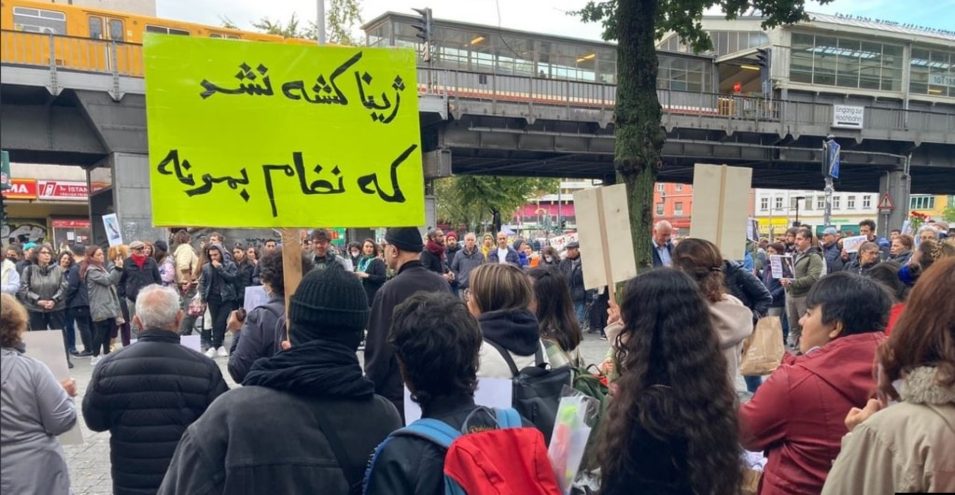
The representative's remarks come after protests have spread over the death of Mahsa Amini, a young woman from Saqqez, who was beaten by the Ershad patrol and police.
Mahsa Amini, a 22-year-old girl who had traveled to Tehran with her family to visit relatives, fell into a coma hours after being arrested by the Ershad patrol and transferred to the Vazra Moral Security Police and died on September 17 at Kasra Hospital.
Although eyewitnesses, family, and hospital reports deny that the young woman died of natural causes, Iranian police claim that she suffered a "cardiac arrest," and other officials have also claimed "underlying illnesses."
On Tuesday, September 19, Jalal Rashidi Kochi, contrary to other political and police officials who claimed that the enemy was "misusing" the death of Mahsa Amini, said that "the Ershad patrol has had no result other than cost and damage to the system, but the main issue is that some people are resisting accepting the truth."
Stating that "the law enforcement force is being harmed by the Ershad patrol," he added: "Some of our friends are not willing to talk about their mistake at all and insist that they did the right thing. Friends must accept that the Ershad patrol was a mistake because it has resulted in nothing but losses and harm to the country."
Rashidi Kochi continued: "If a woman stands in line to vote wearing an inappropriate hijab, the IRIB will show it 20 times on voting day... After she votes and goes home, the same woman will be arrested by the Ershad patrol tomorrow. This is a paradox."
This representative has cited the lack of "honesty and attempts to cover up" as the reason for citizens' distrust of the Islamic Republic of Iran.
Another report indicates that while the death of Mahsa Amini overshadowed Tuesday's session of the parliament, out of the five speakers, only Behzad Rahimi, a representative from Saqqez and Baneh, addressed the core issue of the violence of the Ershad patrol in dealing with Ms. Amini.
Rahimi criticized the "coercive behavior" of the guidance patrol in Iran, saying that the guidance patrol "has always been stressful for our women."
The representative, calling for a "revision" of the guidance patrol, said that members of parliament should "understand the realities of society more," listen to "the voices of the people," and not "disappoint society and the people on the street."
Anwar Habibzadeh Bokani, a representative from Bokani, also said that "it is expected that reviewing the performance of the Guidance Patrol will be among the priorities of the parliament, and that the working methods of the Guidance Patrol and the Encouraging Good and Forbidding Evil will be revised."
But the other three speakers of the parliament either warned the "enemies" to "refrain from slandering and defaming this sacred system," or attributed the public protests to the "leaders of the 1988 movement," or advised those following the case of Mahsa Amini's murder to separate themselves from the "counter-revolution."
Mohammad Baqer Qalibaf, the Speaker of the Parliament, accused fellow political groups and foreign media of "creating chaos and incitement."
He also promised that the Parliament's Internal Affairs Committee, while investigating Mahsa Amini's case, "will examine the implementation method of the General Police Command's moral security patrols so that steps can be taken to eliminate the existing problems in how they are implemented."
After the announcement of Mahsa Amini's death, public protests were held in various cities in Iran, and many women took off their hijabs and participated in these gatherings.
Despite strong domestic and international criticism, the Islamic Republic's response to these gatherings, as in the past, has been to arrest, assault, and shoot protesters.
Source: Radio Farda