Strong criticism of Rouhani following decree to resume economic activities
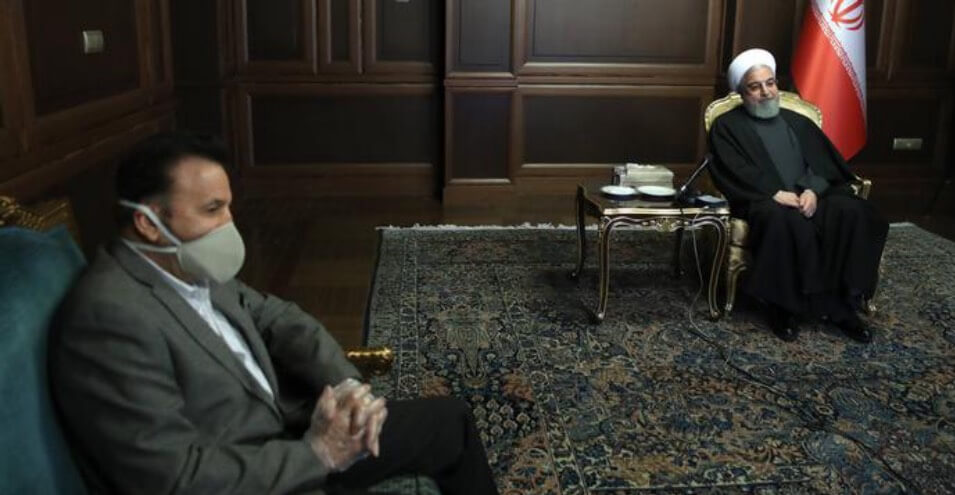
Despite the coronavirus crisis, Hassan Rouhani has ordered the reopening of “low-risk” businesses. This policy has faced strong criticism among members of parliament and some government officials, who see the decision as a major risk in containing the coronavirus.
On Monday, March 6, Iranian President Hassan Rouhani said in a government economic meeting about the increase in unemployment and the closure of small workshops, “Some one-person and multi-person workshops, as well as workshops with more than 50 people, have been closed, and about 3.2 million people were employed in these cases, and their lives have been put under pressure.” He referred to three million “pressured households” and low-income groups in society and said: “We have provided them with a support package in four installments, the first phase of which has been paid from 200,000 to 600,000 tomans, and the second phase will be paid by the end of Farvardin and will be paid in two more months.”
The coronavirus crisis has presented a major challenge to the government, which had already been severely depleted of revenue before the pandemic. Now the government must decide between containing the disease and protecting the health of the people on the one hand, and restarting parts of the economy on the other.
Hassan Rouhani claimed yesterday that “the situation in some provinces is clear.” With the same claim, he ordered on Sunday, April 7, that “low-risk businesses” would resume operations from April 13, i.e. two-thirds of businesses. But before this date, and practically from Saturday, April 6, the face of Iranian cities had changed, and the movement of people and vehicles in cities had increased the concerns of the people and some officials.
In response to Rouhani’s claim, Health Ministry spokesman Kianoush Jahanpour called the situation “red.” He declared that “no province is in a white state” and that “failure to comply with restrictions after April 13 will create a problem.” Referring to the statistics provided by the Chinese government regarding the coronavirus, he called them “a bitter joke.”
Minoo Mahrez, a member of the National Committee to Combat COVID-19 in Iran, also confirmed Kianoush Jahanpour's statements about the statistics provided by China on Monday, April 8, telling ILNA news agency: "The disease has proven that its lethality and contagiousness are horribly higher than China's claims." He added: "It is not clear that the area of the outbreak was only Wuhan. We do not know whether the disease has been contained in China or not? With the history we have of their scientific studies, we know that their statistics cannot be relied on either."
"The president's decision and reasoning are 100 percent wrong"
Ahmadi Moradi, a representative from Bandar Abbas, told ILNA news agency on Monday: "When I heard the president's statements about the situation in Hormozgan province being white, two hypotheses came to my mind; either he was given false information or the president raised this issue out of negligence."
He considered the second option closer to reality and asked: "How is it possible for the president of the country to divide the provinces and consider one place gray, one place white, and another place red. When the virus goes global, it means everywhere is red and different countries are planning to contain it."
Ahmadi called Hassan Rouhani's "decision and reasoning" "100 percent wrong" and called for giving full authority to governors to quarantine or restrict movement in certain areas. He told ILNA: "Regarding the issue of declaring a white status, we say clearly that no, the situation is 100 percent red, and the Ministry of Health has also officially announced that we do not have a white status anywhere."
Ahmad Hossein Ghorbani, a representative of Gilan province and a member of the Parliament's Health Commission, also told ILNA, referring to the decreasing trend in this province, "In China, after they lifted the quarantine, they reimposed the quarantine after the outbreak and the peak. The issue we are concerned about is that this procedure, which has been announced to be considered for ordinary people, could be a cause of crisis and danger."
Regarding the announced date for the reopening of economic units and guilds, he believes that "this virus still has no specific protocol or schedule anywhere in the world, even in developed countries, and the World Health Organization has not announced such a plan."
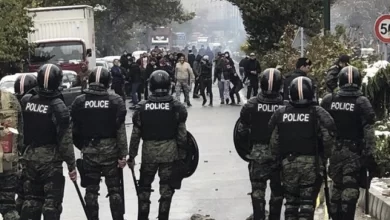
But even before the date for the opening of what the president called "low-risk" businesses arrived, the face of Iranian cities changed.
Mohammad Javad Jamali Nobandegani, a representative of FASA, told ILNA: "Unfortunately, after the holidays ended, we saw heavy traffic in the city and some businessmen returned to their workplaces. I must emphasize that this happened at the worst possible time, because many people had returned to Tehran from their trips and may have been carriers of the disease during their travels."
The Iranian parliament is currently closed and has virtually no role in policymaking to overcome the coronavirus crisis. Referring to the long closure of parliament, MP Fatemeh Saeedi tweeted that the deputies will call for a month-long closure in Iran in the first session. She called the disregard for people's health an "unforgivable mistake."
"The government could not manage even less important issues than Corona"
Criticism of the government is not limited to members of parliament and government officials. Referring to the economic hardships caused by the government's declining revenues and increasing costs on the one hand, and "the rightful expectation of society that measures be in line with the opinions of health experts" on the other, Abdullah Nasseri, a member of the Reformist Coordination Council, told the "Jahan-e-Sanat" newspaper about Rouhani's performance that "in the past years, Rouhani has not been able to manage even issues less important than the coronavirus."
Nasseri has called Rouhani's performance passive and "a burden in every way," and said that expecting him to manage the coronavirus crisis is "basically an unrealistic expectation because he has long seriously shown that he has no plan and is suffering from extreme routine."
Abdullah Nasseri has also been highly critical of Rouhani’s ministers. “Nameh News” quoted him as saying on Monday that if Rouhani “removes weak and incompetent ministers from his circle and appoints a group of experienced people to manage the coronavirus, good decisions can be made even under these conditions of sanctions and with these limited resources. But people should know that desirable anti-corona decisions cannot be made with Mr. Rahmani, Mr. Namaki, and Mr. Nobakht, and unfortunately, Mr. Rouhani will also fall into the well with their rope.”
According to this reformist figure and many experts, although the government in Iran should also take the path that many countries took to contain the disease, the economic conditions in Iran are a major problem for implementing the necessary restrictions. Abdullah Nasseri said in this regard: "The reality is that the way to save the country in the fight against Corona is complete quarantine, and this complete quarantine requires financial resources so that the government can manage the lives of the people. However, the government has neither such motivation nor the necessary financial resources for this task."
To lift sanctions, Iran must engage with the world
In recent weeks, the Iranian government has repeatedly complained about the sanctions as a major obstacle to the fight against COVID-19. The Iranian foreign minister has even called them a “crime.” This is despite the fact that he has previously claimed that the Iranian people themselves “chose” to live under these conditions, regarding the sanctions and the problems they have created for their people.
Abdullah Nasseri, like many reformist political figures, advises the Iranian government in these difficult and very special circumstances to "take the lead in resolving international issues and resolving the sanctions dispute," because only then "can we hope that in the current emotional and moral conditions of the world, it will be able to somewhat rebuild its oil market and plan for the future."
Nasseri warns that Iran should not follow the path of countries like North Korea because "countries that are currently facing international sanctions, such as Iran, Syria, and North Korea, will seriously not be able to manage the coronavirus in accordance with the global protocol."
Both he and many health and medical experts are concerned about the consequences of Hassan Rouhani's decision, believing that he "may be able to reduce some of the economic pressure on his government with this action, but there will definitely be a wave of dissatisfaction and protest ahead."
Source: DW