Famous Arab Thinker: Islam Has Never Had a Martin Luther
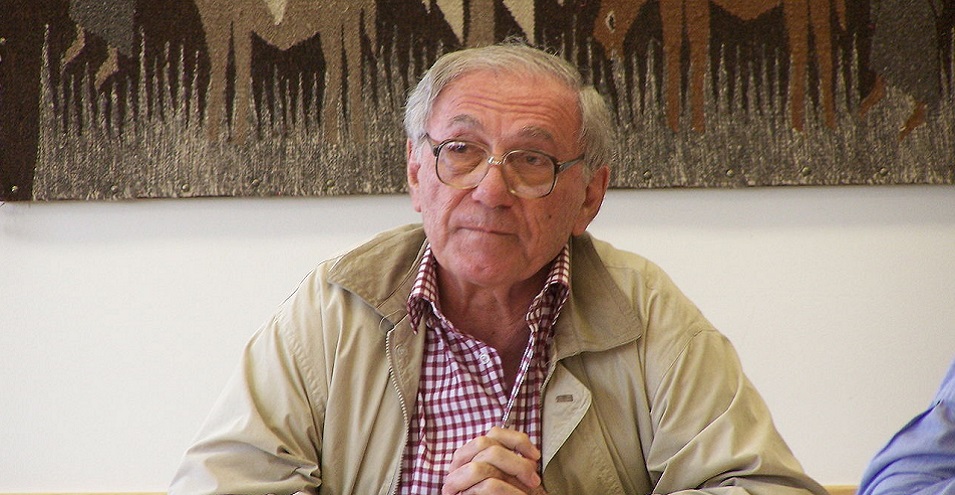
Sadiq al-Azm believes that the main problem of Islamic societies is that they have not been able to reconcile their religious beliefs with the modern world. According to him, most Muslim people want the growth and prosperity of the modern world combined with medieval ideas and beliefs.
Sadiq Jalal Al-Azm
Religious intellectuals constantly debate and argue about why Islamic societies are in a state of crisis and total decline. They think of everything except that the problem with these societies is precisely that they are "Islamic" and still adhere to beliefs that are not compatible with their times.
Sadeq Jalal al-Azm, a renowned Syrian philosopher and thinker, says in an interview about the growth of fundamentalism: “Islamists carry the symptoms of a disease. They reflect the failure of Arab modernity: the inability to grow and progress society, to create prosperity and well-being, and… Islamism is a kind of slander against this failed modernity.”
Sadiq al-Azm is considered the most important and influential figure of the Enlightenment in the Arab world. In a short but insightful interview with the Neue Zürische Zeitung newspaper, he summarized his views concisely and clearly.
He considers cultural criticism to be the most important task of intellectuals in Arab societies and believes that this criticism must begin in a fundamental and courageous manner by criticizing religious teachings and foundations that are incompatible with modern structures.
Sadiq al-Azm himself began this criticism many years ago by writing the important book "Critique of Religious Thought," and because of it he suffered a lot of suffering and persecution from fanatics, to the point that extremist groups issued a fatwa for his death. Today, with the spread of the wave of fundamentalism and the disclosure of its dangerous scope and dimensions, the critical views of this thinker have found a new echo.
Read more: Goethe Medal awarded to Syrian-born thinker
The negligence of religious authorities
Sadiq al-Azm accuses the dominant official religious authorities in the Islamic world, such as Al-Azhar in Egypt or the Saudi family with its dogmatic Wahhabi ideology, of using force and fanaticism to prevent religious reform in Islam and prevent it from adapting to the needs and requirements of the times. They opposed any modernity in Islam out of fear of losing their authority and relegating Islam to the private sphere.
These authorities feared that with the growth of secularism, Islam would suffer the same fate as Christianity in the West, being excluded from the public sphere and thus undermining their authority. Their concern was to maintain their spiritual and political authority.
Sadiq al-Azm accuses the official authorities of the Islamic world of providing the ground for the growth of fundamentalism, in such a way that its virus spread like a “disease” throughout Islamic societies. He states that jurisprudence and traditional Islam inevitably lead to “ISIS” and there is no escape from it.
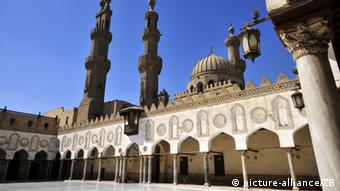 Al-Azhar: A symbol of conservatism and retrograde thinking in the Arab world
Religious reform is more important than secularism.
Sadiq al-Azm considers the establishment of secularism, the principle of separation of religion and politics, to be very important but insufficient. He believes that secularism is impossible while preserving Islamic beliefs, based on jurisprudence and the principles of Sharia. He says that, first of all, this thinking itself must be reformed and adapted to the requirements of the modern world.
The author of "Critique of Religious Thought," who considers himself more indebted to Immanuel Kant than any other thinker, believes that the only thing that can save Islamic societies from the current crisis and turmoil is fundamental religious reform, more or less in the same way that Protestantism prepared Christianity to accept modern civilization.
Read more: Islamic fundamentalism (1)
In Sadiq al-Azm's opinion, the reform of "traditional Islam" should be carried out by Muslim intellectuals, hence he praises the role of thinkers such as Nasr Hamed Abu Zayd in Egypt, Muhammad Arkoun in Turkey, and Muhammad Shahrour in Syria, but regrets that the intellectual efforts of these individuals never became a strong and effective movement that could institutionally transform Islamic societies.
In his opinion, the most important task of intellectuals and reformers in Islamic societies today is to align their religious beliefs with the standards of human rights and individual freedoms.
He emphasizes that Islam has never seen a reformer as profound and courageous as Martin Luther, the founder of the Protestant religion.
Sadiq Jalal al-Azm is considered the spiritual father of all secular and modern Arab writers. This renowned Syrian thinker was born in Damascus in 1934. He is not only well-versed in Islamic and Arabic culture, but also has a deep understanding of Western philosophy and thought, and has taught it at prestigious universities for many years.
Sadiq al-Azm has been repeatedly praised for his enlightened efforts to spread democracy and respect for human rights. On August 28 this year in Weimar, Germany, he was awarded the prestigious Goethe Medal.