Reflections on Pope Leo XIV's visit to Türkiye and his stop at the Blue Mosque and the message of coexistence
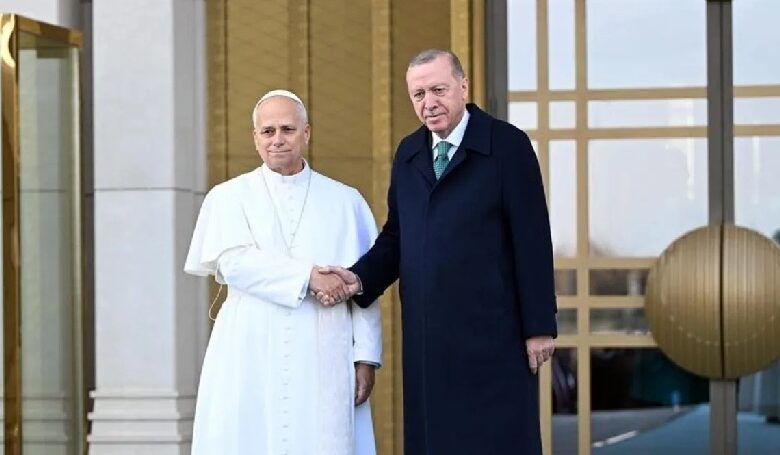
During Pope Leo XIV's visit to Türkiye, the Catholic leader conveyed a new message of coexistence and mutual respect between religions by attending the Blue Mosque.
Pope Leo XIV, the newly appointed leader of the Catholic Church, arrived in Turkey on his first foreign trip, and on Saturday, November 29, equivalent to 8 Azar, in one of the most important stops of his trip, he visited Istanbul's Sultan Ahmed Mosque, known as the "Blue Mosque." This is his first presence at a Muslim place of worship since his election as the leader of the world's 1.4 billion Catholics; a presence that many observers see as a sign of the continuation of the path of dialogue and mutual respect between religions.
Pope Leo XIV, who succeeded Pope Francis, is following in his predecessor's footsteps in supporting dialogue between Islam and Christianity. Pope Benedict XVI visited the Blue Mosque in 2006 and Pope Francis in 2014. However, unlike them, he chose not to visit the Hagia Sophia, an iconic building whose turbulent history has always been the focus of global attention.
Hagia Sophia, a masterpiece of Byzantine architecture from the 6th century, was converted into a mosque after the conquest of Constantinople in 1453, and during the fledgling Turkish Republic, at the initiative of Ataturk, its use was changed to a museum in 1935. The building's inclusion on the UNESCO World Heritage List also solidified its global significance. But the Erdogan government's reversion to a mosque in 2020 drew widespread criticism, with even Pope Francis expressing regret over the decision.
World-famous for its blue Iznik tiles, the Blue Mosque is one of Istanbul's most striking monuments, with its six towering minarets creating a unique presence on the city's historic skyline. This masterpiece of the reign of Sultan Ahmed I has always been a symbol of the rich Ottoman heritage.
Pope Leo XIV is scheduled to meet with local church leaders, including the head of the Orthodox Church. He will attend Armenian and Orthodox services on Sunday before heading to Lebanon, where he is expected to celebrate Mass on the Beirut waterfront for an estimated 120,000 people. He will also attend an interfaith meeting in downtown Beirut, another important part of his spiritual and diplomatic journey.
Pope Leo XIV's visit to the region, at a time when religious and political tensions in the Middle East are once again in the spotlight of global attention, is seen by many analysts as an attempt to recreate bridges of dialogue and coexistence between Christianity and Islam.