Where are the systemic crisis and protests in Iran leading to? Analysts' opinion
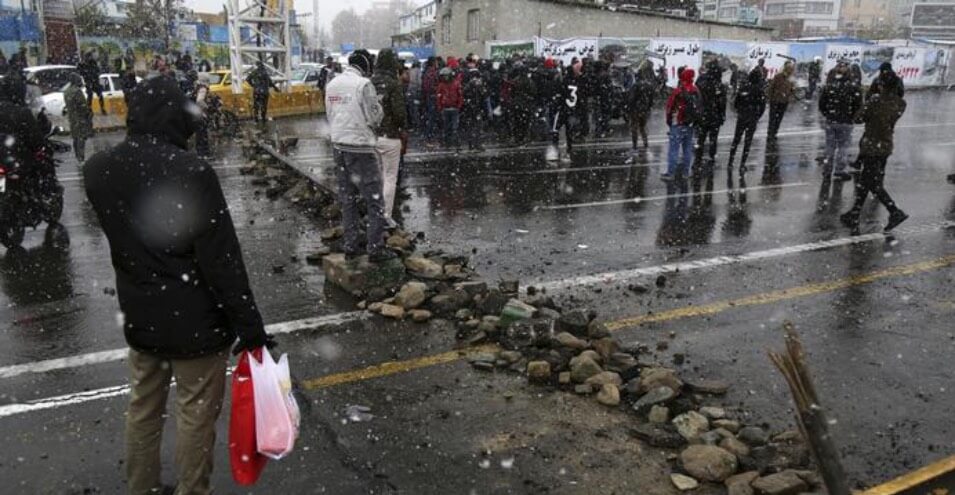
The atmosphere in cities has become extremely secure following widespread protests against the increase in gasoline prices in Iran. The Islamic Republic has resorted to intimidation, repression, shooting at demonstrators, and widespread arrests. Where will this situation lead?
Since Friday, November 14, and the threefold increase in gasoline prices, the atmosphere in Iranian cities has been plunged into unprecedented tension. Various sources, including the official media of the Islamic Republic, have reported widespread protests and demonstrations throughout Iran. At least a thousand people have been arrested, a group has been killed, and many have been injured, the exact number of whom is not clear. Over the past three days, despite the internet shutdown, many protesters and eyewitnesses have tried to convey news of the protests to media outside the country.
The government is bankrupt and penniless. People are not only dissatisfied with Hassan Rouhani’s government but with the entire system. Many slogans target the leadership of the system and the main center of power. Ayatollah Khamenei, the leader of the Islamic Republic, is behind the increase in gasoline prices and has called the opposition “evil people.” How long can this situation continue? What resources does the Islamic Republic have to preserve and survive? What can the opposition do? Is there a possibility of nationwide strikes and the unification of protests?
The discourse of subversion will definitely become the dominant discourse in Iran.
Mehdi Mahdavi Azad, an analyst on Iran issues from Bonn, Germany, tells DW:
"The level of clashes and violence by security forces is very high. Dozens of government buildings have been set on fire and the death toll is far higher than previously thought. The few videos released today show Basij battalions entering the field. The depth and level of the crisis for the government is much greater than what is imagined abroad or even by people inside Iran."
The reality is that the Islamic Republic is caught in a political, social and economic deadlock. This situation cannot continue and will end one day by any reckoning. Whether that day has come or not, in my opinion, is not the case. This demonstration, like the January 2017 demonstrations, will ultimately be suppressed. This is because it is a demonstration that has no leader. It does not follow a specific political idea. You cannot even say with certainty that all the demonstrators are calling for overthrow or that they have a specific model of government in mind.
The current situation can be compared to the protests and demonstrations in Iran in 2013, and we are still far from the protests and demonstrations of the summer of 2014. But the set of these demonstrations and the set of developments that are currently taking place can logically turn overthrow into a comprehensive and social discourse in Iran. If the government does not make a decision sooner at these very sensitive moments and points, the discourse of overthrow will definitely become the dominant discourse in Iran.
"The people are not only under severe economic pressure, they are also under severe political and social repression and are engaged in conflict with the government. If the Islamic Republic wants to continue to survive, it cannot do so with this level of tension and friction with the people. The Islamic Republic needs greater changes to survive. But is this level of change really within the capabilities of the Islamic Republic?"
Self-destructive regimes
Mehdi Mahdavi Azad considers the Islamic Republic of Iran to be a self-destructive regime. According to him, the Islamic Republic has become like a train that is moving at high speed, and all the passengers on this train know that it will fall into a valley. But for various reasons, none of them can stop it.
Despite this, he does not believe that the Islamic Republic's work will end too quickly, saying:
"This government is one of the established governments. These types of governments have a counter-insurgency structure, have a parliament and law, dominate the country, and there is a wide range of solutions against them. However, the totality of ideological, political, and social conditions has left no chance for the Islamic Republic to break out of the impasse. The Islamic Republic must either increase the level of tension in the next year, such as the incident of shooting down a drone, attacking ships in the Persian Gulf so that it can take advantage of the Western world under the pretext of increasing the level of crisis, or reach a kind of reconciliation with the world and the people. That is, the same proposal that Hassan Rouhani talked about two weeks ago and said that we should hold a referendum on it. But in the next year, there is no sign of the superiority of the peaceful tendency.
Livelihood protests can bring down the most established governments
Mehdi Mahdavi-Azad believes that rebellion, demonstrations, and protests, even if they involve the majority of the people, do not in themselves lead to the fall of the government. He says: "We are facing an established government like Syria. It is enough that the central buildings of power such as the parliament, the leadership, and the presidency can protect themselves, even if the entire country is in the hands of protesters, that government is still considered established in terms of law and international law.
What will bring about change is the gathering of protests, their goal-setting, finding leadership, and finding a specific discourse with the aim of gaining a specific advantage. This demand could be a change of government, a referendum, or an overthrow. As long as the protests in Iran do not take this form, meaning that the protesters do not have a specific demand and the voices have not come together, it will not lead to widespread changes in Iran.
But one thing is very important about livelihood protests; the outcome of these protests is unpredictable. Sudan is a notable example. Protests over rising bread prices led to the ouster of Omar al-Bashir within weeks. Livelihood protests can spread rapidly and bring down even the most established governments. In these types of protests, everything can be thrown into disarray very quickly.”
The state of the system is worse than the state of the people.
Hassan Shariatmadari, secretary general of the Transition Management Council, an organization that calls for an unconditional transition from the Islamic Republic, tells Deutsche Welle Persian:
"If the people persevere and force the government to retreat, this time they will have forced the entire system to retreat. The general feeling will be that they have defeated Mr. Khamenei, and this will create great self-confidence for the people. If they cannot persevere and the order of repression is so strong that they do not achieve their demands, it will actually be a prelude to further uprisings because the people's livelihood is no joke."
"So this system, despite all the measures it has taken, will go sooner or later. People have sensed this and will continue on their path."
Hassan Shariatmadari points to examples of successful movements, such as Venezuela or Syria, which continued to survive despite widespread protests and strong public discontent, and says:
"There are examples like Ukraine and Tunisia, and we should not only highlight the failed examples. It is important to see the issues in a historical phase. Since 1972, more than 120 dictatorships in the world have been overthrown by people in the streets, whose regimes have been consigned to history. The Islamic Republic is no exception."
"The concern of a large part of the Iranian people is that political collapse should not lead to social collapse. They want a peaceful transition and that the protests should be managed. The important thing about Iran is that the elites of society have thought about creating a transitional management and have created it and are trying to connect it to Iranian society. This will take time. But this makes the situation completely different from countries like Syria, Lebanon and Iraq."
Proximity to government employees
Hassan Shariatmadari believes that protests will continue at different intervals, adding: "People need to renew their strength and cannot be on the streets all the time. But these protests will continue, they will be repeated, they will become widespread and they will force the system to comply. We have examples like Poland, where the phase of the collapse of the government lasted eight years. This is not something that can be done overnight."
Hassan Shariatmadari says:
"The Transitional Management Council's guidance to the Iranian people is to expand strikes and protests. Approach government employees and encourage them not to go to work. In his opinion, the people's situation is bad, but the system's situation is worse than the people's, and it cannot even pay for its own collective expenses. Therefore, it is not just the people who are in a deadlock. The system is in a much more severe deadlock. We ask the security forces and the forces that were previously responsible for repression not to suppress the people, to stand by the people, and to save their future so that in the not too distant future they can be proud that they stood by the people and not sit in the court of the accused. He believes that Khamenei's order to suppress will not be taken seriously and the IRGC knows that it needs these people. The body of the IRGC is with the people, and the IRGC leadership is afraid that its body will join the people."
Two or three more doors of hell will open before the Iranian people.
Farzaneh Roustaei, a journalist and analyst of Iranian issues from Sweden, tells Deutsche Welle Persian:
"The crisis is very serious, and the regime itself knows this. The situation has gotten much worse since January 2017. The protest against gasoline is a protest against the fact that people will not even have dinner and the government has no solution for it. Because they themselves have closed all the doors in the region and in the world on themselves. On behalf of the Iranian people, they have not left any way out of the crisis. As a result, they are forced to continue on this path with all its dangers. The situation may get worse, but the government has made its decision and has not left a bridge to return."
The country has become economically ungovernable. When the government triples the price of gasoline in these circumstances, it means a free fall for the Iranian economy.
But this demonstration has no leadership or organization, and the Islamic Republic also has experience of silence and digesting the crisis. We had the crisis of bus drivers and truck drivers. They watched in silence, and after a while the truck drivers were forced to return to work. We witnessed the same process in the sugarcane protests in Haft and Tappeh and other places. The government suppressed it in a limited way and waited until the people got tired and fell silent again.
The Islamic Republic should either set up a machine gun and slaughter the people like Syria or Libya. Or wait a month or two in the same way. Spend a small part of the money it has collected on the people to slightly reduce the crisis. Of course, the level of tension in Iran will increase. But the crisis will also stabilize at a higher level. This situation may continue for two years.
"The Islamic Republic is slowly suppressing the people in the most dishonorable way, and the people are slowly calming down. This shows that we are moving towards becoming Venezuelan. The crisis is becoming more complex and insoluble. This is a real hell. The doors of two or three more hells will open for the Iranian people."
Source: DW