Despite the flood, the drought in Iran has not ended.
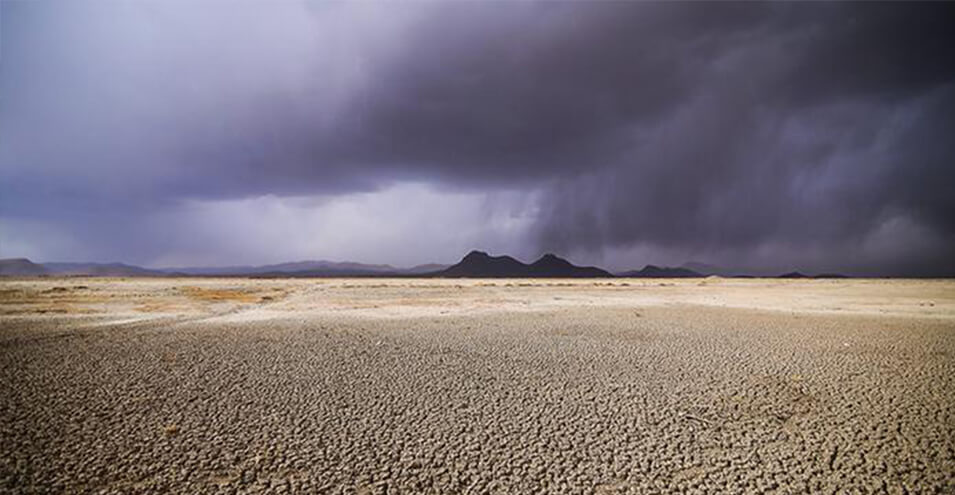
The flood destroyed the cities but filled the wetlands. Flood victims lament the disaster, while officials speak of blessings. What do environmental experts and activists say? Will the water accumulated in wetlands and behind dams prevent drought?
Energy Minister Reza Ardakanian says that during recent rains, 44 wetlands in the country have been drained by 40 to 100 percent, and the water volume of dams has been filled by 75 percent.
Issa Kalantari, head of the Environmental Organization, has expressed hope that recent rainfall will save Iran from the threat of water shortage. According to Kalantari, more than 90 percent of the country's wetlands have become full.
But these same officials were warning about the country's drought before the rains and flooding began, and now they have become optimistic, and this optimism has even been strengthened regarding the restoration of Lake Urmia.
Lake Urmia water level rises by half a meter
It is reported that the rainfall has caused the water level of Lake Urmia to rise by half a meter. Some experts, including Parviz Kordvani, believe that “it is futile to expect the restoration of Lake Urmia.”
Kordvani, a geographer and environmental activist, says that despite the fact that many provinces of the country are under water, “Iran has not entered a wet period.” In an interview with IRNA, the expert said that “the issue of Iran entering a wet period is unrealistic.”
Kordvani does not accept the claims of officials and those who say that Iran's water problem has been solved and drought has been prevented. In an interview with IRNA, he rejected the claims of the officials, saying: "This is not true and we have not entered a wet period in any way. Due to global warming, droughts have still affected many parts of the world, including Iran, and droughts will continue."
According to this environmental expert, "as long as the Earth is warm, Iran's rainfall will be unpredictable."
Kordvani concludes that Iran's rainfall neither indicates that it is entering a wet season nor that climate change has occurred.
According to this expert, a drought can only occur as a result of climate change.
Apart from Parviz Kordvani, there are other experts in Iran who believe that "we should not be complacent about the recent rains" and warn about the "century-long drought" phenomenon facing the country.
Nemat Hassani, head of the Center for Natural Disaster Studies at Shahid Beheshti University, told ISNA that the main causes of flooding are climate change, global warming, and cumulative rainfall.
The expert says that the claim of entering a “wet period” is not true. He predicts that Iran will face a “centennial drought.”
Hassani explains: "Looking at studies over a century, the average rainfall in the country, which was 240 millimeters per year in the early 21st century, will decrease to 180 millimeters per year by the end of this century, that is, in 100 years. In other words, we will lose about 60 millimeters of our rainfall in the future, and it is better to use the term "century drought" in the context of water culture because we are facing a century of drought."
Nemat Hassani concludes: "What happened (the flooding) had many benefits and blessings, despite the threats and harm."
He concludes: "A large volume of water entered the country, and Lakes Urmia and Bakhtegan, the Gavkhuni Swamp, the Hor-al-Azim Wetland, and many other places that could have caused problems for the country were filled with water due to the recent rainfall. On the other hand, many underground aquifers were replenished, and dams that had become very low in water are now full of water. This incident taught us many lessons in the fields of road construction, dam construction, bridge construction, river engineering, and management, and showed that some dams are good and strong, and that we should judge them more fairly."
Source: DW