What is the meaning and importance of the US sanctions on Khamenei?
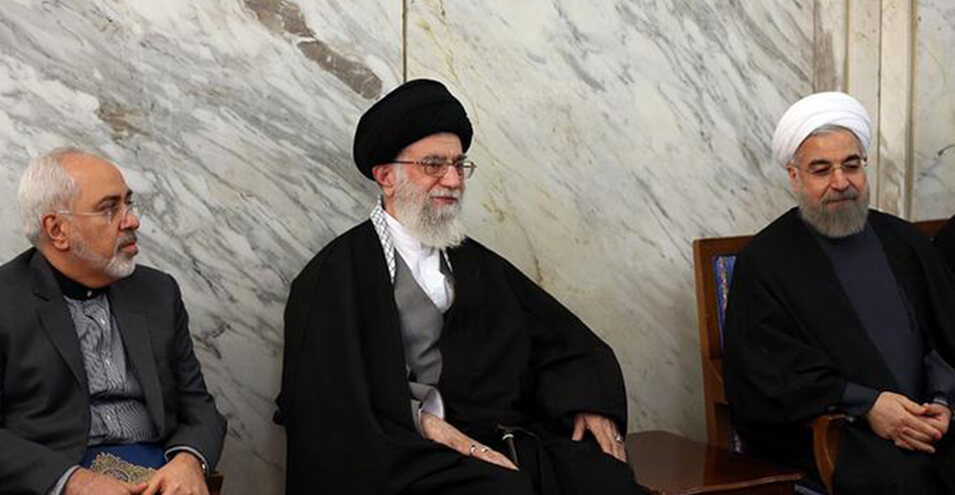
Iran says new US sanctions against Ali Khamenei and Mohammad Javad Zarif will block talks. The US has called the new sanctions a response to the downing of its drone by the Revolutionary Guards. Read what some experts have to say about this.
Iranian President Hassan Rouhani has reacted sharply to the sanctions against Ali Khamenei, saying he has nothing but a house and a Hussainiya. But it seems that the political and symbolic importance of the sanctions against the leader of the Islamic Republic far outweighs its economic consequences.
Hassan Shariatdari, Ahmadi Alavi, Ammar Maleki, and Reza Taghizadeh answered Deutsche Welle Persian's question about the meaning and importance of the boycott of Ali Khamenei.
It is not easy for Khamenei to digest the US action.
Hassan Shariatmadari, political activist opposed to the Islamic Republic
The recent sanctions imposed by Mr. Trump – this time targeting the leadership of the Islamic Republic, all financial institutions, and its shadow government – are not yet clear whether these sanctions will be imposed by the US Treasury Department all at once or in stages.
However, its scope, if necessary, can include all areas of the system and even include religious areas such as Friday imams, religious leaders, seminaries, and the monthly tuition that the leader pays to students inside and outside Iran. It can target all of these areas and, in addition to the political and military bodies, make it difficult for him to interact with the religious sector.
Aid to so-called liberation movements, which in fact include the paymasters and agents of the Islamic Republic, the IRGC, and the Supreme Leader abroad, is generally provided by the Supreme Leader. In addition, the huge budgets that are provided by the Supreme Leader under the guise of religious and cultural propaganda could also be included in these sanctions. The large Shiite clerical establishment in Najaf and Khamenei’s religious representatives around the world could also be targeted by these sanctions.
All of the above may be implemented immediately or in stages, depending on the US sanctions-negotiation policy. If these sanctions are implemented, they will seriously challenge Khamenei's influence inside and outside Iran, especially in the Islamic and Shiite world, which he is very interested in and interested in, and will be very painful and distressing for him.
It will probably not be easy for him to digest this US retaliatory move targeting his influence and leadership. Khamenei's reaction to this harsh and retaliatory move by Trump will largely determine the type of interaction between the two countries.
A symbolic act with real effects
Ahmad Alavi, professor of economics in Sweden
Although the sanctions against the leader of the Islamic Republic may be considered ineffective, it is itself a sign of the rising tension between the White House and the Islamic Republic. This tension has various aspects, such as symbolic and real aspects. But in the economic arena, the symbolic and real aspects overlap. Therefore, every symbolic action leads to real effects.
Whatever the motivation, Washington’s response will have significant consequences for the Iranian economy. Increased political tension means greater insecurity and, therefore, will have a negative impact on the rate of investment in Iran. The most immediate effect of these sanctions will be increased tension and a decrease in the incentive for Iran’s trading partners to export to and import from Iran, which in turn means a decrease in Iran’s foreign trade.
The flight of financial capital from Iran in the form of non-return of funds from non-oil exports or the migration of capital and investors from Iran is also among the other consequences of the rising tensions between the governments of the two countries. Since the Iranian economy is exogenous and inward-oriented, the impact of a decrease in the size of foreign trade on economic growth will be negative. The shrinking of Iran's foreign trade means a decrease in investment in the country and, therefore, will have a negative effect on the level of activity of production units and will also reduce the value of the national currency. In such circumstances, an increase in recession, unemployment and inflation in the medium term will not be surprising.
America's behavior has driven the Islamic Republic to despair.
Ammar Maleki, professor of political science in the Netherlands
Many critics of broad sanctions and advocate for targeted sanctions see political sanctions as one of the best tools for punishing repressive and adventurous governments, including the Islamic Republic. Therefore, sanctions against senior political officials in the Islamic Republic who have been involved in repression and human rights violations at home, and killing and inciting war abroad, are defensible, and even most opponents of economic sanctions defend such sanctions.
The Leader of the Islamic Republic is the highest authority that has played a major role in all domestic and foreign crises; domestic repression and widespread human rights violations are carried out by institutions (judiciary, law enforcement agencies, security agencies) that are all appointed by the Leader of the Islamic Republic; on the other hand, all of the regime's adventurous and warlike policies abroad are determined by him personally and implemented by institutions that are under the direct supervision of the Leader of the Islamic Republic and whose commanders and senior officials are selected by the Leader (Quds Force, military institutions).
Under these circumstances, if targeted sanctions are to be imposed due to the aforementioned actions, naturally the Leader of the Islamic Republic and his close circle should be among the main people to be sanctioned.
By employing a policy of maximum pressure and declaring readiness to negotiate without preconditions with the leaders of the Islamic Republic, the US government has applied the "carrot and stick" principle to put senior officials of the Islamic Republic in a dilemma that forces them to come to the negotiating table to preserve their existence.
However, the Leader of the Islamic Republic, regardless of the pressures and harms inflicted on the people and the country, has put the country in a bind by announcing a policy of "no war, no negotiations" and has limited the regime's options; as a result, the regime is trying to change the playing field with provocative actions such as damaging oil tankers, destabilizing the Persian Gulf, and shooting down an American drone, so that by creating a limited military conflict, it can enter into a "heroic negotiation" by showing its strength and ability to destabilize the region before being forced to surrender completely.
On the other hand, the Trump administration, as an unpredictable government, has confused and frustrated the Islamic Republic with unexpected actions, including placing the IRGC on the list of terrorist groups, withdrawing from a military response to the downing of an American drone, and imposing new sanctions on senior officials of the regime (including sanctions on the Leader and Foreign Minister of the Islamic Republic).
Apparently, this is the first time that the unconventional regime of the Islamic Republic has faced a group on the global stage that has the upper hand in applying unconventional and unpredictable methods and policies .
A direct blow to Ali Khamenei
Reza Taghizadeh, Iran affairs analyst
Despite not having a heavy financial burden, naming the Leader of the Islamic Republic, his office staff, and the institutions under his supervision has psychological significance and is considered a direct blow to Ali Khamenei, who has effectively placed himself in the position of head of Iran's executive branch.
The policy of "pressure against pressure" and responsibility for the failure of Japanese Prime Minister Shinzo Abe's mediation initiative, which was an opportunity for Iran to exit the crisis, has been attributed to the Leader of the Islamic Republic.
The failure of the "pressure-against-pressure" policy is inevitable due to Iran's current limited capabilities in meeting domestic and foreign obligations - a situation that the former Soviet Union struggled with from 1985 to 1989, leading to a gradual withdrawal from Africa and Latin America and the cessation of aid to Warsaw Pact countries before the complete collapse of the ruling regime.
The major flaw in Ali Khamenei's pressure-against-pressure strategy is the lack of a successor strategy ( Plan B ) to exit the crisis.
*The content published on this page solely reflects the opinions and views of its authors.
Source: DW