Continuing repression of religious freedoms in Iran; even the exile of Dervishes does not satisfy the government
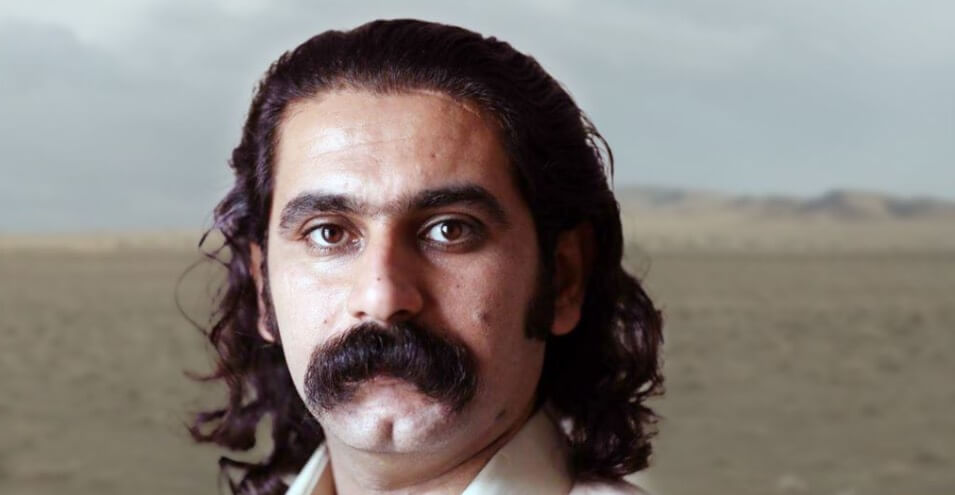
Reza Yavari, a Gonabadi dervishes who was recently released from prison, called the exile of Gonabadi dervishes illegal.
Reza Yavari, one of the Gonabadi dervishes who was arrested after the Golestan 7 incident and after serving his sentence, was released from Sheiban Ahvaz Prison in mid-April on parole due to the recent directive of the judiciary regarding the spread of the coronavirus. In his interview with Voice of America, he announced the number of exiled dervishes as 39 and said that like some of the Gonabadi dervishes who have been released from prison, he went to Taybad alone a month after his release to serve his two-year exile sentence.
According to this Gonabadi dervish, the banishment order for Mr. Yavari and 38 other Gonabadi dervish in the cities of Taybad and Khaf in Khorasan Razavi Province, Zahak and Mirjaveh in Sistan and Baluchestan Province, Kahnouj in Kerman Province, and Borazjan in Bushehr Province has been implemented while the exiled dervishes have been conditionally released, and when the main punishment, such as imprisonment, has been abolished, the implementation of the additional punishment of banishment is meaningless and illegal.
The exile of Gonabadi Dervishes has been implemented by the Iranian government at a time when the spread of the coronavirus has not been fully controlled in various cities in Iran, and as of Monday, June 25, 2020, the authorities of the Islamic Republic officially announced the death of 7,451 people, and the total number of infected people has reached 137,724.
This comes after a World Health Organization official previously said that the figures announced by Iranian authorities on coronavirus cases were only one-fifth of the actual number of infected people. The official figures on the number of infected and dead due to COVID-19 in Iran, China, and Russia cannot be verified by independent experts and cannot be considered reliable or final.
Reza Yavari, who is the only exiled dervish in Taybad County, pointed out that the deportations that have taken place still do not satisfy the government regarding the harassment of dervishes. He told VOA that currently some dervishes, such as Saeed Soltanpour, who is serving his exile in Zahak, Sistan and Baluchestan Province, along with Ahmad Iranikhah and Mehdi Bakhtiari, who are also serving their exile in Borazjan, are regularly summoned by the Intelligence Department of the police force in their place of exile and are harassed.
At least 27 months have passed since the Golestan 7 incident and the attacks by security forces and special forces on the Gonabadi Dervishes in front of the house of Noor Ali Tabandeh, the former head of the Dervishes' lineage, which resulted in 202 of them being imprisoned and sentenced to a total of more than 1,080 years in prison, and the persecution of the Gonabadi Dervishes by the Iranian government continues.
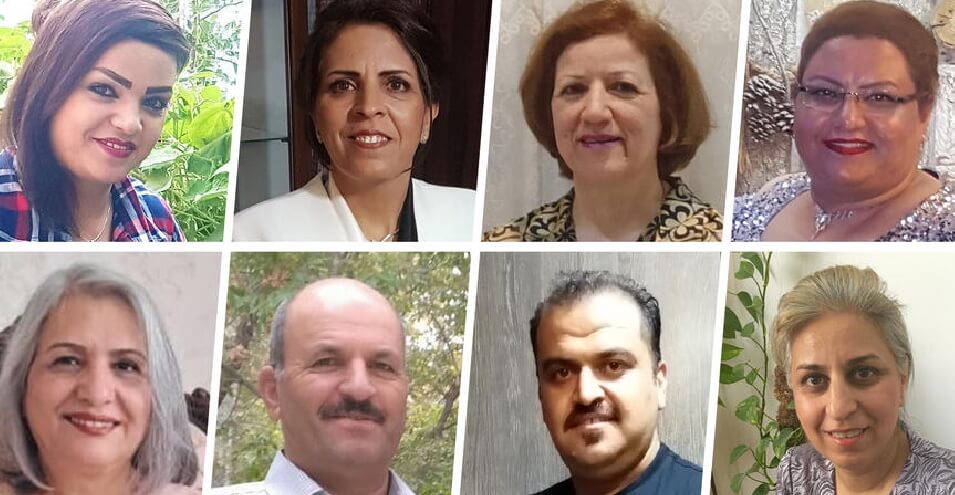
Reza Yavari stated that his biggest concern at the moment is the continued imprisonment of eight other Gonabadi dervishes, namely Mustafa Abdi, Mohammad Sharifi Moghadam, Kasra Nouri, Abbas Dehghan, Kianoush Abbaszadeh, Amin Safari, Reza Sigarchi, and Vahid Khamoshi, and said: "In this situation of the coronavirus crisis, I am concerned about their health."
According to one of the provisions of the Judiciary's circular issued in March of last year, political prisoners who have been sentenced to more than five years in prison on charges of "acting against national security" are "exempt from being sent on leave." This has not only drawn reactions from prisoners and their families, but also from human rights activists and officials in some countries.
US Secretary of State Mike Pompeo recently said in a press conference: "We have asked not only Syria, but also the Islamic Republic of Iran to release not only American citizens, but all those who have been unjustly imprisoned in these circumstances. This is a humanitarian act, and apart from the fact that these people have been illegally imprisoned, in these circumstances the principle of humanitarianism dictates that they be released from prison."
Previously, the United States Commission on International Religious Freedom once again expressed concern about the state of religious freedom in Iran in its annual report. In the section on Iran, the annual report, published on Tuesday, May 29, stated that the Islamic Republic has increasingly targeted Muslim minorities, especially Sunnis and Dervishes, as well as followers of other religions and denominations, including Baha'is and Christians.
Source: Voice of America