Where was the decision to increase gasoline prices made: in the Supreme Leader's Office or the government cabinet?
The head of the judiciary has once again emphasized that the decision to increase gasoline prices was made by the government and that he was against it from the beginning. However, a conservative weekly has reported on Khamenei's role in this issue.
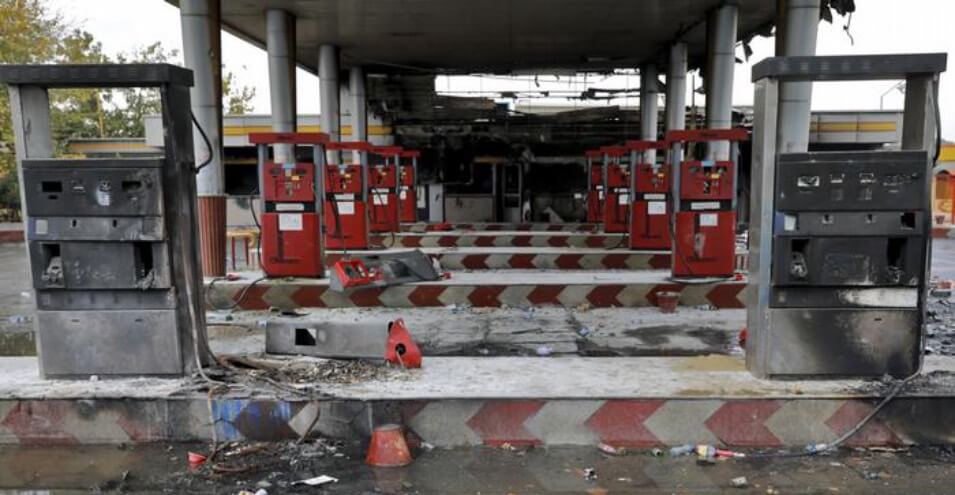
Nearly three weeks after the sudden increase in gasoline prices and the protests that followed, Islamic Republic officials continue to mention the issue in their speeches. Each faction tries to shift responsibility for this decision onto the opposing faction.
In his latest remarks, Ebrahim Raisi, the head of the judiciary, once again referred to the issue of increasing gasoline prices in a gathering of Isfahan students on Thursday, December 4, and said: "For several years, the task of controlling gasoline prices along with increasing salaries was not carried out, but if the government had done this in its place, there would have been no problem."
Referring to the meeting of the heads of the three branches of government, where the decision to increase the price of gasoline was apparently made, the head of the judiciary said: "A proposal was made by the government in the Economic Coordination Council of the Heads of the Three Branches. I said this issue has nothing to do with the meeting of the heads of the three branches, because we have a law and it is the government's duty. I objected two or three times, but the government said that this would be done for the sake of coordination."
Raisi had previously announced this issue and said at the very beginning of the protests that he had opposed the government's proposed increase in gasoline prices at a meeting of the heads of the three branches of government.
According to the head of the judiciary, the plan that the government submitted to the Economic Coordination Council of the heads of the three branches to increase the price of gasoline "was not a plan, and even the opinions of the government's economic team were not unified, and not a single section was foreseen in the law."
Ebrahim Raisi said that what was approved in the meeting, and also approved by Khamenei, was how to spend the revenue from the increase in fuel prices, which should be allocated more to production.
The president, who was Hassan Rouhani's rival in the previous presidential election, said he was not officially informed of the plan and had only heard about it through channels. He said he raised his objection in a memo he sent to the president's office, writing: "I have heard that you want to implement the plan and that the necessary preparations have not been made, and it is expected that incidents will occur given the conditions in the region."
He considered the protest to be the people's right and said: "On Wednesday, some in the government council had pointed it out; the people were protesting and they had the right to do so. We consider the lack of explanation to the people to be a serious shortcoming of the plan."
Khamenei's role in the gasoline price hike plan
While the government's rival faction continues to try to place full responsibility for the increase in gasoline prices on the government, the weekly "Hezbollah Line" has published information on the leadership's role in this matter.
According to this weekly, an extraordinary meeting of the Supreme National Security Council was held on Saturday, November 15, as protests against the increase in gasoline prices began. In this meeting, all members were unanimous that now that this plan has been implemented, it should not be withdrawn, and that withdrawing from implementing this plan may intensify the protests.
However, according to members of the Supreme National Security Council, convincing the parliamentarians, who were completely unaware of the implementation of this plan, is a difficult task that is beyond the ability of the parliament speaker. For this reason, it has been decided to seek help from Ayatollah Khamenei in this matter.
The Hezbollah line did not explain who, how, and when consulted with Khamenei, but it went on to write that on Sunday morning, Larijani, the speaker of the parliament, went to Baharestan with a short message from Khamenei for the representatives: "Following the comments of some respected representatives regarding the recent resolution of the heads of power, it is necessary to tell the respected representatives that it is appropriate that any action regarding this resolution in the parliament be within the framework of the resolutions of the Supreme National Security Council and not violate them, and that the country's sensitive conditions be taken into account."
At the time, no news about this message was published. It was only on Sunday, after Khamenei's speech about the increase in gasoline prices, in which he emphasized that he supported the decision of the heads of government, that it was announced that the proposal by the representatives of the Omid faction to require the approval of any change in the prices of energy carriers in the parliament had been withdrawn.
The publication "Hezbollah Line" also pointed out another aspect of Khamenei's role in this regard, writing: "The general opinion of the Leader of the Revolution regarding fuel consumption management was already clear. Reforming the consumption pattern of energy carriers, including gasoline, is a necessity for the country, given its excessive and excessive consumption, and the Leader of the Revolution had emphasized it many times."
The weekly also referred to the meeting of the Supreme Coordination Council of the Three Powers held on September 20, and wrote that in that meeting, without specifying the time for the implementation of this plan, it was approved that gasoline would be supplied in two ways: rationed and freely. A written report of this meeting was also submitted to Khamenei, and he left the decision on determining the price and how to implement this plan to the experts and the agreement of the heads of the three powers.
Source: DW