Tehran and Riyadh Compete for China's Support
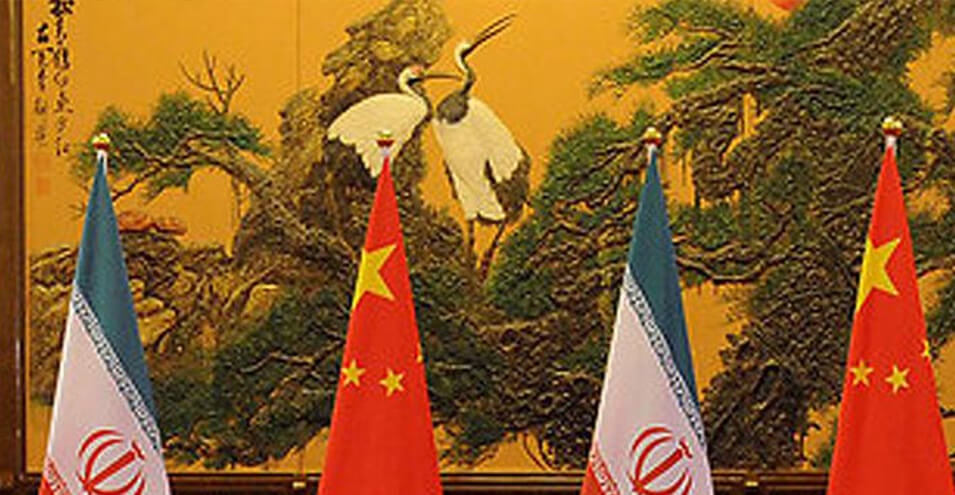
The speaker of the Iranian parliament went to China. After him, the Saudi crown prince also arrived in Beijing. Observers assess bin Salman's Asian trip as aimed at isolating Iran. The Chinese president, however, announced Beijing's determination to continue "strategic cooperation" with Tehran.
Chinese President Xi Jinping expressed his country's determination to develop close ties with Iran, regardless of possible changes in the international situation, during a meeting with Iranian Parliament Speaker Ali Larijani. The top Chinese government official made the remarks shortly before Saudi Crown Prince Mohammed bin Salman arrived in Beijing.
The Chinese President said: "No matter how the regional and international situation changes, China's determination is to expand comprehensive strategic cooperation with Iran."
According to Reuters, although China does not have much tradition in diplomatic moves and playing a role in Middle Eastern conflicts, and despite Iran's large share as the fourth largest oil exporter in the region last year, Beijing has tried to increase its presence in the Arab world as much as possible.
Last Tuesday, Ali Larijani, along with a high-ranking delegation consisting of Foreign Minister Mohammad Javad Zarif, Oil Minister Bijan Zanganeh, Economy and Finance Minister Farhad Dejpasand, Central Bank Governor Abdolnaser Hemmati, and several other Iranian officials, began their two-day visit to China. During the visit, the Iranian Foreign Minister met with his Chinese counterpart last Tuesday.
Saudi Crown Prince Mohammed bin Salman arrived in China today for a two-day visit. The last visit by Saudi King Salman to China was in 2017.
China's Walking a "Fine Line"
According to Reuters, China is walking a fine line during these meetings because it also has close ties with Saudi Arabia, the Islamic Republic's regional enemy.
According to a statement released by the Chinese Foreign Ministry on Thursday (February 21), Xi Jinping said after meeting with the speaker of the Iranian parliament that the two countries enjoy a long-standing friendship and long-standing mutual trust. The Chinese president also stressed the need to deepen “strategic mutual trust” and the need for Beijing and Tehran to support each other in “core interests and major concerns.”
The highest-ranking official of the People's Republic of China added that his country advocates cooperation between regional and international parties to lead the Middle East to a path of stability and development. Xi Jinping added: "We support Iran in playing a constructive role in safeguarding peace and stability in the region, and we are ready to coordinate and communicate closely on regional issues."
China, on the other hand, needs to maintain its close relationship with Saudi Arabia and has its interests in both directions. In addition to being one of China's most important sources of oil, Saudi Arabia is also one of Beijing's favorite markets and an importer of Chinese goods, including its military drones.
Mohammed bin Salman, who is scheduled to meet with Xi Jinping on Friday, has also shown in his previous two stops, Pakistan and India, that he did not leave his Asian tour empty-handed. Deals worth $20 billion with Pakistan, a promise to invest more than $100 billion in India over the next two years, and a promise to release thousands of Indian and Pakistani prisoners in Saudi Arabia were among the gifts from Riyadh during bin Salman's Asian tour.
This is while India is a major buyer of Iranian oil and Pakistan is a customer of Iranian gas. Saudi Arabia intends to expand its oil exports to Asian countries, including China and India, to replace Iranian oil, whose export possibilities have been severely limited due to US sanctions. In an interview with the German newspaper “Süddeutsche”, the Iranian Foreign Minister said that Iranian oil exports are now even lower than when the previous round of sanctions were imposed on the Islamic Republic.
“Broad strategic cooperation” between Tehran and Beijing
Zarif tweeted yesterday about the Iranian delegation's trip to Beijing: "We have come to Beijing, accompanied by [Islamic Consultative Assembly] Speaker Ali Larijani, for important talks with President Xi and the Chinese leadership on the broad strategic cooperation between our nations. Main agenda: Iran's role in the One Belt, One Road initiative and continued political, security, and economic cooperation."
The “New Silk Road” project, or “One Belt, One Road” initiative, is a plan related to investment in the communication sector that was presented by China in 2013 with the participation of more than 60 countries. The plan aims to increase China’s leadership in East Asia and help the country become a “superpower” in the world.
Before leaving Beijing, Ali Larijani, referring to the opposition of "a number of adventurous countries" to the New Silk Road project, said: "The Islamic Republic of Iran is ready to provide China with its unique capacities in various fields such as roads, infrastructure, and energy."
According to IRNA, the Speaker of the Iranian Parliament also added that “during the meeting with Chinese officials, we had constructive discussions on regional political issues, the fight against terrorism, and the consultations that are necessary to establish peace in the region.” According to Ali Larijani, in addition to a number of government members and heads of the parliament’s budget and energy committees, “other sectors such as military and security” were also present on this trip.
Officials of the Islamic Republic are describing the visit of the Speaker of the Parliament and his high-ranking delegation to China as an important one. Upon his arrival at Mehrabad Airport on Wednesday evening, Ali Larijani was welcomed by Deputy Speaker of the Parliament Masoud Pezzekian, Deputy Parliamentary President Hossein Ali Amiri, and some other Iranian managers and officials.
Today, Thursday, the Islamic Consultative Assembly witnessed Larijani’s report on his trip in an informal session. Fatemeh Zolghadr, a Tehran representative in the Assembly, said about the session that Ali Larijani called his diplomatic meetings “important” and “successful.” Bahram Ghasemi, a spokesman for the Iranian Foreign Ministry, had previously expressed hope that Ali Larijani’s trip to Beijing “could further help smoothen” the Islamic Republic’s cooperation with China.
China's mediation between Iran and Saudi Arabia?
There are also other discussions about the Saudi Crown Prince's visit to Beijing, which will take place immediately after the Iranian delegation's visit to China. Some have even raised the possibility of Beijing mediating between Riyadh and Tehran.
Jamil Al-Diyabi, editor-in-chief of the Saudi newspaper Okaz, said in response to Bin Salman's visit: "It is not unlikely that China will once again mediate to resolve the differences between Iran and Saudi Arabia." Al-Diyabi stated in a telephone interview with Sputnik that if China is convinced of the will of Saudi Arabia and Iran to resolve their differences, it is not unlikely that it will accept mediation between them.
According to the Saudi journalist, Beijing is aware of Saudi Arabia’s “important role” in establishing security and stability in the region, as well as, he said, “Iran’s behavior and interference in the affairs of other countries.” At the same time, the editor of the Okaz newspaper considered the impact of Beijing’s possible mediation between Tehran and Riyadh “unlikely.”
Some other observers and analysts have also assessed Mohammed bin Salman's Asian trip as an attempt to get Saudi Arabia out of the pressure caused by the murder of Jamal Khashoggi, a critical Saudi journalist. According to Mohammad Reza Forghani, former Iranian ambassador to Turkmenistan, bin Salman's Asian trip was made with the intention of coming out of his "political coma."
According to ILNA, Forghani accused Riyadh of trying to start an “oil war.” The former Iranian ambassador to Turkmenistan said: “They [Saudi Arabia] have signed huge oil contracts with India and Pakistan to build refineries, and it seems they are looking to target Iran in the medium term, especially in the energy sector.”
Source: DW